Mireiq, The 21st century design is here

Mireiq has created a line of ladys purses, bags, suitcases and wallets that allows consumers to also become designers and change the appearance and even the type of item they wish to purchase.

Jorge Labandeira, creative director and founder of Mireiq, explains that they have developed a system that allows a consumer to create an online bag through a system of customized pieces, so that the appearance of the bag can be modified, customized and also converted into a backpack or bag or a small suitcase.

Un bolso de Mireiq.

The system has been patented and now the idea is to expand it to other items. With the same principles, Mireiq manufactures portfolios and has also started a furniture production line. “The idea is to continue advancing and producing very diverse items although first we must consolidate ourselves in the market of handbags and wallets,” says Labandeira.

The philosophy of Mireiq is to radically rethink the design of any wearable item in the future and place the user at the center of the experience. “We are not a simple brand of handbags, we have a different way of doing things and that is why we give all the items we create the ability to be versatile. We want to give our clients freedom and not end up being prisoners of the object they acquire “, explains Labandeira.

The company is in a process of acceleration within Conector, a start-up accelerator, which works mainly in Madrid and Barcelona but also supports some companies in Galicia and, in the case of Mireiq, has allowed them to get advice from business consultants as important as those from Inditex.

The project has also received the financial support of Afigal and they are currently looking for new sources of financing that will allow them to continue growing.
Boardfy, the management of Big Data as a new business model

Boardfy is one of the companies that has catapulted themselves into the global market with new pricing tools to offer clients the possibility of reaching their potential customers in a much more efficient way and increasing their sales.

Fernando Gómez, CEO of Boardfy, explains that the idea of developing a project of this kind arose from his own work expertise at an e-commerce company. “We saw that there was a demand in the sector for this type of service and we decided to set up an independent company to develop the project,” he says.

The services offered by Boardfy allow their clients to permanently optimize the prices of the products they offer on their e-commerce platform, in addition to monitoring the competition and being aware of the changing market trends. “With our system you can improve sales by up to 30% and, in addition, you can achieve greater efficiency in advertising campaigns that are made through internet platforms,” says Gómez.

Despite the short business life of the company, just two years in, Boardfy already has clients in Spain, the United States and in different countries in Europe. The forecasts are to grow by 40 percent this year and continue with an international expansion that is almost mandatory in this type of business since the local market is pretty small.

The company has been involved in the acceleration program of Vía Galicia, an experience that Gómez considers “basic” for the company since it has allowed them to access some “luxury” consultants who advised them in a very accurate way about the decisions that had to be made to grow steadily “Via Galicia is a luxury that we have here and little by little it will generate a very important business ecosystem in this area. There is no other autonomous community in Spain that has such a  system, “concludes Gómez.

ITFAB: The factory of unique items aided by revolutionary 3D technologies

In the classrooms of the Industrial Design Engineering School in Ferrol, the paths of Iago, Carlos and Roberto once crossed. During that academic race, a 3D printer was purchased among the three to print the models of the works required in some of their college courses. That was the germ of the project which is known today as ITFAB, now a company with a promising future in a sector that grows steadily day by day.

During their faculty days, these three young people offered their schoolmates a printing service for these models. The most serious step forward was taken when Sergio joined the project with an investment “key to the purchase of more machinery and diffusion”, explain the creators of ITFAB.

The closeness and personal attention to each of their items is one of the bases on which this project clings on

Who requests the services offered by ITFAB? Almost all that they have in common is that they seek to “manufacture unique and concrete items, from car repair shops (with tailor-made products for the top end customer) to signage for a new hairdressing salon, design studios with new concepts or catering schools”, these are some of the examples of projects that this innovating company has come up with.

In a short time, ITFAB has acquired an important client portfolio, “with a volume that is already owned by a company, not simply a start-up“, clarify its creators.

Model of 3D printer made by ITFAB.

Now, how are these products made in 3D? “We use constructive robots that are superimposing the information, of each 3D model, ‘layer by layer’.

All this effort has already brought us some rewards. ITFAB has been the winner of the second edition of the Connecting for Good Galicia acceleration program, organized by the Galician innovation agency (GAIN) and the Spain Vodafone Foundation.

The support of GAIN and Vodafone was, therefore, a before and after for the project that was born one day at the School of Industrial Design of Ferrol in the region of Galicia, Spain. “We have managed to make a proposal of focused added value, and thanks to the economic prize of the program, we have been able to set up a base in A Coruña, with the necessary infrastructure to make the leap to the industry”.

Send2me: the smart mailbox that picks up packages for you

0

A bad experience with an anniversary gift ended up in the incorporation of a company. One Friday afternoon, when Toño Fraga was telling the anniversary anecdote to his classmates at the business school, the idea just popped up. How can we make sure that the order we have made will be delivered when we are home? And if there is an emergency and we have to leave home? Are we going to spoil our anniversary plans because of it?

This problem is faced not only by the recipients of online orders, but also by the logistics companies. It is estimated that 25% of deliveries, 1 out of 4, are not successful on the first attempt. An obstacle that harms the efficiency of these companies and their employees, in addition to increasing CO2 emissions by the extra trips that the delivery vehicles have to make.

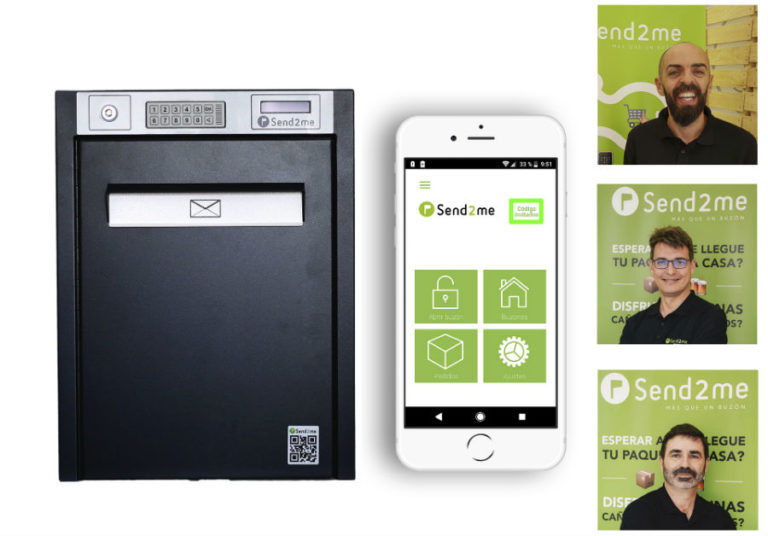
And so Send2Me was born, the Toño Fraga project with Andrés García and Javier Nogueira. These three Galicians, with extensive expertise in the commercial, financial and IT sector, have marketed an intelligent mailbox for single-family homes, which is controlled by an ‘app’, in which the delivery companies can drop off packages when there is no one at home. And in addition, it is possible to make a refund or return the product, so that the company will pick them up, later, at any time.

“It’s the first smart mailbox for single-family homes in the market”, Toño Fraga says

“It’s the first smart mailbox for single-family homes in the market, and we ourselves have developed the ‘app’,” explains Toño Fraga. A very interesting tool for companies and consumers. “We all prefer to receive purchases in our mailbox, and not have to tell the neighbor to be waiting around for it, or drop it off somewhere else, or have to go to pick them up at the store 15 kilometers away from home, right?”, Says Fraga .

Send2me works with all the logistics companies in the market, which greatly facilitates its operation. They have already installed more than 30 mailboxes, especially in the outskirts of A Coruña and Vigo, and have signed an agreement with a DIY company and hardware store to sell their mailbox at a price of 225 euros.

“The Velutina Drone”, technology against the most feared plague

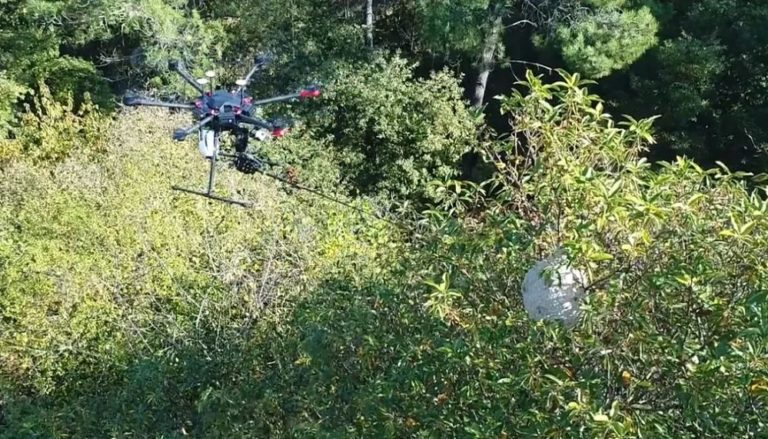
The fight against the most threatening plague that has ever threatened the Galician countryside and cities already has a new ally, the “Velutina Drone“. This device, developed by the Spanish company Aerocamaras, is already being deployed across Galicia, Asturias and Portugal to seek and destroy the so ever dangerous giant Asian hornet nests that have recently become a nightmare for farmers and citizens nationwide. The giant Asian hornets are an agressive and dangerous species of insects since they kill off the native bees and sting humans with highly toxic venom.

The Galician company has applied its ten years of expertise into the development of drones and has come up with a breakaway device that allows to seek and destroy these types of nests in a record time of 15 minutes and avoids the risks of high altitude work in front of insects that can act in an aggressive way “This summer we have taken action in over ten nests a week and we hope to achieve the same results in October, November we can continue working because many nests will be exposed in trees,” says Antonio Sánchez, Communication Manager of Aerocamaras.

Drone Avispa Asiática/Velutina Aerocamaras – www.dronevelutina.com from Aerocamaras / Dreams Factory on Vimeo.

The “Velutina Drone” began to operate at the end of last summer and its development is an example of how Aerocamaras works in the manufacturing and development of these drones, which operate in crops and fields across the region as well as useful for fires or power line surveillance or shooting commercials. In this case, the drone has a 4 meter-long-pole that allows you to approach the nest, even if it is at a high altitude, and shoot the insecticide inside of the nest, which makes it possible to destroy the harmful velutins.

Among the pros of operating such a drone are that it is not necessary to take risks in carrying out risky tasks at high altitudes and no type of waste or pollution is will harm the environment. The development of the project has support, input and a followup from the local firefighters who usually work in the prevention and destroying these giant Asian hornets nests. “The grandfather of the CEO of our company, Jaime Pereira, is a winemaker and was also involved in the creation of this drone,” says Sanchez.

Institutions (especially town halls) and individuals are the usual clients of this system that allows to wipe out the nests in a record time of 15 minutes, without having to wait for the teams of agencies that can take days and even weeks to destroy a single  nest. Aerocamaras also offers training to learn how to handle these drones. Two people from the company, who always remain vigilant and alert and are qualified to work with phytosanitary products and who can handle the drone at a distance of up to 500 meters from the target, usually come to the rescue to seek and destroy the giant Asian hornets nests.

Orballo, the dream of the small ecological industry is possible

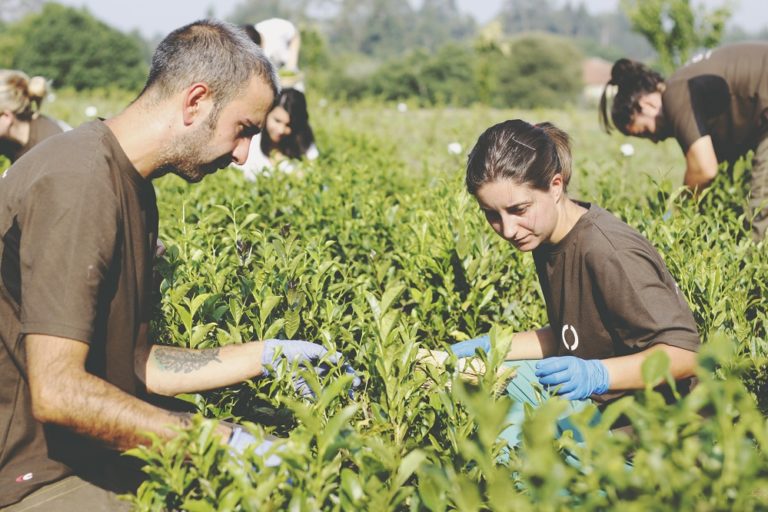
The old dream of carrying out the great potential of the Galician countryside can be reflected in modern companies and with extra added value products, which have already been proven to work fine. One of them is Orballo, a project born in 2012 and that from the Coruña region of As Mariñas that produces aromatic species, infusions and eco-harvests that are gradually sweeping markets by storm. The commitment to quality and organic production are two of the keys to the operation of the company.

Produtos de Orballo.

Oscar Torres, responsible for Communication and Marketing at Orballo, explains that initially he decided to produce aromatic plants such as oregano, basil and parsley but they soon realized that they should go on a new direction and try new products to accomplish a sustainable business model . In this way, they began to produce eco-harvests (packed for rapid preparation) and two years ago they got involved in the infusions market.

The last big bid is the own production of tea, which started with one acre and this year will reach 20 acres. The planting project was developed with the collaboration of the Fitopatolóxica do Areeiro Station and the Uvigo. “Our idea was to launch our own production of tea, a pioneering project in Galicia and which we launched after an investigation of almost three years. We have very good expectations and we hope that this year all the production can be sold as it happened last year, “says Torres.

The company already has 14 employees and production is focused on the region of As Mariñas-Reserva de O Mandeo. The processed warehouse is located in Oleiros and the commercial department is in Madrid. Orballo products can be found in stores throughout Spain and also in a hundred distribution points in Mexico. This year they can reach a turnover of half a million euros.

The philosophy of the company is committed to a local production and the sale of an ecological produce from the base and that is also reflected in recyclable packaging.

Merasys, technology for upcoming 4.0 industry

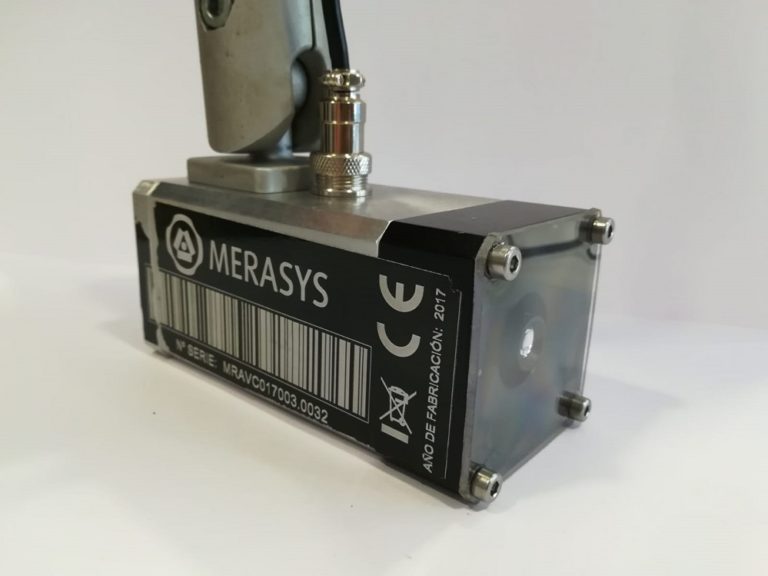
Sometimes the best ideas are not based on a great technological innovation but rather just being able to make an expensive industrial system turn into a much cheaper one.  So, most of resources can be directed at other things. This is the case of Merasys, a spin-off that was bred within the Itera group and that is being developed with the support of the Business Factory Auto (BFA) initiative, which, promoted by the Xunta through Gain, is committed to supporting innovative initiatives in the car industry.

Carlos Parrilla, founder and head of R & D of Merasys, explains that the project arose when PSA Peugeot posed to the Itera group (involved in the car industry) the need to develop a new technology for artificial vision devices to be used in the automobile industry. The main target was to build low cost devices, robust, reliable and adaptable to various production lines.

Carlos Parrilla, director de I+D de Merasys

The people involved in the project come from the CIMA research group, belonging to the School of Industrial Engineers of UVigo. The idea was presented to the BFA program and was accepted in order to develop this new technology. In addition, they gained support from the Center for Industrial Technological Development (CDTI) to launch an R & D project. The hardware and software for the implementation of the devices is currently being developed and the objective is that they can become operational towards the end of 2019.

Merasys employs between six and eight people and it is expected that once the new artificial vision device has been developed, it can be used both in the PSA facilities in Vigo and in other automobile factories elsewhere. Likewise, the devices can be adapted to operate in other types of industrial factories.

Besides this device, which can be considered the flagship product of those developed by Merasys, the company also has been working with other types of control devices, such as those used in cataphoresis processes (immersion painting method applied in various industries) or “Slaves”, which are used to monitor the containers where prawns are bred. Parameters are controlled such as temperature, pH, salinity or water turbidity [how merky water can be].

Efimob, ready for the arrival of a new mobility

Everything points to the fact that the growth of the electric vehicle sector will be unstoppable in the coming years and the companies that have already managed to position themselves quickly in this area will have an important comparative advantage. This is the case of Efimob, a company located in Porto do Molle (Nigrán) that has consolidated under the BFA program, the initiative promoted by the Xunta (together with CEAGA, PSA Peugeot, Zona Franca de Vigo and Vigo Activo) for the development of companies related to the automotive industry.

Pedro Rodríguez (dcha), director de Efimob

Efimob was created in 2104 with the aim of solving the mobility needs of electric vehicles. Four years later the company is already working with clients from Spain and Portugal. Its flagship product is its own software for the management of the energy consumed by a set of electric vehicle chargers, but it has also taken on  the distribution of the chargers themselves and to consulting work for companies that have projects to develop in the sector. This year they expect to reach a turnover of close to two million euros.

Jacobo Eraso, Director of Operations of Efimob, points out that one of the strong points that the company has is that it has already positioned itself in a market that presents many possibilities but in which ignorance abounds.

Eraso points out that the electric vehicle market aims for exponential growth in the coming years. The Efimob Charge software allows the control of the access to the recharging hotspots, the monitoring and detection of faults, managing the payment system of the recharges and the creation of projects.

In this way, the company provides its clients with the follow-up of the entire process of implementation of the recharging networks, from the initial diagnosis to the signaling of the places, through the administrative processing and the installation of the recharging devices themselves.

Another product developed by the company is Efimob Fleet, which allows the tracking of an unlimited fleet of vehicles in real time.

AFFINImeter: Galician Technology Aims at Avant-Garde Pharmaceuticals

Looking for the drugs of the future, at the end of 2013, in the Applied Physics research group of the University of Santiago de Compostela, the AFFINImeter project was successfully launched. “In this group we had been developing thermodynamic models and mathematical algorithms for the analysis of complex interactions between biomolecules for many years,” explains Juan Sabín, co-founder of the company and Ph.D. in Physics from the USC.


These studies opened a very interesting window in the field of discoveries of new drugs and in systems of encapsulation of biomolecules. “We saw an opportunity in the market to create software where researchers could define thermodynamic models themselves and perform advanced analysis of their complex interactions,” says Sabín.

It is, therefore, a project in which the different branches of science work together to discover these medication and drugs of the future. “In the early stages of new drug research, tens of thousands of small molecules are screened in search of one that interacts with a target protein that plays a crucial role in the development of a disease,” explains the co-founder of AFFINImeter. They are expensive and undergo long processes that last, on average, a decade and cost hundreds of millions of euros.

In its client portfolio there are reference names in worldwide pharmaceutical research

To find the ‘perfect’ combination, therefore, there is a need for all kinds of techniques and experiments, and very powerful computer systems. “The screening is done through experimental measurements using biophysical techniques such as calorimetry, nuclear magnetic resonance, fluorescence, etc.”, says Juan Sabín.

The credit taken by AFFINImeter in less than five years is measured by its client portfolio, in which there are reference names in worldwide pharmaceutical research, such as Lilly, Roche or Novartis, and scientific institutions such as the Broad Institute of MIT and Harvard. And some studies carried out thanks to the software of this Galician company have been published in the peer-to-peer-review journal Nature. “Winning customers’ trust is an arduous and long-term task, but we have already begun to see the fruits, and we trust that this will help to spread our breaking software in the scientific community,” says Sabín.

From a Cell Phone to a PC Safely

The development of the power of cell phones has made them our main communication tool. However, for many tasks they continue being less comfy than other devices. That is why the research team of the Information Technology Group of the Telecommunications EE at the University of Vigo has been developing the Ancora technology, with which they intend to take advantage of all that power but transferring its interface to more comfortable handling devices, such as a desktop computer.

Felipe Gil-Castiñeira, project director, teacher and researcher of the Department of Telematics Engineering at UVigo, explains that the technology, called Ancora I / O, “is a tool that allows interaction with complex data that are embedded in a cell phone», but using a larger screen and keyboard.

In addition to the power, mobile terminals allow privacy and a greater confidentiality than other devices, and that makes communications more safely. Felipe provide an example of possible use a management application stock market, that “we continue to execute from our cell phones or handheld devices, but only by moving the interface to a computer we will have more agility to work without compromising our privacy».

AtlantTIC is the research center in Telecommunications Technologies at the UVigo

There are similar technologies, such as Chrome Cast, from Google, or Mirror Link, from Nokia -a company located in Silicon Valley where Felipe was working – but they are not same. On the one hand, Chrome Cast does launch images, not applications. And Mirror Link is used to connect our mobile or handheld devices with a vehicle.

«The development of the prototype for Android is almost ready; Now we have to polish it a bit», says Felipe, who has set up an approximate deadline of 18 to 20 months to launch this high end product.

The team is part of ATlantic, the research center in Telecommunications Technologies at the UVigo, and has gotten financial support this year of 469,700 € from the Ignitia program, at the Galician Innovation Institute, Gain.