Time Travel and Sensory Experiences Through Virtual Reality

Creativity, art and technological innovation are the foundational parameters of Maxina’s philosophy, an audiovisual study group in A Coruña, Spain. Despite their short existence, they have already had the opportunity to show their talent in places like the Guggenheim Museum in Bilbao. Although it is not the only discipline which they swim around, virtual reality has become their banner. Maxina’s study group was born out of the artistic input and professional collaboration of two siblings, Noela and Carlos Seijo.

The business project was born about five years ago, however the Seijos had already been working together since they were very young by making short films. Noela is an architect and Carlos studied Fine Arts. Likewise, both of them have been very interested in ventures that have to do with art and creativity. Three years ago they became interested in the possibilities of virtual reality, a world that fascinated them from the very beginning.

Among the virtual reality projects that have been developed so far is the recreation of the art studio of the British painter Francis Bacon, which could be seen at the paramount exhibition, which the Guggenheim of Bilbao dedicated to the Irish born artist at the end of 2016. Seijo explains that this work allowed Maxina to develop some of the most important qualities of virtual reality, which can allow time travel and have direct sensory experiences such as touching the objects of the artist that currently can not be seen because Bacon’s real studio is protected by glass and is not accessible.

Projects related to art and heritage are preferred by Maxina’s developers, although they have also done more business-oriented work. “The problem presented by virtual reality to extend to a large market is that to access the experience would need a wide range of devices to share the experience with many people. In any case, slowly, things are changing and companies like Facebook or Google are starting to take a liking for virtual reality, which can open new unexplored pathways, “explains Carlos Seijo.

Maxina has been working in and out of Galicia and now they have just opened new headquarters in Santiago. “We have permanent contact with Galician companies and we hope to continue working with them in this field in the future,” says Seijo.
Virtual reality that helps overcome phobias

Sometimes, fear, stress or panic leaves people helpless and passive. It can be the fear of getting on a plane, being on the top of a building, large crowds, certain bugs… Science has identified a plethora of phobias, which make the daily life of millions of people a living hell.

In this, psychiatry and medicine have a lot to say. And now, a Galician company has discovered an alternative way to beat these phobias. PsicoVR has come up with an idea that helps knock down that phobia wall, which is virtual reality.

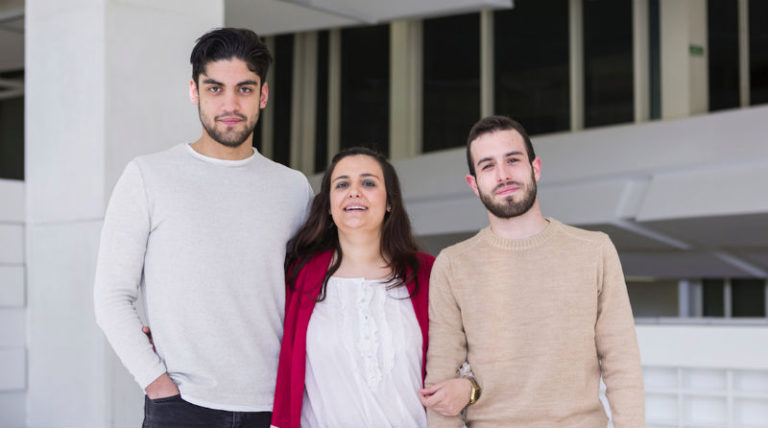
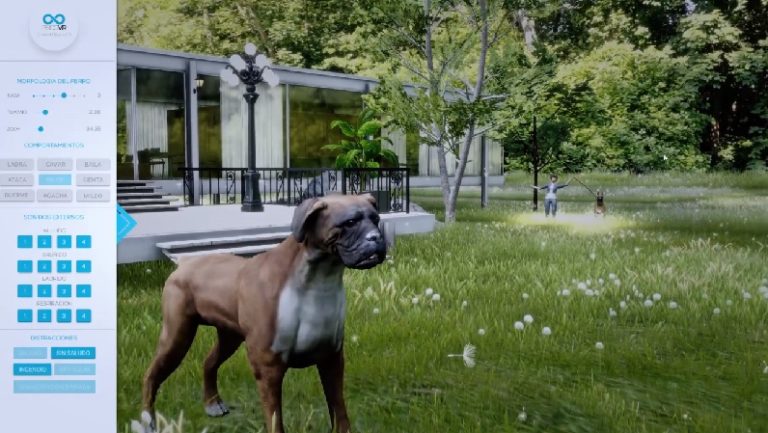
PsicoVR is the brainchild of ​​three young people from the small bucolic town of Pontevedra –Lucía Maneiro, Sonia Tourón and Rafael Tourón-. The novel idea comes one of his children was paralyzed with fear “every time a dog approached him”, Lucia explains, and through a virtual reality game, they researched about how the child behaved when faced with these experiences and phobias. “We saw that since the 90s research has been done on the application of virtual reality in psychology“.

They concluded, therefore, that it was possible to live through experiences similar to phobias, but without the dangers of exposing oneself directly to them in the real environment, exposure is very controlled.” Lucía Maneiro adds that “unlike the usual therapies, in which it is proposed to reconstruct the situation that causes fear, in virtual reality we are in on it”. And, on the other hand, “the fear of facing what frightens us the most is what often postpones the decision to start treatment”.

The reception by doctors and mental health professionals in the sector is being “a positive one”

And also, “in case the situation becomes intolerable, you can quit at anytime”. The reception by doctors and mental health professionals in the sector is being “a positive one”. They have already participated in clinical psychology conferences and trials, and they are starting to get into the business phase, with clients in Pontevedra, A Coruña and Barcelona. And in just over a year of work, PsicoVR was also part of the Via Galicia accelerator, in addition to Vodafone Connecting for Good and Ría de Pontevedra; and they received two prizes: the second prize of innovation of AJE Pontevedra in 2017 and the second prize of the professional category of Maker Faire Galicia, also in 2017.

In addition to Glossophobia, the software developed by PsicoVR, the company offers scenarios for two other phobias (agoraphobia, or fear of open spaces, and fear of dogs) and are moving forward in two other scenarios: claustrophobia, or fear of confined spaces ; and acrophobia, or fear of heights. They also hope to start soon with cynophobia, or the development of scenarios for fear of flying (aerophobia) and driving (amaxophobia).

Atomic Precision To Lift Gaudi´s Sagrada Familia Towers

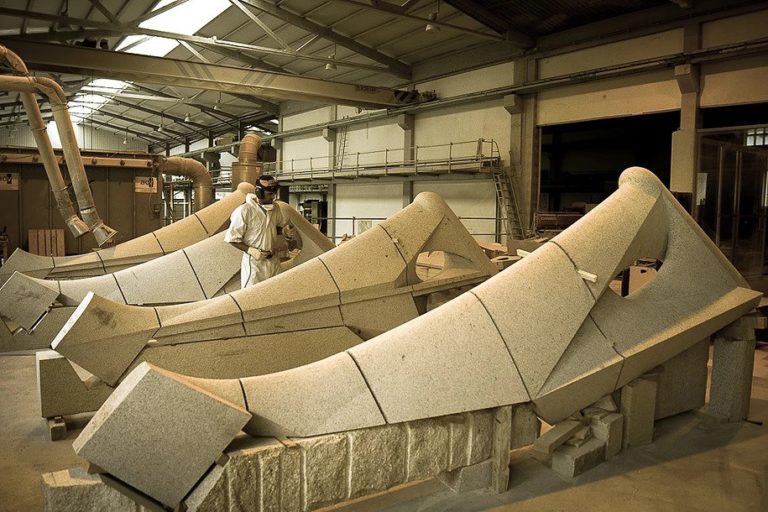
One of the most outstanding architectural feats in the 20th and 21st centuries requires zero error so that the pieces can fit perfectly. This is what has happened in the case of large stone blocks being used at Gaudi’s Sagrada Familia in Barcelona. The Lugo company –PCM Granitos Moldurados-, which has been working at the Catalan Basilica site for over fifteen years.

One must achieve total perfection in the part of the blocks that link with other pieces of masonry. It is a millimetric work that has to be done manually. The error margin increases up to a maximum of 2 millimeters, but can not go further. “The stonemasons are those in charge of adding the finishing touch to achieve zero error, because with
the machines would be much harder to reach because they would have much greater wear and that’s why the final part of the work is done this way, “explains Octavio Vázquez, developing director of PCM, which began working in this family business in
2003, although I would work at the Sagrada Familia site much earlier together with the great sculptor Manuel Mallo.

PCM was born in 1992 from the vocation to implement new technologies in the treatment of natural stone. In the early days they worked a lot in the private construction sector but the crash that came in 2008 also seriously affected their finances company. Fortunately, their skills to produce unique stone pieces allowed them to continue working for clients like the Sagrada Familia in Barcelona.

The stones that are retouched by PCM are afterwards used what is known as the towers of the Evangelists and also at the basilica dedicated to the Virgin Mary. If everything looks good work will be completed in the year 2026. Each of the pieces produced in the installation of PCM at the industrial estate of the Ceao in Lugo have to be certified and then they make their way to Barcelona by means of trucks. Trailers of 24 tons drive all the way to the Catalonian capital around ten times a month. The stone pieces, which are cut and processed for Barcelona, are from Galician quarries but also others come from Catalonia, England and France, too.

The meticulous work is carried out at PCM itself and was brought up to the attention of National Geographic, which dedicated to the company from Lugo several minutes of a report they made about Gaudi´s Sagrada Familia.

Electronic Tongues To Analyze Food

A physicist from Monforte de Lemos specializing in electronics, Andrea Hernández, learned during a research project in Brazil how electronic tongues work: simulations of a real tongue capable of detecting different flavor patterns (sweet, salty, sour, bitter or unami) through the interpretation of signals that turn up in every food or drink, such as wines, without having to taste them one by one. This shows potential allergens, contaminants or pathogens that could put consumers and the food industry at risk.

Back in Galicia, a few years ago, as she herself recalls, “having some tapas, I realized that half of my friends had some type of allergy to different foods”. She reflected on the problem, and from then on, the idea of looking for a possible solution came up really swiftly.

During the celebration of Spinway, an international entrepreneurship program organized within the framework of the Camino de Santiago, Andrea met Javier Casal, an economist with experience in managing technological projects. They understood each other well, and they started the idea of sense (z). Later she joined the Alejandro Acosta project, also run by economists. Andrea was in charge of the quality, innovation and management area, Javier of the business and production plan and Alejandro of the financial and the marketing side of things. The Sense (z) project also has an advisory board formed by Antonio Riul, Xaime Barreiro and Xosé Antonio Duro.
“At the beginning, we developed and validated the technology collaborating with various research centers and companies, in order to make way for a top end product,” says Andrea. By completing this phase, which is now, “will be when they start to market equipment and services with our technology of electronic tongues as main core of the business.”

These services, according to Andrea, will enable the device to “analyze the composition of the food, which it comes in contact with. This taste sensing system provides a great versatility of application, being able to be used both in raw and processed foods, but also for the detection of polluting agents on the tasted surface “.

A ‘wearable’ anti-allergenic

However, according to Andrea Hernández, sense (z) does not forget about people who, like herself and her friends, have problems when eating foods that can cause an allergic reaction. “They can do the allergy test themselves, through a portable device, in the style of the now so popular and called ‘wearables’.” The user or allergic person will be wearing it themselves.

Since it was launched, sense (z) has participated in the Yuzz-Jóvenes con ideas- program of the USC in Galicia and Banco Santander, where they received the 2nd prize and the Yuzz Female award of the year. Later, they also participated in the Vodafone-Connecting for Good Galicia -accelerator, in which the Axencia Galega de Innovación collaborates, and where they have won also the -Connected for Accessibility- award.

Internet of things to avoid milk and water future losses

The economic losses caused by leaks, electrical breakdowns and other unexpected obstacles are a day-to-day headache for many businessmen and public administrations. From the farmer who has to flush gallon after gallon of milk down the drain due to refrigeration problems, even the City Councils who see how their neighbors are suddenly left without any water supply due to power cuts or outtages.

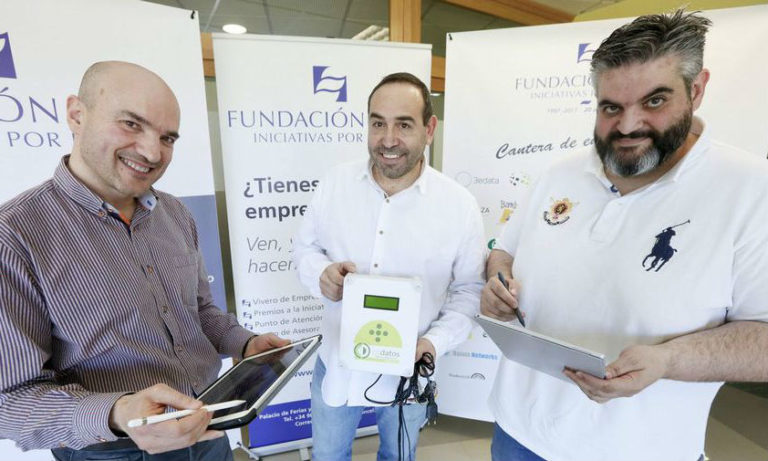
In Galicia there are those who have already solved part of these problems thanks to Data Monitoring, a company that uses what is known as the Internet of Things (IoT), as a management tool, which is a paramount countermeasure.


The germ of Data Monitoring, promoted by Gonzalo Abuín, Germán Feijoo and Germán Corral, started a few years ago. Two of the partners had spent time researching the IoT, testing various microcontrollers, programs and tools. From that several prototypes came along; among them, one that allowed them to control the moist and temperature of a cold room through a Wi-Fi network.

It all started when they helped manage a dairy farm in Lugo. So forth, they developed the Datalact prototype to manage dairy farms. And with the arrival of the director of operations, César González, the germ project expanded its horizons. He would be joined later by Luis Espinoza, senior programmer.

“We had a meeting with one of the town mayor, and we told him what we were achieving within the dairy sector, he loved the idea, and he asked us if we would be able to control water levels in consumption tanks.” And so the second device, Datawater, was born, with which at the same time what was baptized as Data Monitoring was born. At present, the company also offers services to the refrigeration sector.

Today there have almost over 30 clients in Galicia and they are already preparing their expansion 

Today there have almost over 30 clients in Galicia, between the livestock sector and the municipalities. And they are already preparing their expansion so as to market the product in other areas of the Iberian Peninsula.

Since the company took its first baby steps, there have been several initiatives that have made their effort worthwhile. Data Monitoring was one of the 16 chosen in the fifth edition of ViaGalicia, an accelerator driven by the Free Zone of Vigo and Xunta de Galicia in Spain.

Likewise, Data Monitoring has also been an active participant in an Operative Group of the Xunta de Galicia, through the Consellería de Medio Rural.

The light that saves lives on the road

When Jorge checked Road Crash Statistics that the RACE released in 2013,  the high rate of road traffic realted crashes, of which many of them are deadly, caught the attention of Jorge Torre. He realized that most of these crashes occurred when drivers had to get off the vehicle in a situation of risk to place the signaling triangles.

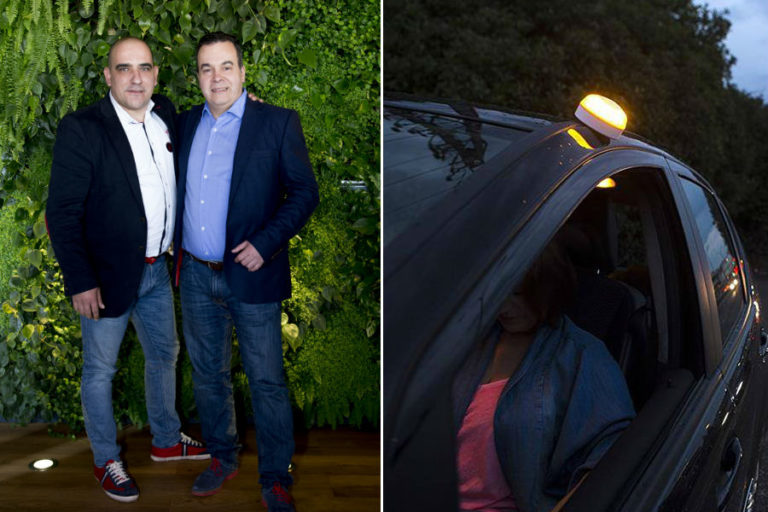
Sometimes, reflective vests, jackets or emergency lights are not enough. What solutions could there be? For two years, Jorge researched and ended up developing a device that went out into the market under the name of help-flash.”It is a luminous signaling device, which warns of an emergency on the road without having to leave your vehicle”, explain its creators. It adapts to all types of media, whether it be two or four wheels, and a simple hand or body gesture is sufficient to set it off: “Just place it on the roof on the outside of the vehicle, in contact with the sheet and, thanks to its magnetic activation, it will be ongoing”.

It is, therefore, a tool that can be of great help to people with reduced mobility. And also, thanks to LED technologies, the beacon has a range of use of more than two and a half hours, so it would stand in cases where weather conditions or difficult access can delay the arrival of emergency services and / or assistance.

Based on this patent Netun Solutions was born, a company that seeks innovation in road safety around the world “through technologies that connect asphalt, people and machines,” explain its promoters.

estradas help flash

Torre, together with Jorge Costas, was one of the founders of Netun. Shortly after Javier Romano, Silvia Souto, David Yustas and Carlos Conde joined, which make up the current structure of the company, which has to add three people for the management of the warehouse and shipments of goods, and three others in administration.

Over 100,000 units

The team developed several prototypes, with which they ended up determining the proper size and how to activate them. Netun has managed to sell more than 100,000 units of help-flash up to date, through platforms such as Amazon and specialized dealers of virtually all brands of vehicles, as well as  top end of the market chains, at Repsol service stations and spare car parts stores, at a price of 29.95 euros. In less than a year, the product has reached France, Germany and the United Kingdom, and Netun is already preparing a leap on to the American and Asian markets.

Acknowledgement did not take long either. In 2016 help-flash was one of the top brilliant ideas that participated in ViaGalicia, the accelerator of companies that drive the Galician Innovation Agency in Spain and the Zona Franca Consortium at Vigo.

Bisqato, a mouthful of countryside flavor in the shape of cheese

A couple of veterinarians is the creator of a new cheese project in the village of Xiros (Guitiriz), which has become a new addition to the plethora of innovative upcoming projects populating the vast and dynamic Galician landscape in recent years. María Veiga and Miguel Garea have fulfilled their dream of starting a project that is based on years of research but at the same time, tries to preserve the traditional values of livestock activity in the area.

Bisqato (the name comes from the Galician word “biscato”) has just started to market its first cheeses, but the project began to come to fruition two and a half years ago with the first tests that María and Miguel carried out at cheese factories of other friends. Then came the trials and relied on the support of prominent chefs who were giving their opinion about the product they were developing.

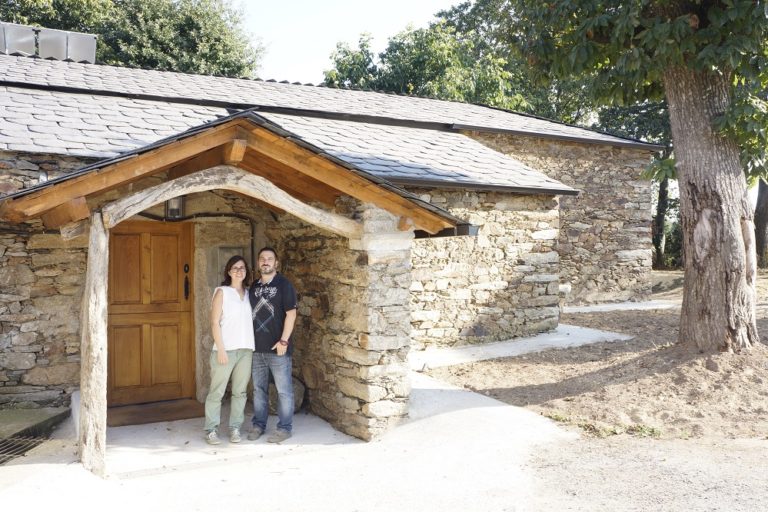
“From the beginning we thought that we wanted to work it out together with the farmers of the Xiros area, who work with the formula of traditional grazing, and in order to locate the cheese factory we decided on a 19th century house located on a lower ground that the exploitation from which we wanted to draw milk. This is tye way we can also guarantee the supply of milk by gravity, without truck transfers “, explains María.

The search for excellence is the starting point of a project that is committed to the production of soft-paste cheeses, something unusual in Spain. For now they have produced two varieties Xiros (of rind mold) and Lia (soft rind).

Bisqato entered the ViaGalicia accelerator and the experience, according to María, has been very positive, since it has allowed the two project partners to access some knowledge about entrepreneurial culture that they did not have before hand. “Participating in ViaGalicia has opened our minds and, in addition, allowed us to meet people who were developing other projects and who were in our same situation,” adds the co-founder of Bisqato.

Emsamble, custom made homes are here

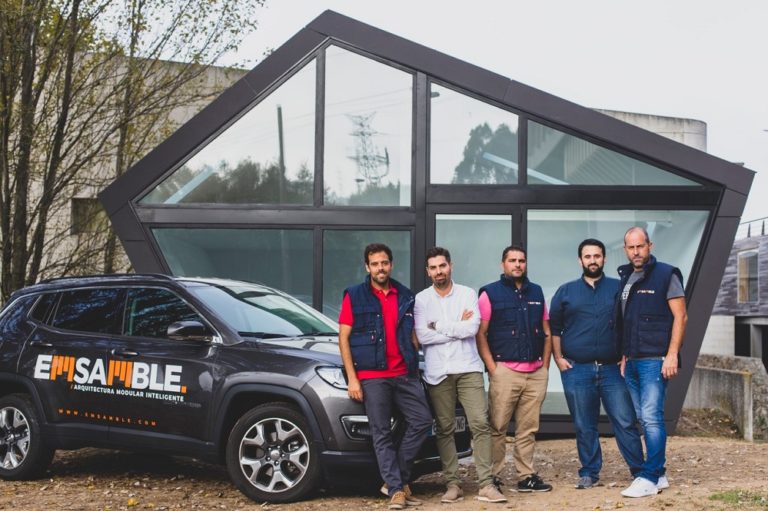
Innovation reaches all corners of activity, even the most traditional ones. Emsamble, a company from A Coruña, began operating a little more than a year ago but its offer of custom made homes for private homes and companies is a good example of the changes have also reached one of the major traditional economic sectors and the future will be very different from what some could even imagine. The possibility that the dream design for a home or office will come true in record time is here thanks to a new type of intelligent modular architecture.

The client is involved in the design of the building from the start

Although the project has become a reality a short time ago, they came up with the idea ten years ago, according to the director and founding partner of Emsamble, Sergio Sampedro, to suit the needs of customers who demanded a new more efficient building construction system.

“We took as an example the automotive industry and began to design a more sustainable building system that allows us to cut down on building deadlines, in addition to being much more flexible for the client”, explains Sampedro, who also highlights that this new system of Industrialized construction also has the benefit of redesigning the buildings´ purpose and uses and even how to relocate them in the future elsewhere.

The client is involved in the design of the building from the start, since the clients´ ideas are paramount. In Emsamble, they have the necessary tools to make a detailed design in 3-D where one can see even the electric outlets of the house or property that will be designed and built.

Emsamble constrúe vivendas en tempo récord.

When the design is finished, a sophisticated software allows all manufacturing data to be sent to the workshop at As Pontes where, using robotics and virtual reality techniques, all the elements that make up the building are manufactured. Once manufactured, they are moved to the place where the structure will be built and a small team can work on site and build the structure or home within a period of two to four working days. Saving time and costs is considerable. The final price may be 25% lower than that of a conventional structure, home or similar.

Emsamble has entered the accelerator of the ViaGalicia program in its latest edition and this has been helping them develop faster and better their business plan.

Bisqato, a mouthful of countryside flavor in the shape of cheese

A couple of veterinarians is the creator of a new cheese project in the village of Xiros (Guitiriz), which has become a new addition to the plethora of innovative upcoming projects populating the vast and dynamic Galician landscape in recent years. María Veiga and Miguel Garea have fulfilled their dream of starting a project that is based on years of research but at the same time, tries to preserve the traditional values of livestock activity in the area.

Bisqato (the name comes from the Galician word “biscato”) has just started to market its first cheeses, but the project began to come to fruition two and a half years ago with the first tests that María and Miguel carried out at cheese factories of other friends. Then came the trials and relied on the support of prominent chefs who were giving their opinion about the product they were developing.

“From the beginning we thought that we wanted to work it out together with the farmers of the Xiros area, who work with the formula of traditional grazing, and in order to locate the cheese factory we decided on a 19th century house located on a lower ground that the exploitation from which we wanted to draw milk. This is tye way we can also guarantee the supply of milk by gravity, without truck transfers “, explains María.

The search for excellence is the starting point of a project that is committed to the production of soft-paste cheeses, something unusual in Spain. For now they have produced two varieties Xiros (of rind mold) and Lia (soft rind).

Bisqato entered the ViaGalicia accelerator and the experience, according to María, has been very positive, since it has allowed the two project partners to access some knowledge about entrepreneurial culture that they did not have before hand. “Participating in ViaGalicia has opened our minds and, in addition, allowed us to meet people who were developing other projects and who were in our same situation,” adds the co-founder of Bisqato.

Merasys, technology for upcoming 4.0 industry

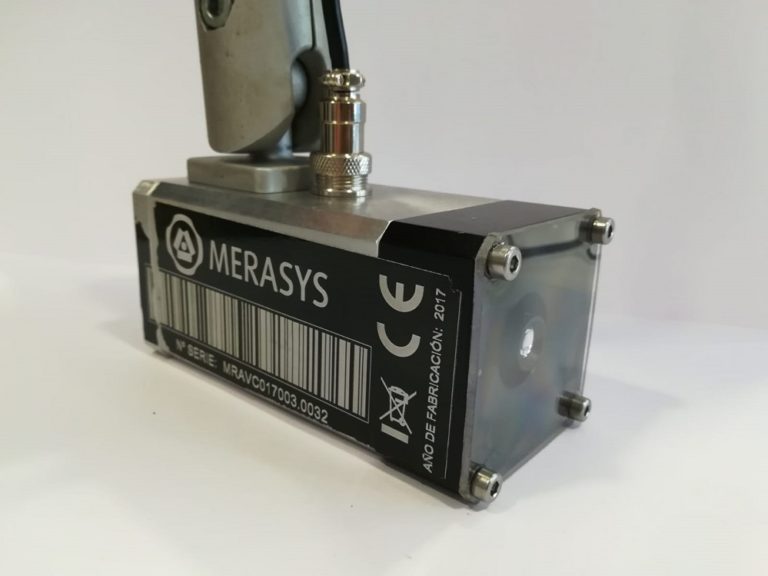
Sometimes the best ideas are not based on a great technological innovation but rather just being able to make an expensive industrial system turn into a much cheaper one.  So, most of resources can be directed at other things. This is the case of Merasys, a spin-off that was bred within the Itera group and that is being developed with the support of the Business Factory Auto (BFA) initiative, which, promoted by the Xunta through Gain, is committed to supporting innovative initiatives in the car industry.

Carlos Parrilla, founder and head of R & D of Merasys, explains that the project arose when PSA Peugeot posed to the Itera group (involved in the car industry) the need to develop a new technology for artificial vision devices to be used in the automobile industry. The main target was to build low cost devices, robust, reliable and adaptable to various production lines.

Carlos Parrilla, director de I+D de Merasys

The people involved in the project come from the CIMA research group, belonging to the School of Industrial Engineers of UVigo. The idea was presented to the BFA program and was accepted in order to develop this new technology. In addition, they gained support from the Center for Industrial Technological Development (CDTI) to launch an R & D project. The hardware and software for the implementation of the devices is currently being developed and the objective is that they can become operational towards the end of 2019.

Merasys employs between six and eight people and it is expected that once the new artificial vision device has been developed, it can be used both in the PSA facilities in Vigo and in other automobile factories elsewhere. Likewise, the devices can be adapted to operate in other types of industrial factories.

Besides this device, which can be considered the flagship product of those developed by Merasys, the company also has been working with other types of control devices, such as those used in cataphoresis processes (immersion painting method applied in various industries) or “Slaves”, which are used to monitor the containers where prawns are bred. Parameters are controlled such as temperature, pH, salinity or water turbidity [how merky water can be].