Pontevedra, An Award Winning City

The urban design of the city of Pontevedra has been acknowledged and awarded by international people of renown in the field and for the city structural work, which has an urban quality to it such as accessibility, road safety, child free areas, national treasures restoration works, enhancement of the habitat and environment, etc. Proof of this are the countless awards scooped by Pontevedra such as,

Stone City Award  (2006): Galician Granite Cutters Association.

Spanish Committee For The Disabled and Physically Challenged Award  (2007)

National Galician Culture Award  (2008): conferred by  Xunta de Galicia.

Road Safety Festival Award (2010).

Cities 2nd Meet-Up for Sustainable Mobility and Road safety Award (2011).

Pontevedra, Friend City of Infants Award (2012): conferred by the foundation of children who support infancy.

Intermodes Award (2013): conferred by Brussels and the Intermodes European Agency.

UN Hábitat Award (2014): conferred in Dubai by the UN.

Center Active Design Excellence Award (2015) : conferred in Nueva York by this institution linked to the Michael Bloomberg  Foundation .

Euro-China City of Intelligent Mobility Award (2015).

“The model of Pontevedra can be exported to the whole of Southern Europe ”

One can tell that Francesco Tonucci (Fano, 1940) is fond of the urban refurbishment of Pontevedra, which has known how to capture Tonucci´s concepts in the city. The author of ´The City of Children´ is restless about praising each and every inch of Pontevedra city reforms, which therein contains all of the recommendations he has given to all cities for several decades.

-How did your model city turn out to be a leading example for the Pontevedra administration ?

-15 years ago, I met the Pontevedra mayor at a conference and he introduced me to the crowd saying that the city was my home. This was because they based the city planning on my ideas. Those who are in charge of the cities, usually,  say that my concepts are interesting, but they must wait at least 2 or 3 years to set things in motion due to traffic and road safety issues. And in the end, these issues never get solved. Pontevedra is a leading example, in which cars and people can get along with each other giving preferential treatment to people.

-Is the challenge now to carry out this project in larger cities?

-My project is based on a model with 4 bullet points : first, give preferential treatment to children over adults; second, give preferential treatment to pedestrians over cars; third, build up the concept of neighborhoods not the concept of a city per se; and fourth, give preferential treatment to leisure areas rather than work areas. Pontevedra is also interesting because it´s neither a large city nor is a neighborhood per se. They have implemented policies about refurbishing the open and public spaces for pedestrians, which had been previously taken over by the private sector. I figure this sort of model here can be exported to other larger cities.

-What´s the role of colleges and schools in spreading this city idea that you are positing?

-Im urging the administration in Pontevedra to become also educators in order to spread this model and concept because they have the right attitude to do it so. I have also spoken with people in charge at the University of Santiago to research about projects like the one in Pontevedra and they must thoroughly research within a wider scope. I believe you must study this model from different academic disciplines and insights such as architecture, economy, social services, etc. It is the very first city in Europe which has taken seriously this project, and I hope that is a leading example to many other cities worldwide. I like a lot what´s been happening in Pontevedra because its something that belongs to us and now you can tell the Italian city mayors, for example, that a model like this is not only posible in the north of Europe but here too.

The ‘Lourenzá beans’, the jewel of pulses of the Galician veggies

0

“It looks like a kidney, with a thin skin, that when you eat it you can´t feel the skin at all, its tender and has a starchy flavor, with a special texture, you can feel it as you touch it”, says Carmen Seijo, the grower of the Lourenzá beans, the queen of the Galician pulses. It´s the only one of the many hundred of species of the green bean (judia) which enjoys the denomination of Protected Geographic Indication, and it really tells much about its high quality. This International Year of the Pulses is a very important year about promoting and taking into consideration such crops and most importantly to be able to eat them.

The variety, which grows at the Mariña lucense is the Phaseolus vulgaris, aka  Faba Galaica. It arrived, as many other Galician produce , from the Americas and soon became a star produce in Galicia. The General Archives of the Kingdom of Galicia had already mentioned it in the XVII century at the  Lourenzá flea market, due to “a fertile and joyful soil”, at that time, the chroniclers coined this place as  “garden of the county”. Its conditions are ideal for the growth of this pulse due to a fertile soil, warm temperatures all throughout the year and moderate rains.

Possibly, the last name Lourenzá is a product associated with the celebrations at this ancient flea market, nevertheless, the denomination of the IGP expands to over fifteen towns at the Mariña (Alfoz, Barreiros, Burela, Foz, Lourenzá, Mondoñedo, A Pontenova, Ribadeo, Trabada, O Valadouro, O Vicedo, Viveiro y Xove etc). This denomination was conferred in 2008, but the growers had been already making a case for ages about the much worthy bean, specially since they held the first celebration of this bean at The Bean Fest, in 1990.

“A city which invests in pedestrians is a healthier city”

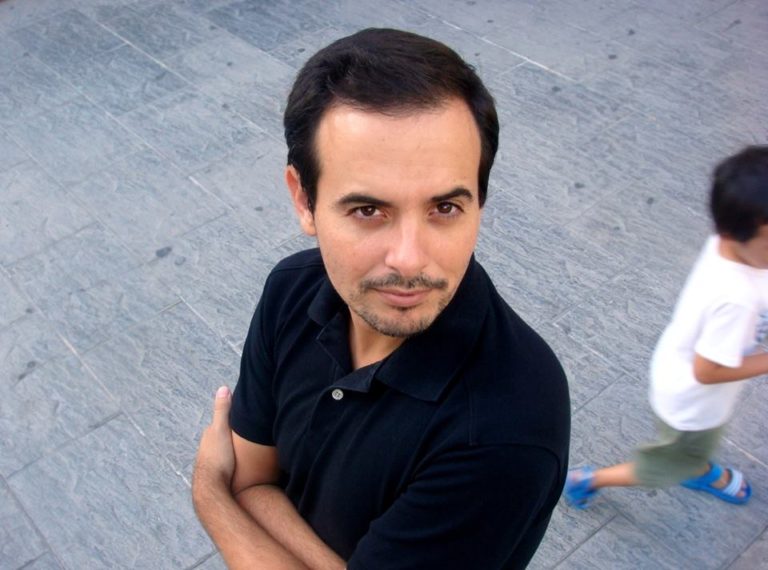
The network of CITIES THAT WALK was born 5 years ago to bring together all the municipalities and administrations which have invested in developing a better system for pedestrians in cities. Nowadays, Over 20 city halls are part of this little network in Spain and Portugal. The city of Pontevedra is in charge of the networks presidency. Pablo Barco (Seville, 1979), is its technical coordinator. This activist, with a degree in History and technical research in sustainable mobility, has worked for ages to stand up for the rights of pedestrians in city urban centers.

-Whats the project behind CITIES THAT WALK?

-Our strategy is based on 3 focal points: to improve road safety, to foster universal accessibility and to raise awareness about the environment. CITIES THAT WALK was born to the union of the public administrations and citizens movements, which supported the idea of sustainable mobility in order to work towards a common goal within this scope.

-Whats the present trend? ¿Are people willing to support sustainable mobility or are they still resilient?

Its obvious that people show some resilience. You can tell when they want to pass a bill, like  30km/h speed limit in some city areas. We have made such proposals in certain municipalities, but few are willing to go for it. And besides cars are not affected by this sort of speed limit in the city. However, city halls around Spain are resilient.

Regarding road safety, road accidents and deaths go down

-Can all cities be just cities to walk about?

-Yes! Sure! They can. However, the issue here is that when you talk about making roads into pedestrian areas, theres some misconceptions and ignorance about it. People believe pedestrian areas must be pedestrian zones only. But there are some nuances to this, you can take action in a way that pedestrians can take advantage of this situation: make roads narrower, have bumps on pedestrian crossings, etc. Alternatively, we have to carry out this process way so different either if they are big cities or if they are small cities. In big cities, for instance, we must consider the public transport to avoid long distances without using a private vehicle.

-How much better is a city built for pedestrians?

-A city that invests in a pedestrian is a healthier city, as much mentally as physically speaking. Children are respected, they have more freedom of movement, and can surely enjoy from public open areas, as well as elderly and disabled or physically challenged people.  Regarding road safety, road accidents and deaths go down. And there are other reasons as Jane Jacobs would say, the mother of sustainable urbanism is that mobility enhances communication among the inhabitants of the city and,thus, develops a better collective intelligence.


A Company From Coruña Develops a Pioneering System in Ecotoxicology

0

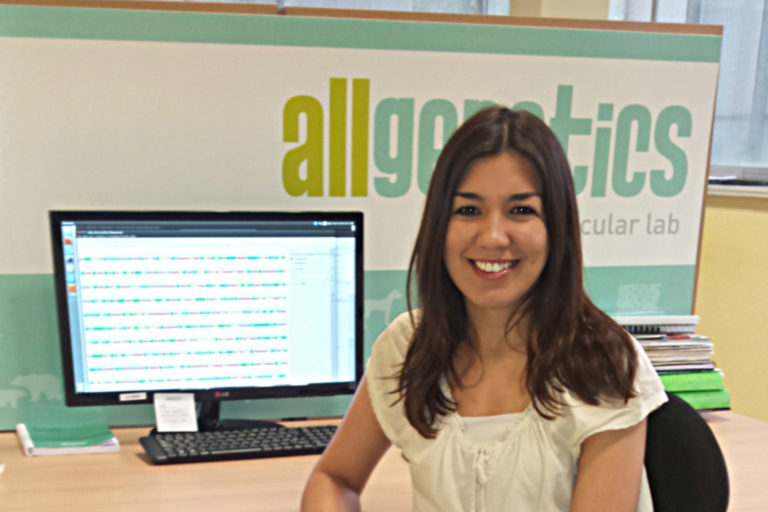
The Coruña biotech AllGenetics has just launched a pioneering service in Ecotoxicology which allows to verify with high reliability which test species are employed by testing labs to assess the environmental impact of potentially dangerously toxic chemical agents. The novelty of the system that AllGenetics offers is about telling the difference between species, which are morphologically hard to classify, explains Dr. Verónica Rojo, project manager of AllGenetics Analytics corporate division: “Ecotoxicology labs carry out trials to determine the effects caused by chemical agents on specific test species, namely seaweeds, fish, daphnias, earthworms orpot worms. To make the tests valid worldwide, international organizations like ISO or OECD set up the standards, which specify the testing protocols to follow up in all labs. Its paramount that all labs use the same test species to carry out specific Ecotoxicology tests”.

The idea of offering a test species verification service for Ecotoxicology companies was developed in 2013 when AllGenetics took part in the coordination of the project ‘EiseniaBarcoding Initiative‘. This ‘DNA barcoding’ project was implemented to identify species ofearthworms from the genus Eisenia employed in Ecotoxicology labs worldwide. The results of this project, which were published in the journal Applied Soil Ecology, prove that not all labs employ the same species of Eisenia to carry out the same tests and that the name Eisenia fetida can actually turn out to be 2 different species. In the wake of this project, test speciesverification is being discussed by the ISO due to a joint initiative of AllGenetics and the German company ECT Oekotoxikologie.

AllGenetics, based on the campus of Elviña at the Universidade da Coruña (University of Coruna in Galicia, Spain), is really the only one company specialized in the verification of test species used in Ecotoxicology.

The Tear Pea, Caviar From the Earths Womb

3

The history of tear shaped peas is about a three way collaboration amongst researchers, farmers and cooks. It is all proof that when you gamble on something like innovation and you direct agriculture towards an integral production goal it will bear fruit. A few years ago, the tear shaped was not really known even in Galicia. This variety was only harvested in the Basque Country where it was one of peoples favorite produce, which top chefs such as Arzak, Berasategui o Subijana used it in their kitchens. Very few people knew that the biological origin of this produce is native to Galicia.

The Misión Biolóxica of Galicia (Galician Biological Team), based in Salcedo (Pontevedra), preserved seeds of this kind, which had been collected previously from several places in Galicia. One of the researchers, Antonio de Ron, is one of the top experts in pulses in Europe and has expertise in the study and betterment of pulses´ different species. Due to the recent succes of peas elsewhere in Spain, the farmer Santiago Pérez and top chef Javier Olleros went to the headquarters of The Misión Biolóxica of Galicia to recoup this kind of crop. From this joint venture, a research project was born to take advantage of the top culinary properties of this ‘green caviar’ as its known in Spain. After a hard and long genetic research of this crop, the Galician tear shaped pea was ready to take the last leap onto the tables of the best Galician restaurateurs.

What does it taste like? Whoever tasted it so far has pointed out that the tear shaped pea is something like an explosion of sweetness and freshness at the same time in your mouth. Its usually served almost raw and must be boiled just a little, and when you chew it, it will release all its flavor.

An awesome experience!

Imatia: Innovation and diversification as the base of corporate culture

Imatia´s success on the trade is based on winning several awards such as the Galician Spin-off company within the ‘Seal of Approval’ category. This is a great example that a company born and bred at a college can stand the test of time without forgetting its roots and identity such as innovation and diversification. This company has specialized since the very beginning in fast software targeted to administrations and corporations but has not turned away from exploring other business pathways of development.Thats one of the reasons why they are still in the innovation area; a culture, which always has always been the ethos of Imatia.

Imatia1

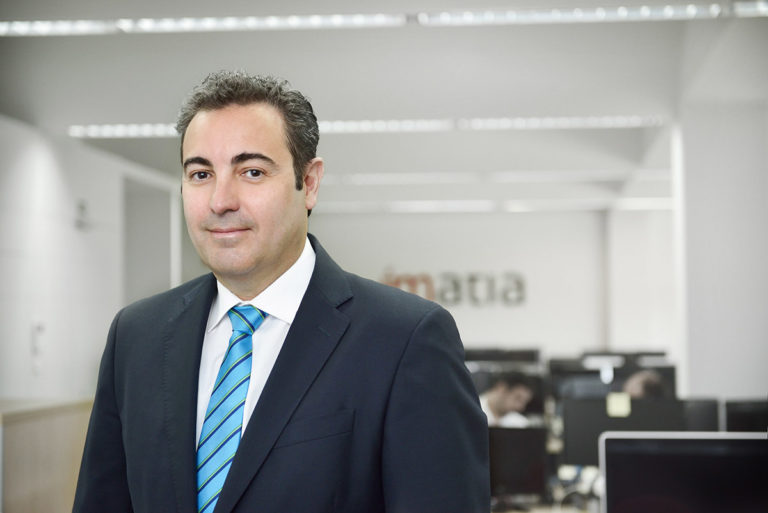
Fernando Vázquez, CEO of Imatia, explains the seed of their company has always been linked to the college research group DASA-created in 1995, in Vigo. 10 years later Imatia was born, right at the same period of time, which the new Spin-Off-Company-Incorporation law came into effect . “Right about  1995 we had thought of some ideas and projects, which were quite ahead of their time, eventually, scanning the trade worldwide, we realized that in order to succed really one must start from their locality and create employment and wealth around there, then from there on, you must keep expanding. Our main focus has been to create technology in Galicia and then sell it overseas”, says Vázquez.

Nowadays, Imatia has a client portfolio that includes the 5 continents and they employ over 100 people. Vázquez feels that his company had great support and a financial injection at the beginning when many administrations and companies started buying their products opposite to what the international corporations were offering to them at that time. “I believe that college professors, like myself, are privileged to do what we like to do and we have to give back to society what society has given to us initially. There are about 6,000 college professors in Galicia and its very important they can make a contribution to the job market locally”, he points out.

This year is the first time, we have managed to open a branch of our company in Brasil and theres even a vested interest in expanding further, especially in Latin America due to unparalleled opportunities there. Lately, Imatia has developed a brand new project in Africa, in Morocco to be more precise, and they have marketed a computer-vision-device for trains. Amongst the portfolio of clients we can find large corporations such as Inditex or PSA Peugeot Citroen, even the US Air Force, The Regional Galician government Xunta or Adif.

Galicia wants to fly high with drones

0

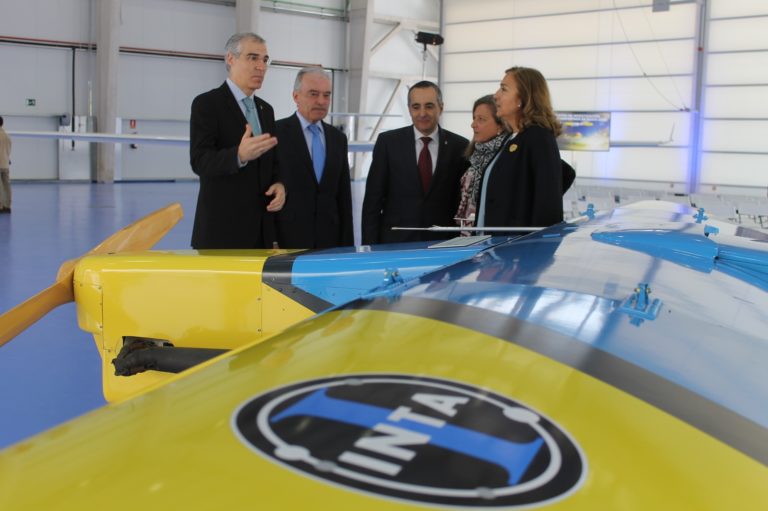
The Xunta (The Galician Government) wants the Parque Tecnológico at Rozas (Technology Park at Rozas, in Lugo) to turn Galicia into an international landmark of drones. In February, the Galician government has agreed terms with Spanish Indra and Inaer-the latter, a British branch of the Babcock group. They will be in charge of working on this project and more than 115 million euros will be injected into it until 2025, of which some come from private and public funding. This will be the first one that involves serious funding in the technological and industrial sector in Spain. This very same month of May, both companies and Government will seal the deal on paper. So, the project will take off at that time at the Rozas Park.

“This is a strategic project, most likely, it has been the most important deal to be sealed in decades in Lugo. Needless to say, this has been the most important, Xuntawise, in our province so far”, said in February the Xunta president, Alberto Núñez Feijoo who disclosed the name of the companies involved in managing this park.

Likewise, Manuel Varela Rey, the manager of the Agencia Galega of Innovacion (GAIN)-part of the Galician Department of de Economy, Employment and Industry- told GCiencia. : “This is a medium term investment so that Galicia can get ahead of the game in a sector like this, which has a great potential in the near future”, he explains. Varela points out that the Rozas airdrome will be the cornerstone of this project  “since its a very suitable area, very little air traffic and theres very little population, and close to the ocean. Theres also a free obstacle zone, which allows to test fly the drones with no hardship. In Europe there are now only 3 or 4 airdromes, which are close to the North Pole where weather conditions are hard”. Moreover, at Rozas the so called- Instituto Nacional de Técnica Aeroespacial (INTA)- has been operating here also for a while, and they have a test area with drones. So , we can say they have a lot of expertise in this field

The secret of the Rías Baixas flower

The camellia is flower native to the Rías Baixas. This Asian plant came to Europe over 4 centuries ago.  Nowadays, at the Estación Fitopatológica in Areeiro, a branch belonging to the CSIC and the Diputación de Pontevedra, have been analyzing its DNA, as well as identifying its different species. They have researched about their health benefits and even they have been able to use it to produce teas and the latest and the brand new camellia oil…

Antonio de Ron: “We have no industry here to deal with the demand of Galician seeds”

0

Planting pulses seeds adds hydrogen to our soil, it´s cost productive, and it does not pollute the environment. This is the predicament that UN for Food and Agriculture-aka FAO– chose 2016 as the Year of the Vegetable protein. “the priorities, this year, is to increase its consumption in some countries and to better their genetic properties”, says the researcher of the CSIC Antonio de Ron, who from the Misión Biológica of Galicia, is responsible for the preservation and betterment of corn, vine, green beans, peas and brassica genetics. They range from grain legume crops such as the traditiønal Galician collard greens to the green and red cabbage .

Antonio de Ron.
Antonio de Ron.

This cluster of legumes together with the soil bacteria called rhizobia fix nitrogen (diazotrophs) and enrich the soil after becoming established inside root nodules of legumes (Fabaceae). “this allows later on to plant other things like cereals” without killing the soil nutrients. This is an awesome symbiosis and is really opening new pathways of research. The main research, however, is based on genetic improvements with a clear target in mind: the increase of production. Something, says De Ron, “relatively affordable”. “We adapt legumes to new weather and soil conditions or to enhance resistance to plagues.”

All in all, “To make them resistant in the long run so as to avoid pesticides, which pollute underground water and soil ” and to implement better produce qualities like a thinner skin and a better texture. “Now we have been working on adding some new more elements and nutrients, which can improve peoples health like antioxidants, which may prevent heart ailments”, says the CSIC researcher who has just published a Grain Legumes digest with the aid of the American Springer publishers. His book is devoted to the basic 8 grain legumes and include eight chapters devoted to the breeding of specific grain legume crops and five general chapters dealing with new approaches to the genetic improvement of these species, including the relationships with their symbiotic rhizobia.