Egatel, innovation as a way of life

There are times that investing in innovative ideas is not the same old formula but becomes a happy reality. This is the case for the company from Orense Egatel, a company which is part of COMSA coorporation, and since its inception in 1992 the company has been focussedon the development of products based off innovative ideas so that they can compete within the international markets. it is not by chance that the last report Ardán points at Egatel getting the top grades among the top Galician innovative firms and companies overall in the Golden Galician category.

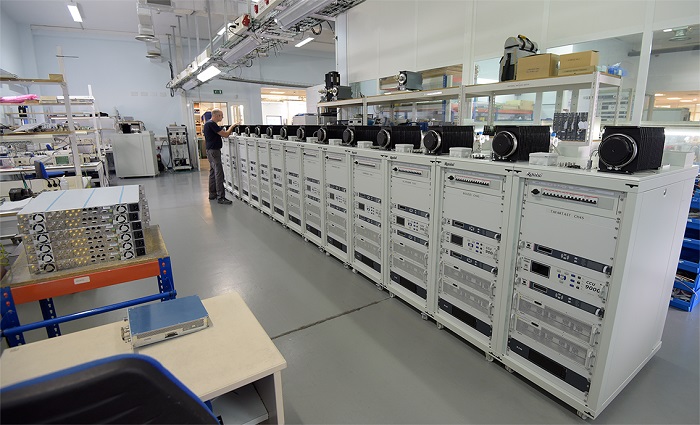
Microtransmisor de Egatel.

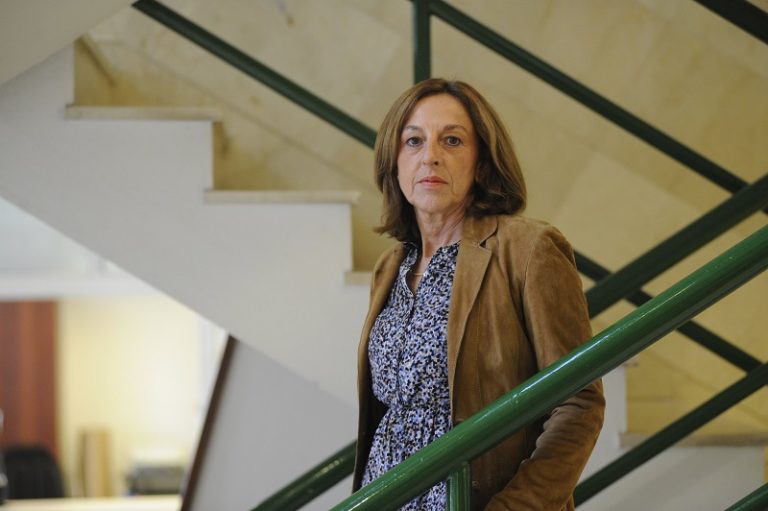
The project managing director of the I+D of Egatel, Manuel Pozo, explains that innovative vocation at Egatel is paramount for the company´s success and development across its production line. All equipment being sold at Egatel is designed by Egatel and its I+D labs alone.

The company from Ourense produces and sells Radio and TV relays and transmitters, which can be found across 30 different countries worldwide. This is real proof that innovative ideas get to open new pathways and markets for international companies and firms.  “Without I+D we would not be able to survive in this sector, its part of our DNA and its our company´s ethos ” says Pozo.

35% out of the Egatels 62 employees are part of the I+D  but, as Pozo points out, innovation is all around in our company and the whole staff is always involved in the development of new products.

16% of our revenue end up in our reserach and development department, which works closely with the Galician  AIMEN, CTAG, Gradiant and the 3 colleges. Our Egatel star products are basically Radio and TV relays and  transmitters; before they used to be analogue but now are digital.  However, now theres a wide range of TV standards in every corner of the world. So they customize this type of technology for each and specific country. Egatel whose headquarters are at the Parque Tecnológico of Galicia, has also branches in Madrid, Finland, Argentina, Chile and México. These branches also offer support to bordering countries.

Via Galicia accelerates business ideas

0

The fourth edition of the accelerator Vía Galicia will mobilize up to 2,375,000 euros in funding between participatory loans and repayable contributions. The program will focus in 2016 on Industry 4.0 and strategic sectors such as aeronautics. The Regional Minister of Industry, Francisco Conde, reported by the delegate of the State in the Consortium of the Zona Franca, Teresa Pedrosa, the reconvening of this program to support entrepreneurship, in which both administrations collaborating for two years “adding efforts and providing synergies”. Conde said that renews call projects growth of respect to 2015, as driven initiatives will be 19 instead of 15.

“We want our entrepreneurial ecosystem responds to the industrial challenges of Galicia“, Conde said. In this regard, the alignment of the call with the industrial policy of the regional government will be implemented in a special role in the aeronautical and aerospace among the projects to be supported, in line with the Aerospace Technology Centre Porto do Molle. He also noted that the accelerator will support initiatives linked to the Industry 4.0.

Plastic Sea

Around 8 million metric tonnes go into our oceans each year. The tiniest ones are called microplastics, and are assimilated by the micro organisms at sea. And do we not know what the outcome of this ongoing plastic dumping will be or how harmful it can be for humans . A team, from the University of Vigo, leads the European project ”Ephemare”, together with scientists and research institutions from 10 different countries, long to answer this question.

Pulses, a superfood which isn´t eaten very often

Pulses are notorious for making people fat should they eat them without control. However, this is just bad press and its totally unjustified. Its totally opposite since pulses and vegetables should be included in everyones diet. They have high content of iron, low rates of glycemics and control cholesterol levels quite well among other side benefits.  But you must eat them wisely so you can get the best of their qualities, according to Julia de la Montaña, professor of the Nutrition and Bromatology area at the University of Vigo  (Uvigo).

legumbres 3

The last dietary intake poll by Foods Department in Spain (2014), published by the Administration of Agriculture and Foods ,  points out at the average Spanish intake of pulses and vegetables is 3,1 kilogramos per person a year, theres been a slight slump to 5% compared to the previous year.

Galicia for instance is within the Spanish average whereas other communities such as  Cataluña, Aragón and Cantabria go well over 4 kg of pulses intakes a year, which should be the target to achieve nationwide.

‘Pulses are a great source of protein’, says De la Montaña

Julia de la Montaña explains that one of the main problems we find in Galicia is the pulses intake is related to high caloric dishes and an excessive pulses intake affects people´s health too (overall old elderly people) such as beans and trotters and the famous Spanish fabada. “In Galicia we don´t eat pulses and veggies wisely and the wrong amounts, we mix it with pork meat in dishes, which some people are not allowed to eat in their diets and should heed medical advise”, concludes this expert.

De la Montaña points out at pulses which are notorious foods among women because women think they gain weight when they eat them. But, there is enough evidence and research that indicates otherwise.

Pulses are a great source of protein  (they have between 20% and 40% of protein depending on the sort of pulse or veggie). Though its protein value is less than that of meat, theres a way to eat pulses along with cereals which produce the same effect. “one of the benefits of pulses opposite to meat is that pulses have less fats and overall, pulses have healthy fats because they contain fatty acids”, says De la Montaña. To this benefit , you must add that they avoid cholesterol and don´t have any gluten at all, so they´re good for celiacs.

Cefaparques project

Under the seas of Vigo Bay, there´s a safe haven teeming with life. Just by the Cíes isles, at the National Preserve of  Atlantic Islands, the octopus, squid y cuttlefish are the main characters of the  Cefaparksproject. A unique research which has made a milestone about the life of sneaky cephalopods. The scientist Ángel Guerra, from Instituto de Investigaciones Marinas at the CSIC, is the team leader of this spectacular project.

What makes pulses unique?

0

2016 has been announced as the International Year of Pulses by the United Nations.They assigned the task to the Food and Agriculture Organization of the United Nations (FAO) as the entity in charge of bringing the celebration closer to goverments, nation states and non government organizations too.

The objectives to be accomplished here are as follows, first, to raise awareness of the important role of veggies as safe, nutritious , healthy and easy food and environmentally friendly to grow. second, to promote the value and the consumption of veggies, their benefits related to the soil fertility and to combat the climate change and malnutrition. Lastly, to encourage the links within the food chain to increase vegetables production and foster the research about crop rotation and the challenges ahead in the vegetables trade.

The question is then: Why this produce? What makes vegetables so unique and so highly regarded worldwide? We will put forward some arguments which make lentils, kidney beans and many hundreds of other crops belonging to the pulses family that have earned them a name.

Os Legumes son unha alternativa nas dietas das poboacións máis empobrecidas.

The first reason why veggies are very nutritious is that some veggies like pulses contain at least double the proteins than whole grain cereals, for instance. When one combines them with foods rich in vitamin C, their high content of iron makes them a powerful food.  Especially for those people who usually have anemia.  They also contain folate, which reduces the risk of neural pipe defects. They are also rich in minerals such as magnesium and potassium as well as phosphorus. Since they have a low glycemic (fat) content and a high fiber content , they’re suitable for diabetics.

Moreover, a research conducted by the University of Manitoba (Canadá) points out that the regular ingestion of veggies like pulses will control and combat obesity. “They have a lot of health benefits. They help maintain the sugar level steady in your blood stream. Better recipe for cholesterol and diabetes so far.” says Marcela Villareal, Office and Association Line Manager for the  FAO.

The FAO strongly recommend eating at least 400g of fruit and vegetables per day, including all greens. Lately, vegetables consumption in our households has slumped dramatically.  The average Spaniard eats daily only about 12 g of veggies per day, less than half the recommended level by the Spanish Endocrinology and Nutrition Association  (SEEN) which accounts for only 2 to 4 rations of vegetables per week  (25-45 g per day).

Situm: State-of-the-art with DNA college

In very few occasions, a firm like SITUM can brag about them being only backed up financially by a university.  But, this is really the case with Situm, a 2 year-old-company that is the brainchild of 3 students and professors of the Galician colleges. After a previous and thorough research, developed at the University of Santiago for over 5 years, this gave way to the incorporation of a spin off company. In spite of its short life span within this sector, Situm has been successfully reaching out for the international markets of indoor geolocation technology. Their development of a state of the art technology firm has helped them win several industry awards, amongst them the first edition of the Galicia Spin-off awards in the Idea Emergente category (Newcomers best idea).

Víctor Alvárez, CEO of Situm, explains that the 3 college students began their research within the scope of robotics. Then, they wanted a robot to be able to find out the whereabouts of people and track their last moves. The growing technology at that time was very expensive and complex to get it installed inside of buildings. However, after 5 years of hard research, they managed to develop a project, which allowed them to pursue their goals without actually installing any device inside of the buildings. “Once we worked out together on the project we managed to move all the algorithms into a smartphone. Its a sort of google maps but aimed at indoor spaces”, he says.

Situm technology is now available in 23 different countries

Although, they have been working hard on the research of other apps and products, for now Situm has successfully positioned themselves within the field of indoor geolocation technology, which allows any mobile devices to track the location of users and objects indoors. These apps are becoming fast-growing and a necessary tool to locate specific offices in a huge building, or find out where some one has parked the car in a packed parking lot with thousands of vehicles.  Situm technology is now available in 23 different countries.

Nevertheless, the paid version of this app is only available in Spain, Japan and Colombia. Hopefully, many different companies and institutions will purchase this app soon in over 23 countries where it’s been tested so far. The app is even active, as we speak, in a new Hospital in Lugo, Spain.

The cost and installation of this GPS device in a building ranges from 3,000 to 30,000 euros a year, always relying on what side of this technology one wants to use.

Situm’s main competition, within a brand new sector like this, is the rival company from Finland IndoorAtlas, which funnily enough is a company that was born and bred out of a Finnish college,too.

You decide no longer when to water

0

Their idea is to install agroclimatic stations that detect climatic parameters of both the plants and the soil and that these data are analyzed immediately by our own software which offers the farmer a summary crop and where needs are adapted to each producer . As a daily part that guides the actions to be performed on the plantation without relying on the instinct. “It is based on tradition, in the customs sector and we also do educational work .  We explain that environmental monitoring can reduce costs, improve production, save on resources such as water , plant or electricity , “says Sergio Eiriz , one of the partners along with engineers David Losada and Javier Pesado.

iBeeAgro_Tool-Info_Parcela

The product has been on the market after nearly two years of research and development of hardware and software. Its pilot facility is located at an organic vineyard appellation of origin Ribeiro. The ambient temperature and humidity, air pressure, solar radiation, moisture of the leaf, the water potential, soil temperature, air speed and direction and the amount of rain are measured there. All these data are transferred via GPRS to iBeeAgro Tool, the program tells the farmer directly the risks of disease in cultivation, how to manage irrigation and even manage the notebook field exploitation. As a service in the cloud, the users can monitor their field from anywhere from their smartphone (or computer) and Internet access. Or you can create alerts that notify you via email or SMS when abnormal situations or risks for cultivation are registered. “Now we are also working on automating orders so the platform can manage irrigation and give the order directly if it is necessary,” says Eiriz.

The test fields will be expanded soon with two new pilot projects in Extremadura . The system has been proposed for fields exceeding five hectares extension , so its application in Galicia would be limited “to the viticulture sector or even potato ” . ” But do not close the door to anything ,” he says .

By now they have already had success in business innovation awards . They won one Incuvi Award of the University of Vigo in 2015. And the iBeeAgro project has also been selected in the Open Future program for new upcoming companies.

Born the Galician Aerospace Innovation Center

0

Five months after the constitution of his foundation, the Centre of Aerospace Innovation, Cinae, already has of a space to develop his activity.

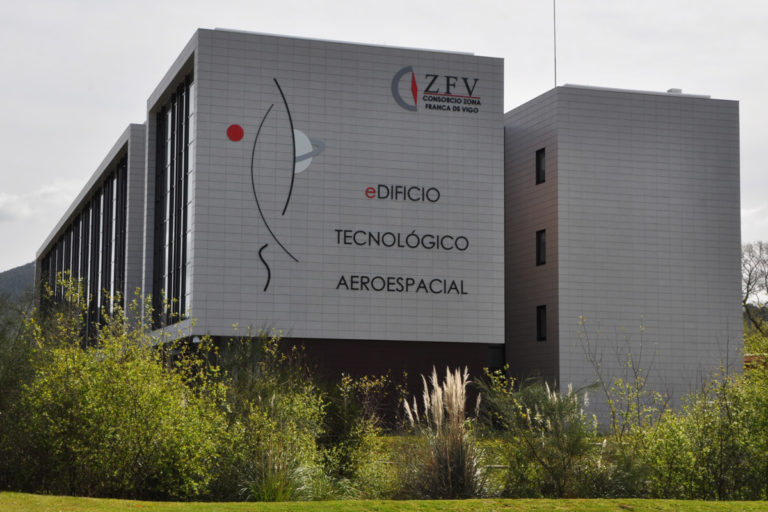
With the University of Vigo and the Consortium of the Frank Zone like members founders and the participation in his patronato of the companies and private entities Airbus, Consortium Aeronaútico Galician (CAG), Deltavigo and the Union of Galician Companies of Aeronautical (Udega), this technological center, called to turn into  the main focus of innovation and development of the peninsular northwest for the aerospace sector, account now with an own place in the Aerospace Technological Building of Porto do Molle in Nigrán.

In the real estate of more than 6000 square metres, promoted by Zona Franca and the Incyde, the Centre of Aerospace Innovation will be the only of Galicia with the specificity that require the aeronautical and aerospace sectors, sharing space with a nursery of technological companies, as well as with private companies.


The bird that watches over the crops

0

There’s a bird now that flies vigilant over the strawberry or table grape crops and also some fish farms. A bird of prey that scares the flocks away, which feed on the farmers’ daily yield.

This bird does not follow its instincts but takes direct orders so as to protect the crops. This bird, we are talking about, is actually a drone, which has been developed by the Vigo-based-FOBOS company. this drone scares away plagues of threatening unwanted flocks of birds in a sustainable manner.

logos-fobos

Everything starts off with the deep ornithological research about the surrounding fauna, which needs to be protected and the birds’ food habits, behavior and biorhythms are studied throughly, too.

From then on, an automated air vehicle or drone is programmed and disguised as a real bird of prey, which mimics the moves and ways of a real bird of prey within its hunting range.  “It’s adaptable and analyses each and every threat to the crop or fauna and we have several models mimicking different birds of prey ”, says the CEO Fobos Solutions, Marcos Carrera. The company has filed for a few patents and already been accepted to exploit the rights to its models and devices. And this happened around June 2014 that interestingly enough there were designed by the CSIC, right at the biohub of the Doñana preserve and they have been working on it for the past two years. “The design, manufacturing and application technique, namely, of when, where and how to fly are genuinely made in Galicia as well as the drones controls and input ”, says Carrera.

The technique is easy : this robotic birds mimic short aggressive flight paths for a timeframe of  15 – 20 days to scare away flocks of preying birds which threaten crops and farms. “It’s a sustainable method and with a success rate of 90%, according to the  CSIC stats and surveys on birds populations in that area ” . Carrera explains that the ideal situation is to prevent first before the real birds get to the seeds or harvest. “It’s easier to scare these plagues of birds away, so the damage and losses are zero. We stop this kind of plague of birds from coming over and over”, he points out .

These stealth drones mimicking birds of prey have generated interest way beyond the agricultural scope.FOBOS has already  received plenty of inquiries from city halls, harbors, quays, and wharfs around the country to tackle the problem of annoying seagulls within these areas . However , due to Spanish laws about drones in populated areas, here this kind of drone activity is restricted at present .