Jules Verne and the Vigo Bay

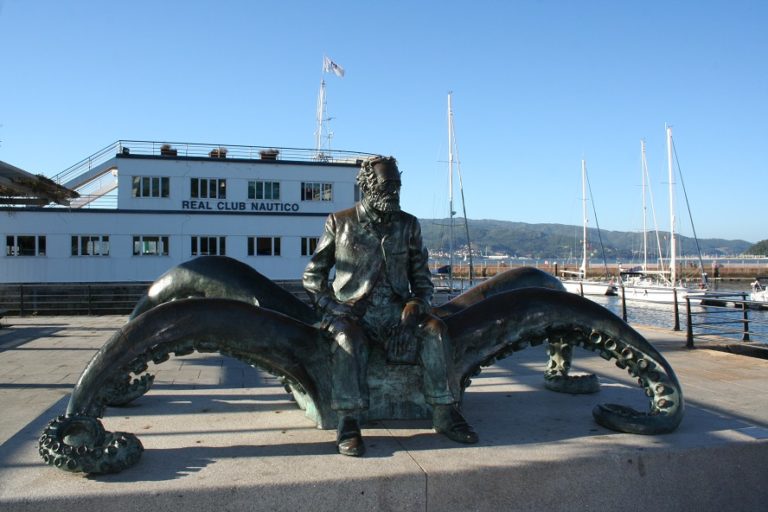
Twenty Thousand Leagues Under the Sea is a classic science fiction novel by French writer Jules Verne. Since first being published , the Nautilus and its captain Nemo have been embedded in the minds of people worldwide. Nevertheless, very few know that there’s a chapter and a seaport, which are key to Verne’s adventure. Vigo bay was the place where certain technological advances were developed in a distant past and later Verne would add these up to his famous novel .

Monet, technology to pamper vineyards

0

Vines disease prevention and control is one of the main concerns of entrepreneurs in the wine sector. When facing this type of problem, the Galician company, Monet Viticultura, has come up with an ingenious program, which allows vineyards plantation owners to check the status of their plot of land in real time from any mobile device via the Internet.

“A close and good care of the vineyards plantation will help cut down on the use of fitosanitaries and other chemical products, that’s why the grape quality will get better for sure”, says Débora Franco, cofounder of Monet.

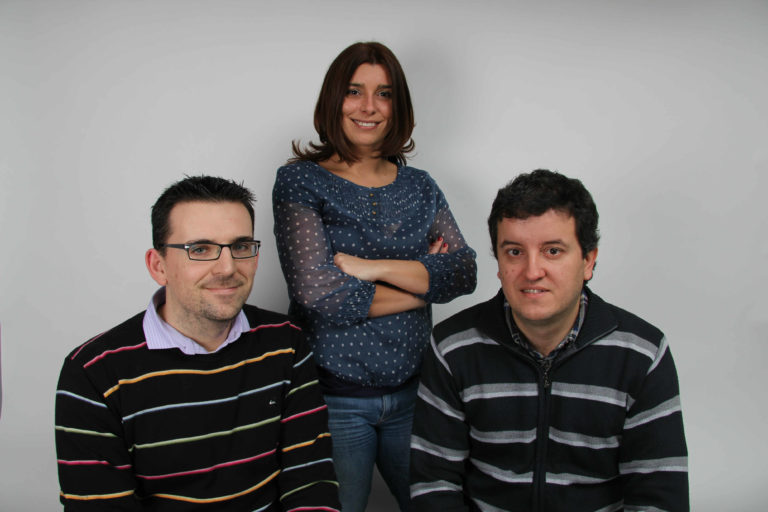
The concept was born at the end of 2012. The brainchild of three witty engineers with majors in telecommunications, Débora, David Rey and José Antonio Gay, who had been already doing research at Vigo University, and worked for a while on the implementation of new technologies in the rural areas and the primary sector, decided to put to good use their ideas.

At the start of 2013, they won an award aka  Incuvi Emprende conferred by the Vigo university and aimed at I+D+I programs, which are more common ground in universities, nowadays. By the end of that very same year, their efforts were compensated by the companies accelerator VíaGalicia. And afterwards, in March of 2014, they incorporated the so called company Monet, and they managed to pull it together with an agronomist on their side, Eugenia Comesaña, so as to have a better insight of the wine sector. This program was at full speed by then .

Monet is operational with any private or public meteorological station and collects atmospheric and environmental data such as temperature, air and leaf humidity, rain and wind levels and features, etc. It specifically shows a forecast and tips closely related to that particular plot of land. Upon reviewing these data , assessment of disease models and predictions are scrutinized.  The probability of new upcoming or already known diseases is updating via a colored code  (green, yellow , orange, red etc.).

At this moment in time , Monet has a portfolio of over 12 strong clients, which have been conferred by the government with different protected denominations of origin located in the regions of Galicia, Castilla and León, La Rioja and Navarra all across Spain .

“Children should be the center of attention when designing a city”

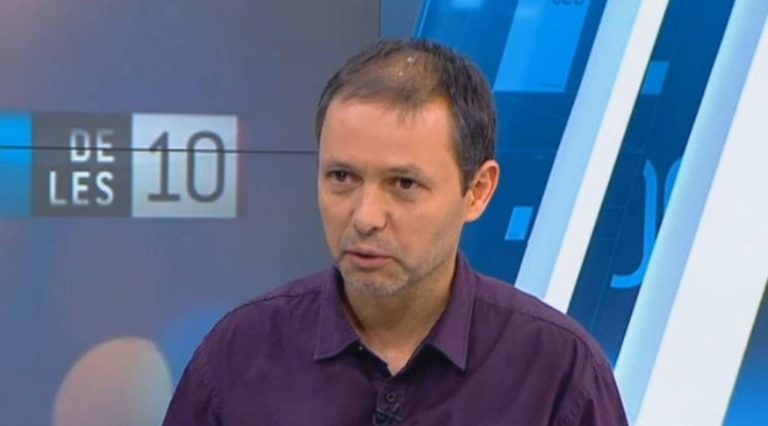
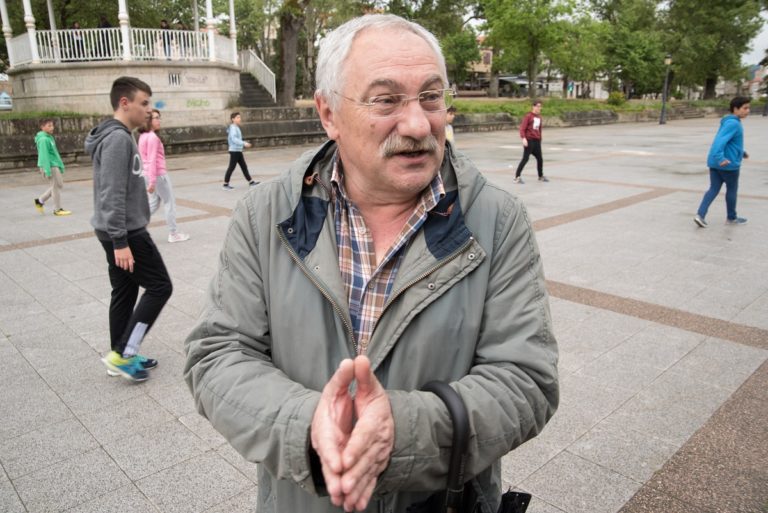
One of the keys to success in Pontevedra, its urban accessibility and sustainable mobility, is based on the technical accuracy of the city project design. In order for this project to go ahead, it is paramount the expertise of thorough researchers and urban experts. Pau Avellaneda (Sabadell, 1968), Ph D in Geography from the State University of Barcelona and with expertise in safe and sustainable mobility, is one of the authorized voices within this field countrywide.

-How do you lay out a plan for urban mobility?

-First of all, we have to leave behind the concept that the mobility blueprint for a city is based on traffic and other means of transport. The manuals, drafted regarding this issue, say we have to look beyond traffic, urban private and public transport, territory and urban infrastructure, we must consider also the flows of people around and within the city.

-The city is also an important space to meet people… Right ? 

-Sure!. you must consider other features when designing a 21st century city.  You must link the mobility with the public space. Namely, streets or roads are not only made for walking or driving. Theyre meeting hubs, recreational areas and where you hold other social and cultural activities.

-Health or well-being is important in this city equation… Isn´t It?

-Yes, health is important from an active or passive perspective. A city “taken over” by vehicles becomes a negative input in the quality of life of its citizens. Its as unhealthy as what happens to a passive smoker: He breathes a lot of smoke from vehicles and hes exposed to a high level of noise too. Likewise, this is the active mainstream : a city for pedestrians is a healthier city ; should the people walk more often, their health will improve.

“Citizens must have access to spaces where things are happening”

-What´s the role of local funds in all of this?

-You have to consider social integration. Citizens must have access to spaces where things are happening. If we block or make access hard for disabled people, children or elderly people they become second class citizens.And you cannot overlook the financial side of it either. People say sometimes they have a lack of government funding to develop these kinds of projects. But They don´t look closely enough at how much money they can save by implementing sustainable mobility : better health linked to walking more often, as Ive mentioned earlier, or less traffic accidents, that would definitely cut down hospital bills for the government and everyone else.

-What makes a better city? A city made for children and namely for pedestrians?

-Its a major improvement all the way and for everyone!   Children should be the center of attention when designing a city.

– Why is Pontevedra leading by example?

-Because they have invested in a 21st century project. Pontevedra is one of the first cities to have taken for granted mobility as an integral part of their territory.  The outcome here is plausible and evident; the city has improved greatly in all walks of life.

Converfit, a customized web experience for everyone

0

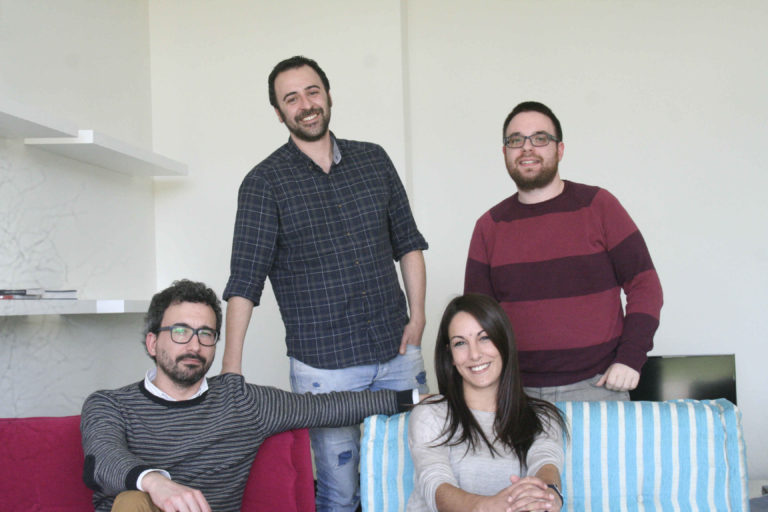
This type of issue has been identified by everyone of us. We have an issue with the phone company ; long waits and mixups to get an issue fixed are usually slow, not so comfy and many time very little efficient. Tired of listening to background music as you hold on the phone or in some waiting room and leaping from one sales rep. But, Pablo Gutiérrez Alfaro and Jorge Rodríguez Núñez, 2 entrepreneurs from Vigo, decided to come up with an instant messenger tool which connect client and company at the same time aka Citious.

A while after, the demand of companies for a service or to further services like chat web, forced  Citious to evolve. they developed then another product , Converfit, an analytics system for webpages which is the central axis of this new upcoming company now.

A apariencia dos sitios web muda segundo as preferencias dos clientes
Web appearance changes depending on the demands of the customers.

“We’ve told companies all of what their clients do in their websites: how they move around, the products they check, searches they perform, etc.”, says Lucía Sendón, in charge of communication and media for Converfit. The app picks up data and develops profiles about each and every client that visits or hits the page. Also, theres a live chat system which helps giving recommendations during the process of a purchase and increase at the same time the conversion rate. In a nutshell, a web can dramatically improve visitors and sales with our app.

The app has a large range of clients from different walks of life such as fashion, banking and telephone companies. In less than a year the project has really paid off. By the end of  2015, Converfit was the only one company from Spain which was chosen by Microsoft Ventures Accelerator, held in London, UK

In Galicia, the backup of VíaVigo was key to Converfit. They participated in the company accelerator VíaGalicia, kickstarted by the Zona Franca in Vigo and by the Xunta de Galicia (Galician government).

Sweet clover, superfood for cows

The ups for good health when ingesting pulses has been proven once and again. However, pulses benefits do not stop with people alone. Recent research at the –Centro de Investigaciones Agrarias- of Mabegondo (CIAM), specifically 5 years ago, has shown that pulses like the sweet clover allows the cattle to improve milk quality and production of about 6-8% percent, besides improving the fatty profiles of the products, it contributes to getting a very sheer quality milk too.

Gonzalo Flores Calvete, leading researcher at the department of Grass and Fodder of CIAM, points at the research done which throws conclusion similar to those related to humans and done also in Europe. He says that the results must pour into the farms and carry out pilot programs to spread the usage of pulses as a method of feeding in farms among the cattle.

Flores says that in spite of the initial hardship between the usage of pulses and grasses is highly positive. “We are at a crossroad here and pulses which were previously used to feed the cattle at one point in time they had disappeared but now they should be implemented because we have shown the great benefits for the cattle and humans nowadays”, says Flores, who is very persistent about spreading the word about these latest findings on pulses and their benefits in cattle.

Scientific Cooking

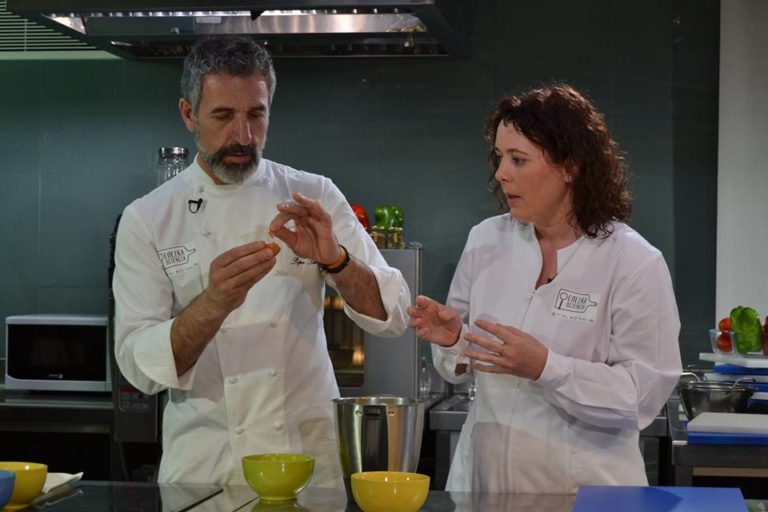
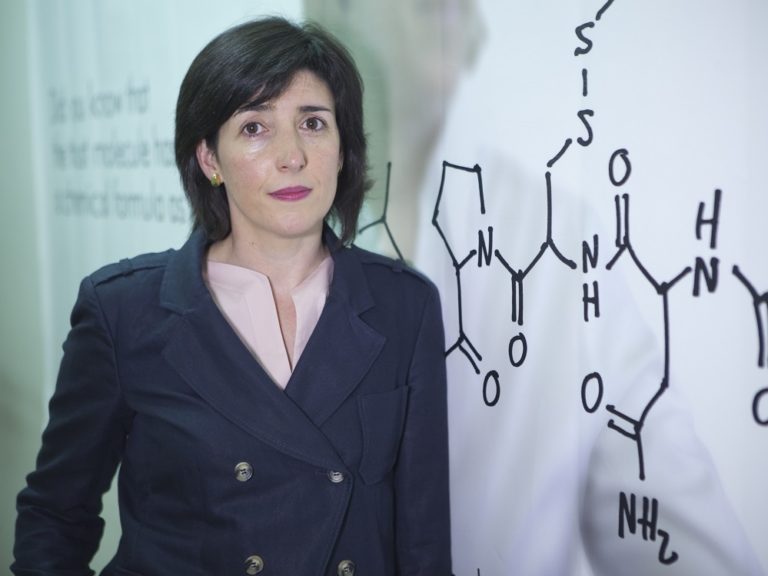
Science applied to cooking is the objective of the so called documentary  ‘Cocina con Ciencia’ in English translated as  ‘Scientific Cooking’, which is an educational program produced by the  CSIC and hosted by the Galician chef Pepe Solla. Food safety is the key to these documentaries directed by the biologist Graciela Ramilo.

Galchimia, Organic Chemistry with a Galician accent

Galchimia’s path is a clear evidence that an entrepreneur’s dream can come true, however, a great deal of effort and hard work has lies behind it. It has secured its expansion in the international markets due to its innovative ideas despite the fluctuations of this sort of trade. This company was incorporated 15 years ago by means of 2 chemistry students, Carme Pampín and Jacobo Cruces, who worked at the Department of organic Chemistry at the college of Santiago de Compostela (USC). Definitely, it is a company, which has consolidated strongly right after its inception as a spin-off.

Laboratorios de Galchimia.
Galchimia.

Galchimia has led the way within the scope of Synthetic Organic Chemistry in Spain. Besides trading nationwide and overeas nowadays, they have been researching for several pharma and biotech top firms, their catalog comprises over 200 products, which the very same company sells via their website. These few past years, Latinamerica has been a paramount market for their trade, although around 75% of their revenue still relies on contractual research. Galchimia employs now 30 staff and has swept 1.8 million euros in revenue, in 2015.

Innovation is the identity key for Galchimia and most of their clients’ request is about the creation of new molecules. To “come up with new molecules” is necessary to carry out a complex research and be persistant so as to accomplish this task. The company’s base is in O’ Pino next to Santiago and looks on at new pathways to diversifying its business and creating new products licensing. Likewise, there are several projects in their agenda with other Galician and foreign firms collaborating and supporting each other when it comes to this type of research. Current undertakings include Horizonte 2020, Interconecta, Madame Curie and Conecta Peme.

‘It’s the future and doable in any city’

-Pontevedra city stands out worldwide due to their award winning city plan…

-In Pontevedra, we have built up a city plan, which would not have been viable 40 years ago. Long ago, the old town used to be pedestrianized first as though it was something separate from the city. However, we have overcome this kind of a concept . Mainly, due to the creation of what we call ‘dead zones’ So we have come to the understanding that cities need changing as a whole not only focusing on only separate parts of the city.  We need to work on road safety, children safety and independence and disabled people too.. and we managed to bring it all together within a new city planning which has been successful.  Where other cities didnt dare to go, we thought of it a lot, well ahead of time and went further than any other city after working out a thorough plan in time.

-Does this model work for all cities?

-The ideas do so. Because we dont develop our own ideas but universal ones. Afterwards, you have sizes, evolution times, idiosyncrasies… but we are determined to apply it and its doable in any city worldwide.

-Can you do it in large cities?

-Better than in the medium sized cities. Its not true that its hard to make big cities into pedestrian areas. Its easier. In a large city, driving around is only 30% or less . The other is public transport. To restrict or ban traffic would affect it much less on a daily basis .

-Cities like London are restricting traffic in the town center…

-Regarding London, I can tell you that its nothing like Pontevedra. That citys policy is neoliberalism: access to public services is measured by stealth taxes. Theyre seeking  congestion relief by charging a tax called congestion charge. In Pontevedra, the traffic is conditioned by the city itself and how well it functions with their inhabitants. Its not about stealth taxing people.

-How do you convince the city dwellers that it works?

-If you believe it yourself it does work.if not, you wont change any bodys mind. You have to be ready and well prepared, well laid out and planned from the start.  preparation is what makes it work well.

-How did you convince the local traders and business people it was good for them?

-Some topics are totally unrealistic. There was no action or movement by the local traders against us. In Pontevedra that did not happen. The traders association or guild of Zona Monumental went along with the plan.

-The urban models are making progress… Is Pontevedra leading the future?

-Every period of time has its own challenges. But should you scan the horizon of a generation, of lets say 20 or 30 years, which is reasonable in the history of a city, I believe that this is the project, which should be followed. Definitely its the future.

Kiply, the galician App that will increase your productivity

0

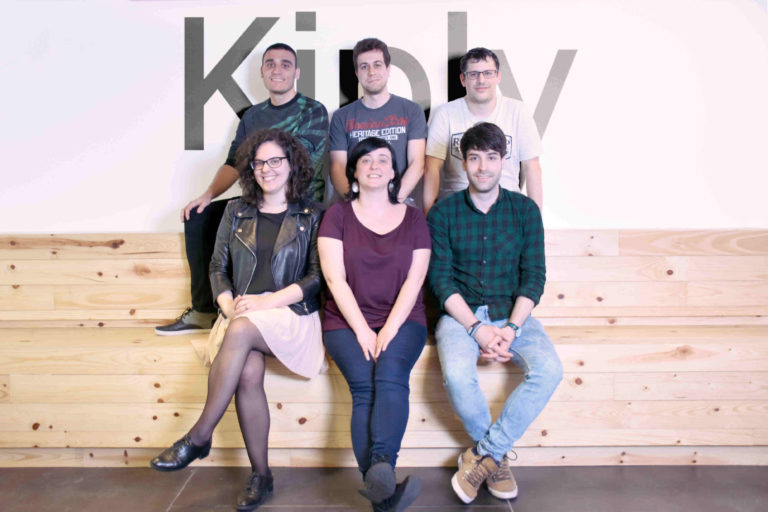
A Galician company has just launched what it can be coined as the antidote against time wasting at work and to enable employees to make the best of their job resources. The Kiply tool, developed by a group of Galician entrepreneurs aims at “enabling you to perform your job better”, explains José Higinio Cánovas, the company´s CEO. Cánovas has a degree in Business Administration and Management from USC in Galicia and a Masters in Finance, too. Before kickstarting Kiply, he was doing consulting where he began to work out in his head this app. He says “I was wondering how my employees should perform at my workplace, and how I could empower them to get better at specific tasks”.

Panel de parámetros de Kiply

Logically, you need some kind of parameters to measure it. Thats why the app is thought out for people who work most of the time with computers. “Its what we are able to control —explains Cánovas—. We work like a measuring bracelet people use for fitness,so to speak, its like a calorie counter or steps you have to take to burn them. And we focus it on working. We compare data of different users and suggest where they can save time and how they can manage their time better”.

Kiply is downloaded onto any computing device and from them on, you begin to collect data. The user can choose different measuring cards, which show up by default (web browser, social networks, IT programs) or you can come up with new customized cards, which can measure any task and time management required for it. From the first week onwards and through a comparison chart with databases from multiple users and an analysis of productivity, Kiply, then, starts by giving you advice on tasks and how you should manage them.

The city of citizens

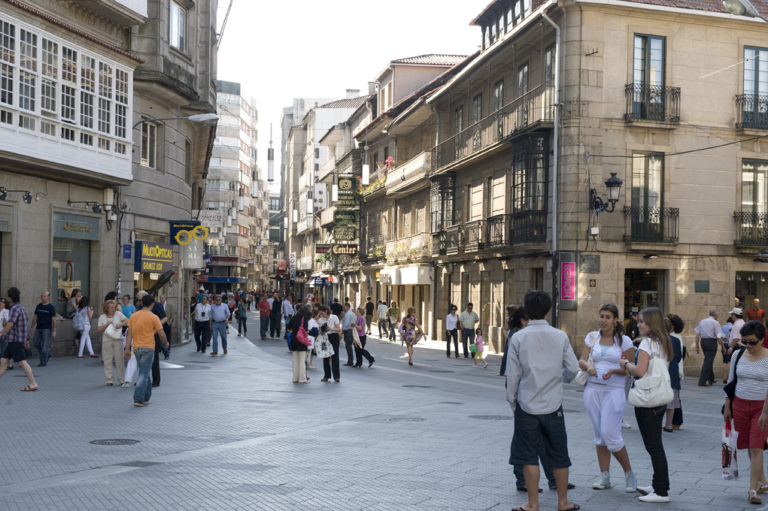
The transformation of the urban design in Pontevedra kickstarted in 1999 and has allowed, within a decade or so, to consolidate a role model of a city, which has helped Pontevedra lead by example either in Spain or worldwide. It looked almost impossible to think about the success of a project, which not only has changed the face of the old and new city center, but also has managed to make a difference in the daily lives of its dwellers. The revamp of public spaces, the new pedestrian roads and streets, and the removal of building barriers and the complete revamping of the city are actions, which have been taken and helped the city whether combined or on their own to achieve a great balance and radical change, benefiting the daily life of the Pontevedra dwellers.

The ideas of Italian thinker and pedagogist Francesco Tonucci inspired the city to develop an urban project that places people first, in general, and children, in particular, as the ones who have benefited from the works in the city infrastructures, design and urban landscape. Any person who has strolled around Pontevedra city will find vast public spaces, cleaner streets and car free areas. Cars are no longer the owners of this city and it has become a child, disabled, and elderly friendly space.

Eventually, a great deal of awards have rained down over the city of Pontevedra. Amongst them we should mention the Premio Nacional da Cultura Galega (National Galician Culture Award), conferred by the Xunta de Galicia to the city in 2008. However, the awards have kept pouring down from overseas, too. In February 2015 the city mayor, Miguel Anxo Fernández-Lores scooped an award in Dubai given by the Emirates and together with the UN-Habitat section entitled “centered around people”. Needless to say, that Pontevedra has turned out to be an exportable project and this type of city design can be carried out by cities, which wish to recoup the public spaces and make their city more pedestrian friendly. What has been achieved in this little corner of the South of Europe, can also be achieved in any city worldwide. Last year, Pontevedra managed to sweep 2 more awards at once in New York and Hong Kong.