Molecular test made in Lugo that will detect SARS-CoV-2 in 30 minutes

One of the most commented issues since the start of the Covid-19 pandemic has been the differences between different types of disease screening tests. Different types, with different procedures and more or less adequate depending on the objectives. Molecular techniques that detect the virus itself are the most suitable, for example, to measure the contagion capacity that a person may have due to the viral load (number of copies of the virus) that they have in their body. On the other hand, there are those of antibodies, which can observe the defense response of the organism, but not a greater or lesser presence of the virus, at least directly.

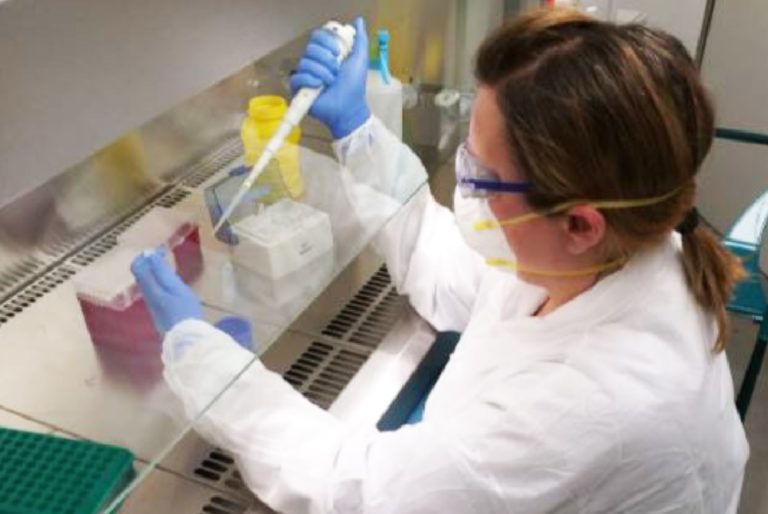
The difficulty of molecular detection, carried out through so-called PCR tests, causes the entire process to last several hours, which sometimes slows down the diagnostic capacity of the healthcare system. AMSlab group, based in Lugo (Galicia), and specialized in the biotechnology sector, has been working for two months on a kit that could accelerate this process, avoiding the use of laboratory techniques and confirming, with more than 95% reliability, the presence of SARS-CoV-2 in patient samples. The project was selected by the Galician Innovation Agency, of the ‘Consellería’ of Economy, Employment and Industry of the Xunta de Galicia, in its line of financing solutions developed in the country to deal with the pandemic.

Different uses

Manuel Lolo, CEO of AMSlab, clarifies that the test “is not a quantitative method“, that is, “it does not measure the amount of viral load that a person can have”, but it does guarantee a quick result that would allow, for example, doing a faster and more secure shot in spaces such as nursing homes and hospitals. The kit somehow fills the gap that could be (and the consequent risk) if a contagion is not detected in a residence in the first days of infection, and that antibody tests could not observe since there was not yet immune response.

“The device would work with a nasopharyngeal exudate and through colorimetry; that is, if after collecting the sample of fluid from the patient’s airways in the reactive band, it would change color if it tested positive. It has already been successfully tested in the laboratory, and now we have to adapt it for use, so that anyone can do it without specialized training in diagnostic techniques, and looking for the necessary suppliers to make it commercially viable”, Lolo explains. AMSlab is also in talks with the Instituto de Salud Carlos III, responsible for giving the go-ahead for these tests, to validate their use and, if things go well, to be able to manufacture and use it as soon as possible.

Manuel Lolo (AMSlab).

In this way, the number of molecular tests can be increased, without taking the samples to the lab, analyze them and waiting for the results, which will speed up the notification of positives and the measures that would activate the detection of cases in spaces such as residences in case of a possible regrowth. “What is intended with this device in particular is to transfer the PCR analysis to the first phase of patient evaluation,” summarizes Manuel Lolo.

According to the AMSlab manager, the entire manufacturing process would take place in Galicia. “We are committed to doing it here,” says Lolo. Once the peak of the crisis is over, which brought with it numerous difficulties in accessing some critical compounds, as well as transportation problems from production centers, the current situation is already making it easier to obtain the precise material. In addition, Gain’s financing, second explains Lolo, “is going to help us dedicate more resources to obtain faster results”.
The map to measure the risk of sprouts of Covid-19 in Galicia

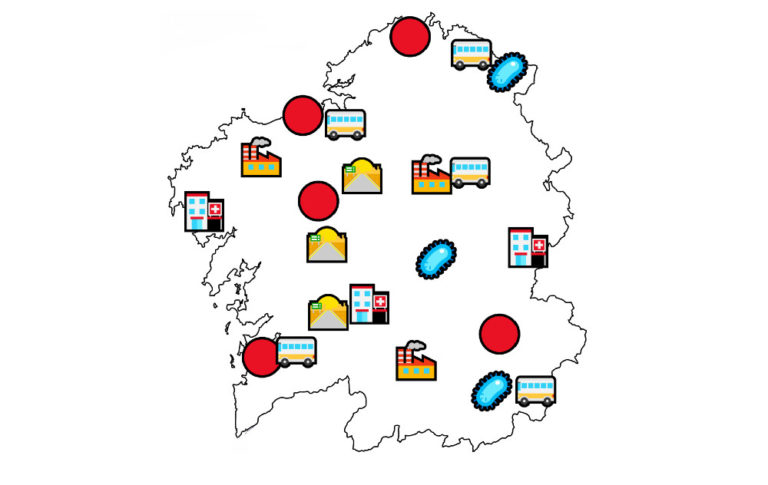
Is there a certain bus line that passes through a hospital center and areas of high concentration of people, that could be a possible source of infection? Has a Covid-19 outbreak taken place in a town in Galicia, and has it spread in a few days without being detected by the health system? Retrospectively analyzing why certain events occurred during the pandemic, and offering a clear picture of the situation to prevent it from happening again, is one of the objectives of the coronavirus risk mapping carried out by the Territorial Analysis group of the University of Santiago de Compostela (USC) with funding from the Galician Innovation Agency, within the framework of the call open by this entity, attached to the ‘Consellería’ of Economy, Employment and Industry of Xunta de Galicia, to promote activities of R+D+i that provide solutions to the crisis.

“When we saw what was happening, we started to investigate, due to the previous work we had already done, to develope the first spatial analyses using maps that had allowed us to follow the epidemic,” explains Ángel Miramontes Carballada, professor at USC and member of the Institute of Studies and Development of Galicia (Idega), who will lead the project. When the call was opened, his group answer to it and ended up being one of the eight initiatives selected from more than 160 proposals.

With this contribution, which is up to 71,000 euros, the USC team will be able to hire the more research staff for the project and develop the lines of collaboration that they had already opened since the beginning of the pandemic with international experts in spatial data analysis and experts in health geography, among other disciplines.

“The idea is to analyze the spatial behavior of the spread of the virus through three main aspects: the sources of contagion, both those that have already occurred and those that could occur in the future; the territorial factors that may influence the spread; and the ability to indicate to the competent authorities the necessary actions to stop this possible spread”, Miramontes details.

Constant updating and new variables

In order to guarantee better monitoring, the tool will have the ability to adapt and update itself with different variables depending on the evolution of the crisis. “Our idea is that it twists around three large blocks: on the one hand, the socioeconomic indicators, with the infrastructures that must be taken into account, such as hospitals, supermarkets, pharmacies, etc .; second, the analysis of data to act on a scale of great detail, from small population entities to the whole municipality, and thirdly, to have the data of the epidemic itself. Once we produce this cartography, we can analyze all the available information from different perspectives “, the investigator explains.

With this tool, the project aims to bring “true information” to the disposition of the health authorities, which helps in making optimal decisions in the face of the crisis. “We will always work with the official data, and with all the relevant aspects to take into account to outline the tool.”

Remote-controlled resuscitators adapted to the patient’s breathing

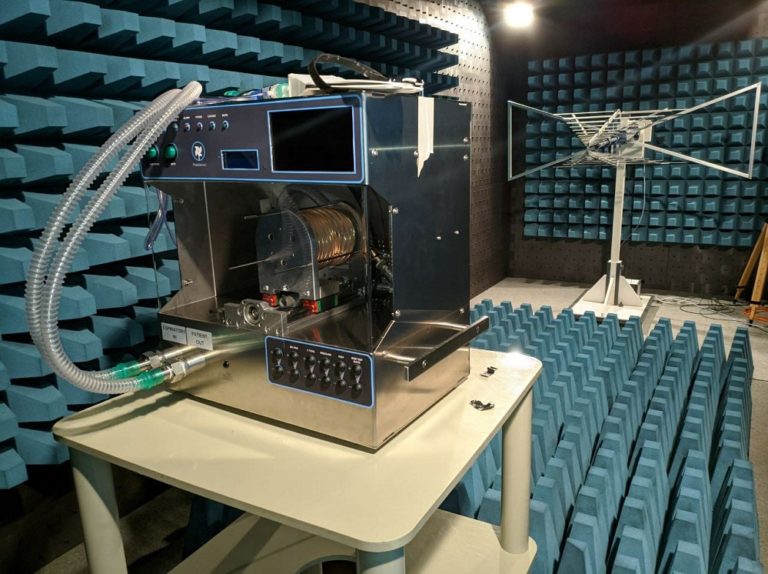
The company Técnicas de Soft, based at A Coruña, designed during the confinement a project that contemplates the design and operation of a reusable autonomous resuscitator based on an Ambú equipment, which they baptized as RAR (Reusable Autonomous Resuscitator). The equipment will have an electronic controller and tactile interface that will allow healthcare personnel to interact with the system, easily parameterizing the different operating modes. It will be possible to control electronically and select both the grade of the Ambú device and the speed. In this way, healthcare personnel will be able to adapt the volume of air blown, the cadence and the pressure to the needs of each patient. The project, consisting of the manufacture of 4 prototypes with different drives, is financed by the Axencia Galega de Innovación (GAIN), through an agreement signed for this purpose.

The project consists of the manufacture of an invasive ventilator for ICUs based on the coordinated operation of an Ambú-type resuscitator bag. These resuscitation devices are often available in both ICUs and ambulances, and are readily available. Based on this idea, the project aims to create an entire ecosystem around the ventilator that improves the management of invasive breathing for Covid-19 patients.

Modelo do prototipo de TecdeSoft.

The ventilators can be connected to a control center with software that allows comprehensive monitoring of various equipment, as well as the integration of cameras for the supervision of patients in the ICU. “In this way, we reduce the number of times the healthcare provider has to approach the patient, allowing the technician himself to supervise various devices, thus reducing exposure to the virus,” says Juan Jesús Pardo, technical director of Tecdesoft.

If the hospital wishes, and the country’s legislation allows it, this control center can be connected to a cloud platform that facilitates the monitoring and tracking of anonymised data. This platform has cybersecurity mechanisms and does not allow action on the device, simply monitoring the history. It is designed so that various specialists who bring knowledge to improve patient care from remote locations can interact. This tool also has an artificial intelligence engine with which inappropriate patterns or correlations between different practices can be identified.

Cameras that capture temperature only with facial recognition

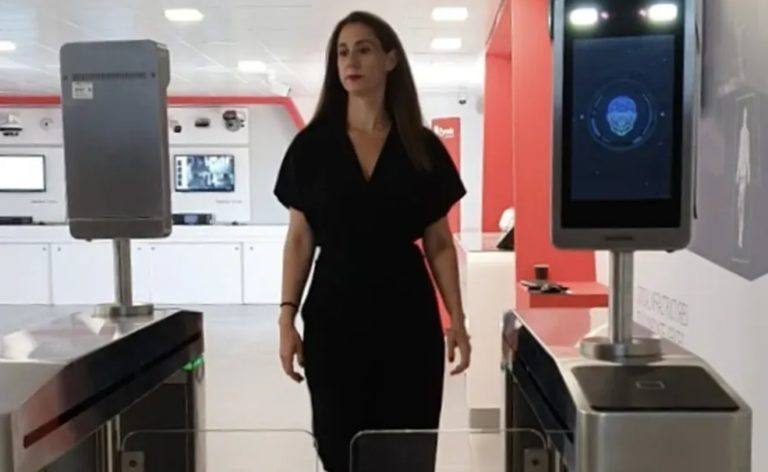
The joint project of the startup Creativigo with the company OARO consists of a thermal imager that allows access control to public or private places, with temperature monitoring through digital identification thanks to facial recognition. Creativigo developed part of the programming of the digital identity in Blockchain, while OARO did the hardware for this equipment that could serve as prevention of contagion from Covid-19.

On March 8, Pablo López, CEO of Creativigo, landed at the Panama airport. When he went to pass through the passenger control, he was received with the pistol at his head to take the temperature. “It was a little violent because I had never had such a control.” Little by little, the alert state began in Spain, and the border closings. To return home, the only place he could fly was through Havana. There in Cuba they also took his temperature, but in this case through thermal imaging cameras. “I saw the cameras working, but the data did not see where they were going.” Thinking about this, the idea that will now come true came up.

Pantalla de monitorización do dispositivo.

Pablo López has been working in technology in the field of Blockchain, where they have advanced digital identity solutions. Two years ago, he developed a project with another company, OARO, which was also trying to embed the idea of ​​thermal imaging cameras as a non-invasive way that offers a warning signal.

From Creativigo they tell us how it could be carried out. People who are going to the venue would receive an invitation on their mobile. Through a personal image they would have to pre-register in an application, in such a way that when the person passes in front of the device, through facial recognition, it allows or denies access, and performs a temperature control. “We are studying the possibility of integrating other types of services at the same time, consider including another health protocol, to determine what happens in the event that someone gives a high temperature, what would be the steps to follow. The prior registration is essential to safeguard the data protection of each person, “says the creator of this device.

With the help of the Galician Innovation Agency (GAIN) of the Xunta de Galicia they decided to take this step and some more forward. In fact, they are also working on autonomous equipment that could be installed by anyone, since it consists only of one foot, with a tablet screen, and the thermal imager to be used anywhere permanently or temporarily. In this way it is not necessary to make a high expense and it can be rented only to be used at a specific moment in an event.

Bionix completes a scalable manufacturing “made in Galicia” respirator

The history of Freesterra-1, a respirator developed by the A Coruña-based company Bionix Technologies, is a great example of how talent and the desire to serve society can unite and lead to a profitable and wealth-generating business project in the country . The Covid-19 pandemic has transformed this start-up in just two months, which has developed a respirator model for Covid-19 patients (also applicable to those of other pathologies) that could be manufactured in a period of some two months, if the pending certifications go ahead.

Jacobo Penide, founder of the company, explains that Bionix was born in late 2017 and is fundamentally dedicated to offering comprehensive solutions to companies to monitor their business operations, using RFID technology, the Internet of Things and artificial intelligence. “I have always thought that it is a shame that medical devices are not manufactured in Galicia and I even made some attempt in the past to launch a project. When the Covid-19 crisis erupted and we saw the health collapse that occurred in Spain, I believed it necessary to contribute our knowledge to fight this pandemic and we started with the respirator project”, explains Penide.

The first designs were made in early March. Bionix obtained the collaboration of another Galician technology company, Cinfo, and also of the Nóvoa Santos Foundation, which manages the Teresa Herrera hospital in A Coruña and promotes health research. Work was done day and night to perfect the design and in just 24 days a first prototype was produced. The final objective was to obtain an invasive respirator, suitable for patients with a pathology as acute as Covid-19.

The pending step is testing on real people and it is expected to be able to do it in a few weeks, when the corresponding authorizations arrive. At all times, the recommendations of the Spanish Medicines Agency and the British counterpart agency for the development of this type of apparatus have been followed.

The project is funded by the Galician Innovation Agency of the Xunta de Galicia

Coronavirus disinfection comes through the air

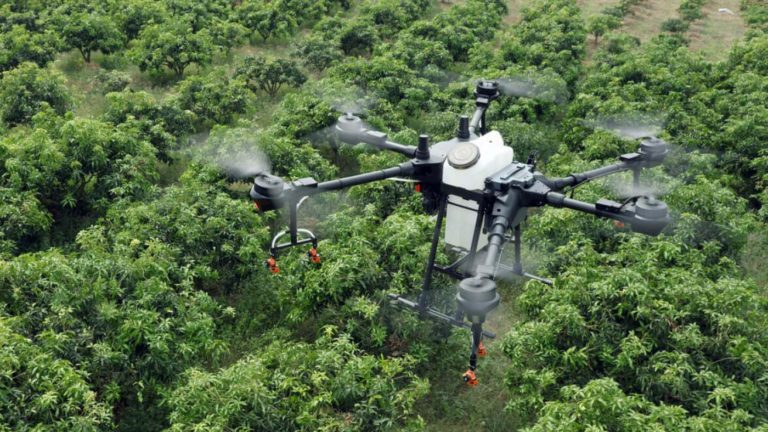
The fight against the coronavirus can also get blown up and using aerospace technology. And made from Galicia. Because researchers from the University of Vigo are developing a disinfection project using liquid dispersion through unmanned aerial systems. Taking advantage of the “maturity” that drone cleaning technology already has, his work will focus on the development of a geographic information system at the Galician level and a methodology that allows optimizing its use in this health crisis.

The initiative is financed with 55,000 euros by the Galician Innovation Agency (GAIN) of the Xunta de Galicia. It is one of the eight solutions chosen, among the 160 received, in the call made by the Consellería of Economy, Employment and Industry for the development of innovative projects against Covid-19.

Higinio González, full professor at the School of Aeronautical and Space Engineering on the Ourense campus, is the main researcher, with the team completed by professors Fermín Navarro, from the same center, and Joaquín Martínez, from the School of Mining Engineering; and the research staff Luis Miguel González; Noelia Fariñas; Lorena Docasar and Alejandro Gómez. From June to December 2020, they want to “develop and validate flight operations with unmanned aerial systems to carry out disinfection tasks”.

O profesor da UVigo Higinio González.

The project has three objectives. The first of these is the development of a geographic information system at the Galician level that determines areas where a high influx of people is expected and are susceptible to drone disinfection. The second is to determine the necessary hours of operation and legal restrictions for this disinfection, as well as the necessary resources at the economic level, of equipment and operating companies. The third is the development and verification of specific disinfection methodologies for these systems to guarantee their correct results.

Although it may surprise the use of drones to disinfect areas such as parks, stadiums or recreational areas, the reality is that the technology is already very advanced. The Covid-19, explain those responsible for the project, has caused a global pandemic still in the containment phase and in the return to normality that began, they indicate, “a key aspect will be to continue to disinfect surfaces that can act as flattering for the transmission of the virus ”.

O profesor Fermín Navarro.

As the existing restrictions are lifted, they detail, “disinfection tasks will have to be extended more intensively to places that are not currently being used but will be used again in the future, for example schools and universities, sports facilities or outdoor entertainment venues ”.

In this context, says Higinio González, the COVID-19 crisis “did not remain oblivious to the use of unmanned aerial systems in disinfection tasks,” citing examples of use in countries such as China and France. “Given the scenario of cautious return to normality towards which we are heading in the coming months, it can be seen how unmanned aerial systems can be useful to complete disinfection tasks in places such as sports, schoolyards  playgrounds, leisure areas such as gardens, swimming pools, rivers and beaches ”, indicates the researcher.

Galician medical engineering at low cost

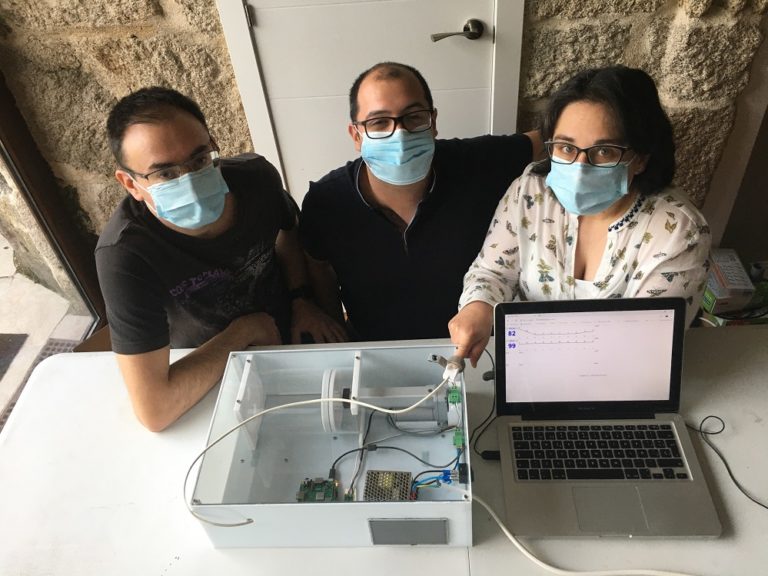
The difficulties that most of the sanitary areas had since the appearance of Covid-19 to obtain respirators caused that innumerable initiatives have arisen. One of them is that of three engineers from the Fentotek company who developed a project to manufacture mechanical fans. They worked on the design of this medical equipment, each one from a different place in the province of Ourense.

Fentotek is a company that was born last year with engineers who have been in the industry for a long time and who are dedicated to electronics design. His business plans never entered into the manufacture of medical utensils. They worked on devices for communications, industrialization, electronics, power… but they had never made medical equipment. This involved a documentation workload unknown by industry type.

The idea appeared through the demand that exists in the market for this type of device that is difficult to obtain, because there is a shortage and it also has a very high price. The engineers joined forces to manufacture them based on a respirator that had a lot of media impact, such as the one made by the Catalan company OxyGEN, which automated an Ambú-type resuscitation balloon. “What we decided to do was to take advantage of the fact that we had a lot of experience in automation of equipment, and we created a team that goes further,” says Rubén Otero, CEO of Fentotek.

What they are looking for is that this fan is not dependent on an automated manual respirator, but is capable of withstanding ventilation for a long time. “In addition to this, we want this device to serve to monitor patients. We also intend to provide a concrete solution here and in other countries where access to resources is limited, both in Africa and in South America ”.

Currently they have the device made by parts, and they are trying to assemble the device, which will be manufactured in the coming weeks, with the idea that at the beginning of June they could already test it. This project was selected by the Galician Innovation Agency (GAIN) along with seven others, and will have the financial support of this entity, dependent on the Ministry of Economy, Employment and Industry of the Xunta de Galicia, to develop solutions based on the R + D + i in the context of the crisis caused by Covid-19.

SETGA investigates ultraviolet light as a disinfectant against coronavirus

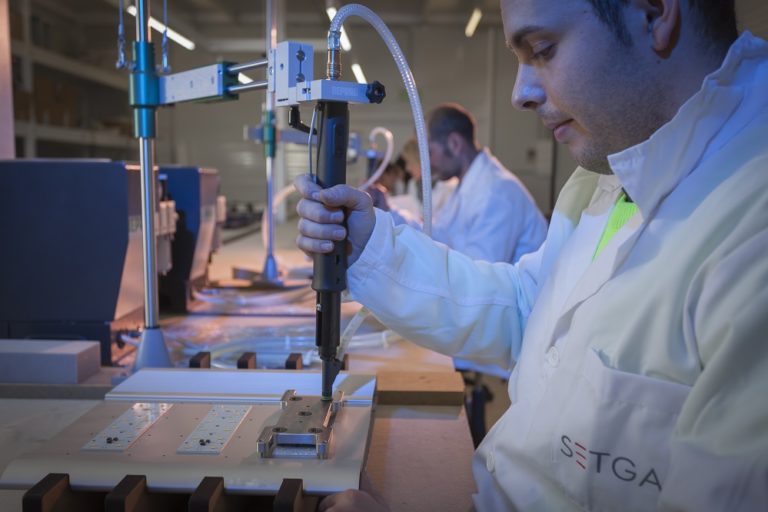
The fight against the effects of Covid-19 has so many fronts that science and industry can start unsuspected alliances to face the pandemic. From the veteran lighting company SETGA, based for 30 years in Pontevedra, they soon saw the opportunity to try to contribute their technical knowledge to combat the effects of the Coronavirus. They are currently in full investigation of the use of ultraviolet light to disinfect Personal Protection Equipment, masks and other objects that are used by health workers in the care of patients who contract the disease.

The STERIONICS project is one of the eight that have been selected by the Galician Innovation Agency GAIN of the Xunta de Galicia among the innovative solutions that Galician companies have proposed to fight this pandemic. In total, 750,000 euros will be invested to support these initiatives. The selected proposals have been those that have obtained the best score in aspects such as technical feasibility and their possibilities of ending up reaching the market.

Vicente Alonso, SETGA engineer who coordinates the project, explains that the idea of ​​starting it came up shortly after the pandemic broke out with the intention that the company could apply its know-how in technical lighting to a sector that even the moment was alien to them as the toilet. “We have evolved from traditional lighting to LED technology and we saw the possibility of applying this knowledge to the disinfection of sanitary equipment,” says Alonso.

The investigations, in which the Photonics research group of the University of Santiago collaborates, consist for the moment in analyzing the use of type C ultraviolet light, which has a biocidal capacity, to be able to disinfect objects used by toilets during their Covid-19 patient care. According to Alonso, prototypes of cabins in which these objects could be disinfected have already begun to be designed, although there is still a way to investigate what should be the amount of ultraviolet light that must be applied to objects to strip them of that viral load.

Dairylac: how to enrich dairy products and bet on the circular economy

When talking about the dairy sector, the first thing that comes to mind to many people is the obtaining and marketing of milk and its derivatives, such as yogurts, cheeses or a simple brick container for the food sector. However, advances in biotechnology and the commitment to a circular economy help to find new opportunities in compounds that few years ago went directly to waste. This is the case of Dairylac, a Galician business project, based in Melide (A Coruña), in one of the regions of reference for the dairy sector in Europe, and that has been committed since its birth for the commercialization of food products, but also for the search for new ways, such as the manufacture of bioplastics.

Explains its general director, Iago Quintana, that Dairylac arises “from the initiative of one of the great Galician dairy cooperatives, which today is Aira, and from the hand of the Autonomous Administration (Xunta de Galicia), with the aim of producing high value-added ingredients in a key sector such as milk”. Although the commitment to diversification is growing, “an important part of the product is still commercialized without transformation”.

One of the main bets of Dairylac is the production of serums and infant feeding

Thus, one of the main bets of Dairylac is directed towards the sera. “From milk these by-products can be obtained, which are very interesting to convert them into demineralized serums, with a high value in those bought for infant feeding. In the company, in addition, we can manufacture powdered milk that can also be sold in that market of personalized milks”, explains Quintana. The children’s nutrition sector is precisely one of the company’s main R&D bets, “because it is a market that demands new products and will be much more important in the future” adds the head of the company.

Varal and Biopol

In recent years, within the framework of this commitment to R&D, Dairylac has participated in initiatives of the Axencia Galega de Innovación, such as the Agrobiotech incubator or the Conecta Peme Program. Quintana stresses that this department, led by Dr. Ángel Pereira and that has been created from scratch, is key to the future of the company, and already has three people focused 100% on it.

This bet has two proper names: Varal and Biopol. In the first of them, Dairylac participates in a consortium to develop new technologies that allow the collection of irrigation or process water and biogas from industry waste. The pilot project is to be developed Prestes cheese factory, located in Vilalba.

And on the other hand, Dairylac has also been involved in Biopol, whose objective is the research, development and validation of a process to obtain biopolymers from dairy subproducts. Within the final applications, the possibility of using these biopolymers as heavy metal adsorbents and in the encapsulation of essential oils or aromas has already been evaluated.

Fresh milk, cheeses and ice cream

But Dairylac’s business line is not only in this use of by-products. It has also developed its own brands for the end customer, which have an increasing importance in their turnover. On the one hand, Deleitar, as an umbrella brand, offers pasteurized milk (the first in a 100% renewable container, according to the company), in addition to butter, cream, bar and cream cheeses and ice cream, which are sold under Folerpas brand. Iago Quintana emphasizes that Deleitar “already represents 10% of our turnover, and is growing”.

On the other hand, the Tres Viajeros brand, with clear inspiration on the Camino de Santiago that goes through Melide, is the commitment to cheese with Protected Designation of Origin, both in the Arzúa-Ulloa and Tetilla types.

The great biotechnology laboratory for food

BioIncubaTech, the first bioincubator in Galicia and the only one in Spain specialized in biotechnological projects applied to health and the agri-food sector, received a total of thirty proposals in its first call. The applications received will be evaluated by the Operational Management Commission of this technological incubator of the USC. The proposals chosen will be made public on December 15.

Health is the sector with the most proposals received, 24 projects that cover a broad spectrum of technologies and services for disease prevention, diagnosis and treatment. The other six remaining belong to the agri-food sector. A total of 18 proposals were received for the preincubation modality, six for the incubation modality and six, for acceleration, according to the stage of development of each project or company.

Support for 20 projects

BioIncubaTech will offer support in this first call to 20 projects. In the modality of physical incubation in laboratory, office or coworking area modules, a maximum of ten business projects will be accepted, four in the pre-incubation phase, three in the incubation phase and three in the acceleration phase.

Logo of Bioincubatech.

Fifteen of the proposals requested this type of space, seven of them in the area dedicated to coworking and eight, in incubation modules. Virtual incubation is also offered for the other ten projects in any development stage that, although they do not require physical accommodation in the Emprendia building, will be able to access all the support programs, common facilities and scientific infrastructure offered by BioIncubaTech. Another fifteen projects opted for this virtual incubation modality.

Recruitment of entrepreneurial talent

BioIncubaTech combines infrastructure and incubation and acceleration programs to attract entrepreneurial talent and research results from around the world to Galicia. This new infrastructure, whose thirst is located in the Emprendia building of the USC, offers support and space for the incubation of both micropymes and biotechnological projects. In addition, it provides preferential access to scientific infrastructures of the USC.

On the other side of the scientific-technical infrastructure provided, the companies that use BioIncubatech will have a series of support programs in four fundamental fields of activity: knowledge transfer and innovation management; recruitment and management of managerial talent; international coordination and networking; and attracting investment and financial management.

The project, which has the collaboration of Uninova and the Santiago Chamber of Commerce, is funded by the INCYDE Foundation in its 2018 call for “High Technology Incubators for the Promotion of Innovation and the transfer of technology to micropymes” (Funds ERDF), and co-financed by the Galician Innovation Agency (GAIN) of the Xunta de Galicia.