Cockle from Noia: the authentic and sustainable flavour of the sea

The waters of Noia bay are home to many treasures. In the gastronomic field, the cockle is king for its quality and the large size it reaches. On the palate, this bivalve is characterized by having an authentic sea taste, a flavour that is the result of the care with which this valuable resource is managed.

According to the secretary of the fishermen guild of San Bartolomé de Noia, Adelo Freire, the cockle is the “star product” that is extracted in the shellfish banks managed by the organization. In these banks, more than 1,500 people work daily, 471 dedicated to shellfish on foot and about 1,100 afloat, in small boats.

One of the hallmarks of the Noia cockle is its quality, derived from the sustainable management of the resource, which is extracted at the optimal time for consumption. The season begins in September, when the food is best, and ends in March, in order not to affect the spawning period that begins in April. “We respect natural spawning. Not extracting during the breeding season causes the stock to be renewed. It means that we have 75% of the national production of cockles”, he says.

The current campaign began on September 28th and, in the first two months, more than a thousand kilos of this bivalve have been extracted. With these figures, Freire highlights the good performance of shellfish banks and ensures that, with regard to cockles, “there are brotherhoods that do not take out what we take out in a day throughout the year.”

“We respect natural spawning. Not extracting during the breeding season causes the stock to be renewed. It means that we have 75% of the national production of cockles”, assures the representative of the fishermen guild

Although its season runs from September to March, the work to maintain the resource is constant. “We have a way of working that seeks a sustainable fishery, that it does not happen that one year there is something and another there is not. And, to achieve this sustainability, nothing better than taking care of the cockle all year round”, he says.

As he explains, this sustainable management of the resource not only has a favourable impact on the stock, but also benefits the size of the food. In that sense, he points out that “when short-term performance is sought, size suffers.”

Authenticity & traceability

This sustainable management of resources is closely linked to the efforts made in terms of traceability, controlling at all times the local origin of the product, the size and the quality. “We do not sow anything that is not ours,” says Freire, who also points out that Noia’s is the only Galician fishermen guild that has its own kennel.

The commitment to quality, authenticity and sustainability is also visible to the consumer. Not only with the creation of the collective brand “Berberecho de Noia. Rías Gallegas. Pesca Artesanal” to which more than 30 companies have already joined (from canning and treatment plants to an online fish shop), but with a specific space on its website where the traceability of the product can be checked. You just need to enter the code of the product purchased and, through it, you can verify the authenticity and information about the origin.

Little by little, the guild is advancing in its commitment to traceability. Thus, it has promoted research projects such as Valober, through which it worked for two years (together with the University of Santiago and other brotherhoods) with the aim of providing the cockle of the Galician coast with its own and differentiated identity. As a result, genetic differences were identified between the community bivalve and those from other parts of Europe.

Now, the guild takes a step further and by the end of the year it will have its own laboratory ready to work on health and guarantee of origin. In principle, the organization will launch it for its own use, but open to use by other entities interested in differentiating its product.

The guild of Noia works from sustainability. Picture: Confraría de San Bartolome de Noia.

A versatile product

The cockle extracted in the first months of the season (between September and until December, approximately) is mainly used for the canning industry, although quantities are also sold for fresh. Approximately starting in January, the fresh sale of this bivalve increases, which admits infinity of gastronomic applications: from the simplest to the most sophisticated and experimental.

Noia’s cockle empanada, made with corn flour, is a benchmark in local gastronomy, but this tasty bivalve can also be consumed steamed, grilled, in rice dishes or in stews. In addition to these more traditional options, it can also be enjoyed in lasagna, tacos, or even vermouth cocktails.

Renowned cooks from Galicia and from outside the community have passed through Noia and dedicated praise to the local star product: Alberto Chicote, Javier Olleros, Lucía Freitas and Paco Roncero are some of them. During their visits, all these referents of the gastronomic field dedicated praise to the local star product.

Intangible heritage

The cockle from Noia also opts to be recognized for the intangible heritage value associated with this artisan activity. In this sense, the guilds and municipalities of the Muros-Noia estuary are immersed in an initiative that seeks Unesco recognition of the culture of shellfish in the estuary as Intangible Cultural Heritage.

The project is claimed as a testimony of a model of integration of civilization and nature in the coastal area that has created its own, genuine, lasting and changing culture throughout a thousand-year history. In the same way, it defends the way of working as an environmentally and socially sustainable model for the management of marine resources.

Under these principles, they are working on a shared candidacy with Chilean partners with similar characteristics. On the Galician side there are the fishermen guilds of Muros, Noia, Porto do Son and Portosín and the town councils of Muros, Noia, Outes and Porto do Son; while in Chile participate the islands of Chiloé and Tenglo.
Melide, the sweet heart of Galicia

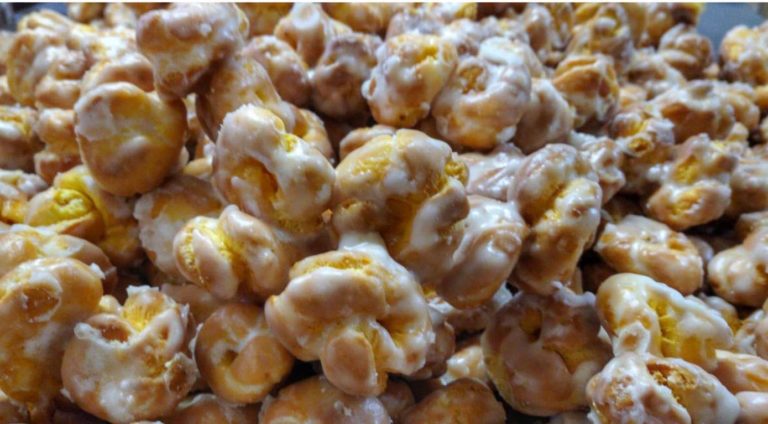
The traditional Galician pastry has one of its pillars in Melide. Its well-known melindres and almendrados, and its genuine ricos, are three star products and an important part of the gastronomic identity of village located in A Coruña, a few kilometres from the geographic centre of the community.

The care for tradition, the wise choice of raw materials and the affection with which the different pastry families of the town have made the product for several generations are the key to maintaining and consolidating their top quality artisan products. Therefore, it is not an exaggeration to say that visiting Melide is discovering the sweet heart of Galicia.

Today, there are 8 establishments’ inheritors of their respective family traditions, a practice that began in private homes but gradually passed from the kitchens of Melidense homes to artisan workshops. For this reason, a walk by the downtown streets can become the most tempting challenge for people who love twelve.

“What we did in the workshops was to collect the legacy of the recipes that were made at home,” explains Alberto Rodríguez, head of the Pastelería Estilo, one of the establishments located in the historic area of ​​Melide. At 47 years old, he is the fifth generation of a family saga dedicated to the artisanal elaboration of traditional Melide pastries. Over time, this activity has undergone some changes, but always respecting the essence and tradition.

Famous almedrados and melindres, but unknown ricos

The strategic location of Melide, as a crossroad, has a lot of weight along the history and traditions of the village. Place of celebration of markets and fairs, stop of the pilgrims who go to Santiago by the French Way or the Primitive Way and old conventual location; It does not seem strange that we are talking about a reference of the confectionery and a good place to taste other products such as octopus or cheese.

With so much dynamism and commercial activity, nor is it surprising that foreign ingredients such as almonds would reach latitudes like these. A nut that, beginning to appear on the most refined tables of Galicia – it was a distinctive element in the after-dinner tables of well-to-do houses since at least the sixteenth century – became popular in the second half of the nineteenth century, when traditional Galician gastronomy took form. For example, we can find almendrados in Melide, but also in other Galician towns such as Allariz (but with some differences in their preparation).

Of all Melide’s pastries, the melindre is undoubtedly the most famous one. This kind of bagel made from wheat flour, cow butter, egg and sugar is a local icon and rare is the case of the person who stops or visits the village and does not leave with a package in hand. “The almendrado was always closely linked to the fairs,” explains Alberto Rodríguez; who remembers that his great-grandmother already sold her own elaborations in these kind of markets. It was the generations after that of this enterprising woman who opened an office to sell a product that, today, succeeds as a tourist attraction.

The ricos (a kind of cookies made with flour, eggs and cow butter) are the most unknown sweets, but the only genuine ones in this town. Alberto Rodríguez explains that, although local customers know about this unique product, it is necessary to extend its promotion in order to make them more popular.

Respect for tradition and raw materials: the keys

For Alberto Rodríguez, pastry of Melide is a “food craft” work and, in that sense, defends his work respecting the recipe and inherited tradition and “respecting the raw material”. Thus, he remembers that the activity is also and immaterial heritage closely linked to popular culture.

Regarding the recipes, remember that each business has its little peculiarities: “If we were to do a blind tasting with different melindres, I would find that there is a common base, but also a house brand”, explains the Melidense, who insists that artisan work is present throughout the entire production process.

The key is, therefore, the choice of the best raw material. In the specific case of eggs, Rodríguez is committed to the proximity product, which combines sanitary guarantees and maximum freshness. To achieve it, he has worked for many years with a local farmer: “The egg is a living product that evolves. If the egg is fresh, the yolk separates very well from the white and has a quantity of protein that, when mixed, allows me to generate a type of product that gives a specific texture”, explains.

The artisan also gives the example of butter, preferring the one made with clarified cow’s milk. In this sense, it recognizes the great effort that some Galician producers are making when working, generating a raw material that is essential for the production of traditional sweets.

Thus, he warns of the dangers of deviating from tradition and the genuine recipe: “If, for example, we do not respect the rich itself, and that traditional butter flavour in Galician pastries … These are flavours that are in danger of extinction”.

Alberto Rodríguez warns of the dangers of deviating from the recipe: “If we do not respect the rich one itself, and that traditional flavour of butter in Galician pastries … These are flavours that are in danger of extinction”

Past, present and future

The activity has changed a lot from the times in which Alberto’s great-grandmother attended the fair with her homemade melindres. Nowdays, the family has an artisan establishment on the central Progreso street that, in recent decades, has been registering some growth. It was her grandmother who started the sale in the store, but as a complementary activity to the cafeteria that her husband had: “Today, the pastry business has its own identity”, points out.

The ways of consumption have also evolved in these years: from sweets linked to specific moments or celebrations, to a powerful tourist attraction.

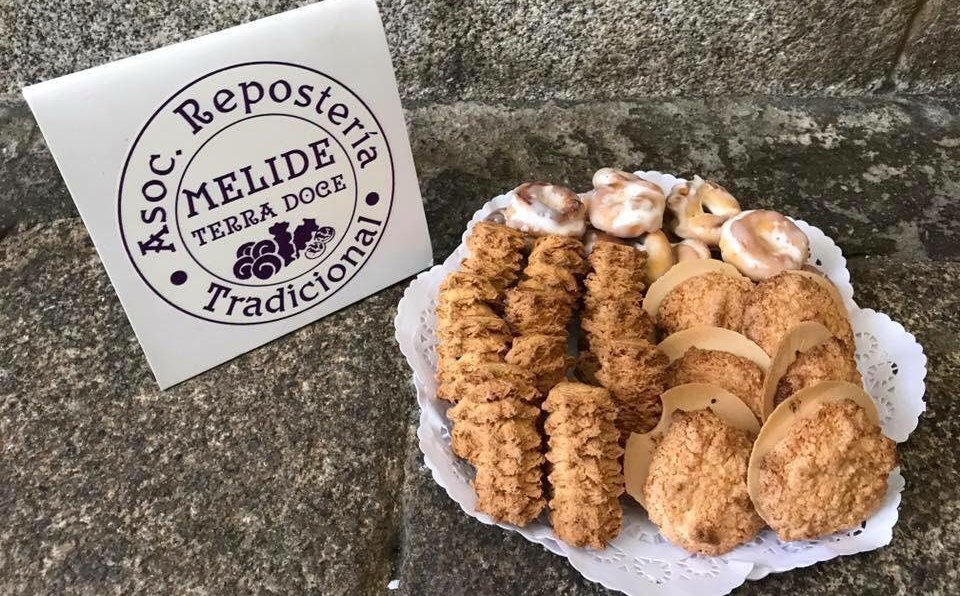
Catro establecementos unen esforzos a través da Asociación de Repostería Tradicional Melide Terra Doce.
Melindres, almendrados and ricos.

The point that has not changed over the years are love and respect for tradition. Four of the traditional businesses in the town have created the Melide Terra Doce Traditional Pastry Association, which is currently chaired by the manager of the Estilo pastry shop. “We start from the same common idea: the product is good because the recipe is good. So we work so that the customer is not misrepresented or deceived”, explains Alberto Rogdríguez.

He also thinks in the future and, from his personal point of view, it us necessary to achieve “dignify the profession”. “We would like to be able to live from this in a dignified way: viable and stable” concludes the craftsman.

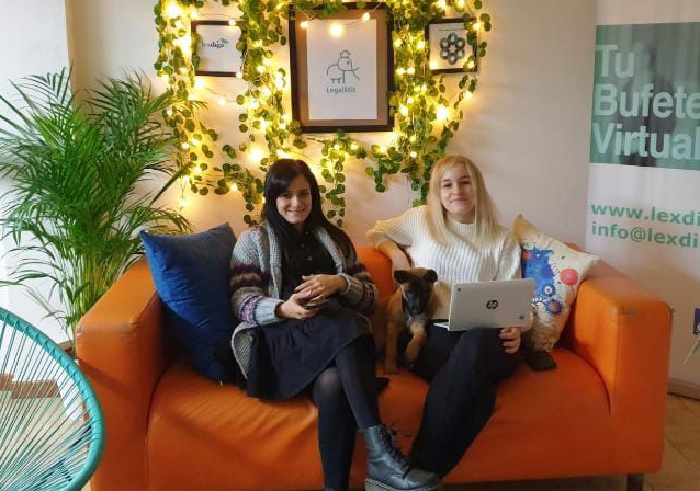
Legalmit, a software for integrated telework management

They say that every cloud has a silver lining. 2020 was a year of paralysis for almost all economic sectors. But not for Leticia and María Seara. Two partners who had just founded Legalmit, a company based on comprehensive communication and management software for law firms. “We integrate technology in a natural way, including all kinds of tools: communication, management, videoconferencing, digital signatures…”, says Leticia Seara. Or to put it another way: a 360º office where technology is integrated “in a natural way”. In other words, all the roles of the company, its workers and collaborators and its clients are at your fingertips.

“It is a more collaborative, fast and agile way of working, without the need to go to the office”, explains one of the founders. And although their software was intended for law firms, the high demand from other sectors led them to expand their offer. Today, Legalmit also offers its services to various academies and even gyms, with the aim of making online classes more affordable. The pandemic has therefore benefited these two partners. “The health crisis showed that more tools like this were needed. It validated our initial proposal,” they say.

Working with the cloud

Another of Legalmit’s strong points is that they work internally with the cloud. In other words, it is not necessary to connect remotely to the computer desktop. An improvement that they wanted to introduce, aware of the limitations in their profession. Both Leticia and María Seara are lawyers and it was they who became aware of “the need to change the way we work”. With their software they are looking for a more transparent and agile way of working, where there are no uncoordinated tools, but all of them work in an integrated way.

This project was born in Vía Galicia, a business accelerator promoted by the Zona Franca de Vigo and the Xunta de Galicia. It was 2018 and Leticia and María Seara already had in mind the development of a software that would facilitate coordination between employees and clients of law firms. However, it was not until the last quarter of 2019 that they began to commercialise their work and promoted Legalmit. Now they continue to participate in other initiatives and accelerators, trying to develop more ideas and keep their business growing.

An artificial intelligence project

One of their new projects is linked to artificial intelligence and machine learning. At the end of 2020 they immersed themselves in a new initiative through a grant from the Centre for Technological and Industrial Development. “This new project is linked to jurisprudence. We want to detect what is going to be the winning argument for the lawyer to structure his lawsuit“, explains Leticia Seara. Secondly, she continues, this will help to choose in which court to file the lawsuit. “Justice also has risks”, she says. For the time being, they are trying to develop and perfect the way it works, but hope to be able to take it to the field from next year onwards.

But this is not the only thing they have on their hands. There is less time left to welcome 2022 and Leticia and María Seara aim to focus more on marketing and sales. “We currently sell to Spain and Mexico, but we would like to expand our client base and automate this process even more”, say Legalmit. For the time being, they advocate a “powerful and stable” product: a single tool to carry out all the necessary procedures in a law firm, in an academy or even in a neighbourhood council. “Votes are called and recorded. It’s not just a question of raising by hand”, the company points out. Leticia and María Seara are already looking ahead to next year. Whether or not there is a setback, every cloud has a silver lining.

FREEdron, a multiple cartography of Galicia

Compared to classical methods of obtaining geographic data, such as topography or photonometry, FREEdron is a device that combines different sensors to capture that georeferenced information. In addition, it provides a modular and complete hardware-software solution that allows greater control in the collection of information, as well as its integration and basic processing.

The project is based on LiDAR technology, through which a signal is sent that, at a certain distance, bounces and returns to the receiver. Then, by joining that distance to positioning systems, a georeferenced vector is obtained in the air, thus knowing the coordinates of that point thanks to a device capable of reading up to 600 thousand points per second. Moreover, and with regard to other techniques, LiDAR has certain advantages when it comes to mapping spaces, according to Marcos López, manager of Cartogalicia: “Imagine that I want to have the digital model of the terrain of an oak grove. By photonometry, if I don’t see the terrain, with just the photo I can not extract information from the latitude elevations that are below those trees. The LiDAR allows us that penetration into the vegetation, and we could get the digital model of the terrain and the surface, which would be the top of the tree. And, from that, calculate many other things”.

Multisensor and multiplatform

To this sensor, where LiDAR is the center of everything, other sensors can be added and synchronized, to merge the point information with other data of interest. Thus, for example, in precision agriculture, LiDAR could be merged with a multispectral camera, which provides phytosanitary information on vegetation.

Moreover, the system can be mounted on multiple platforms, such as a land vehicle, an airplane or even a boat. A differentiating feature that, according to López, is not so simple: “multiplatform is not just taking it out of one place and putting it in another. The behavior of the sensor will be different depending on the type of vehicle, so development is needed for the calculations to differentiate between land, air or sea”.

Along with this interpolation of multiple capabilities, which make FREEdron’s LiDAR a more valuable device, is also the containment of weight and dimension parameters, fundamental determinants of the autonomy of an equally configurable and scalable end equipment. An optimization of the existing technology that allows, in turn, the optimization of the results of their customers, including companies in the industrial sector and the  measurement of forest forest masses services, as well as companies of topography, cartography or urbanism, both public and private. For these, and at the post-processing level of that data, there are two options: payment for use, in which they are provided with an information processing platform, or the sale of a permanent license.

RAWLIDAR and the BFAero

On the occasion of the award of the incubation phase of FREEdron, RAWLIDAR was born, in reference to obtaining “raw” data from LiDAR. The firm, which has earned the qualification of technology-based employment initiative, is owned by two companies. Cartogalicia SL are experts in geomatics and pioneers at the state level in the creation of cartographic products through the use of unmanned platforms, bringing to spin-out their expertise in cartography and mechanical engineering. For its part, and in response to the knowledge in the field of telecommunications and software required for the development of the project, RAWLIDAR is also formed by Ingeniería INSITU, a Lugo-based technology company that has a long history in field disciplines, as well as in electronics and software applied to the geomatic field.

The spin out participates in the second edition of the Business Factory Aero (BFAero), an accelerator for SMEs in the aeronautical sector of Galicia that need to systematize and consolidate their business model. Driven by the Xunta within the Civil UAVs Initiative (CUI), a strategic and pioneering initiative in Europe with the aim of attracting investment in the aerospace sector and proposing innovative solutions in the field of systems and unmanned vehicles, BFAero is the accelerator of the sector that it has the largest financial endowment at European level. In this way, projects such as FREEdron, in the incubation phase, can count on support of up to 100,000 euros at a loss.

“Obviously, the reach of the BFA is limited to a temporary space, an economic amount and some milestones. But being under the wings of BFAero is positive, because it allows us not only funding that, although not enough, it is a it helps, in addition to giving us visibility and providing us with tutoring”, explains López. The accelerator also participates in the elaboration of a complete plan for the development and commercialization of its product at local, national and international level, with a duration of 24 months for the incubation stage. It also offers tutoring with industry experts and access to CUI facilities and equipment, as well as its own office and coworking or training spaces on all those issues that affect their business idea.

TripleAlpha, the “big data” you could eat

Founded in 2018, TripleAlpha is a technology company specialized in data analytics, like many others. However, it is its approach that distinguishes Padrón’s consultancy from others in the big data sector: a work focused on the industrial field and, especially, linked to the food sector. “The founding partners come from this sector. We have more than 15 years of experience each, and we feel very comfortable. Many of the clients also already know us from our past,” says Álvaro Dosil, TripleAlpha’s technical director.

For these clients, the company carries out an automation of its data collection processes, as Dosil explains: “Usually, in companies the data is collected in paper format or manually. We take this data to the cloud and, from there, the models and technical applications of machine learning to help them make better decisions, both at the operational and at the business level”.

Machine learning in optimization processes

As a branch of artificial intelligence, machine learning is based solely on working with data. Data that, because it is the most abundant in industries, such as raw materials, speeds or wastage, is the object of TripleAlpha’s work: “With all of it we generate data lakes and, from there, we develop dashboards to help businessmen and production managers to make better decisions”, says Dosil.

In this way, the transformation of data into knowledge allows customers to obtain useful information. Information that significantly improves decision-making, having a direct impact on the profitability, and thus optimizing their business. As exemplified by the director, “if we go to a company in the dairy sector, the one who makes the decisions is usually a master cheesemaker. Therefore, many times the decisions are made based on experience. But what our systems do is that the decisions are solely and exclusively taken based on data, to reproduce patterns that worked in the past and identify which were the optimal processing conditions. Our system recommends these conditions to the master cheesemaker, in order to achieve more profitable products that are also always very homogeneous”.

The BBFood accelerator, starting point for Alpha Cloud

An application of this knowledge is the project called Alpha Cloud, the cloud tool that facilitates the improvement of production processes. “When we started, we were focused solely and exclusively on the analysis of company data. But we realized that industrial companies still lack a lot of data. At that time we decided to bet on creating Alpha Cloud, a data monitoring platform that works with cloud tools like Microsoft Azure”.

A project for which the BFFood accelerator was vital, and for which they received an endowment of 25,000 euros: “At that time there were only three of us. We didn’t have many resources, so we decided to present ourselves to the BFFood accelerator. And it was a decisive step. Many of our customers who are in the food sector, they got to know us at that stage, which allowed us to do real networking”. The accelerator helped them develop Alpha Cloud, with the help of the Torre de Núñez company, which acted as their mentor and, subsequently, they also participated in the consolidation phase, with the Galacteu company. “Right now we are already working with Alpha Cloud for the food sector and other sectors, for which we are very grateful to Clusaga, the Galician food cluster,” adds Dosil.

The platform has allowed them to consolidate their position in the food sector, in addition to facilitating their entry into other areas such as textiles, the automotive industry or services. Because its system has application in all types of sectors or companies, according to the technical director: “We can work in any sector where there is a dependent variable, and try to model what are the causes that affect that objective indicator. For example, in the dairy sector. The objective in this sector is to produce the greatest quantity, but also quality, of milk per head of cattle. And that depends on the feeding, vaccination or the welfare of the cows. What we do is correlate all these parameters to design models that allow optimizing this process. So, wherever there is a dependent variable and there are independent variables that affect it, we can model those relationships”.

A triple profile company?

As Dosil, an industrial engineer and doctor in particle physics, relates, TripleAlpha was born after years working in Switzerland at CERN’s particle accelerator: “In the process which is the academic career, I saw the possibility of applying this knowledge of data science, which is applied to the analysis of pure physics, to the industrial field. And I returned to Galicia and we decided to set up TripleAlpha”.

Belonging to a STEM career, with an average age of 30 years and being women a 60% of them, the eleven people who currently make up the TripleAlpha staff also respond to a triple profile, distinctive of the projects carried out by the company that the physicist directs: “We have industrial engineers, who are the ones who analyze the process, who detect areas for improvement. We have mathematicians and physicists, who are dedicated solely and exclusively to the analysis part. And we have computer scientists and telecos, who dedicated to developing computer applications or web forms”.

Strategic sectors with projects of future

From the beginning, TripleAlpha made a firm commitment to the strategic sectors of Galicia, for which it is formulating various vertical solutions. One of them, for the dairy sector, known as DigitLAC. According to the technical director, “this solution, built under Alpha Cloud, aims to be a comprehensive solution to ensure that the livestock sector, by analyzing the information it has today, is more profitable and more productive”. Through a partnership with PS VET, the Galician veterinary company provides them with the knowledge of the sector, to which they apply their experience in data science: “The platform aims to collect all the information from the farms in order, with that information, to help the farmer to make decisions regarding vaccination, feeding and care of them, to produce more and better quality milk”, he adds.

In addition, this company, which has the seal of innovative SMEs, participates in an industrial thesis with the University of Santiago: “Industrial theses are theses that are made between the academic and industrial fields. In this, in which it participates the Galician Institute of Physics of High Energy of Santiago (IGFAE), we try to see what are the limits of machine learning, in order to apply them to the industrial field. Because we have to always be on the frontier of knowledge, to be able to take it to the industry”.

Glecex: research at the service of food and cosmetics

Only 30 seconds of application on hands. A moisturising, alcohol-free lotion with biocidal properties. That is, capable of killing encapsulated viruses, such as coronaviruses, including SARS-Cov-2, and influenza viruses. It does not yet have a name but would serve as an alternative to the well-known hydroalcoholic gel. The difference: it has only natural ingredients. So says Enma Conde, one of the partners of Glecex, the Galician company that developed this formulation. Armed with optimism, they hope to start marketing it at the beginning of 2022.

“To date, it is the only hand product that is alcohol-free and has certified biocidal properties“, explains Conde. They are currently in the process of registering their lotion with the European Chemicals Agency (ECHA), an essential step for its future commercialisation. “Although we already have the formulation and the prototype, we are still working on this project. In fact, we have already carried out a test on human volunteers to verify that our product is compatible with the skin and does not cause irritation, but moisturises,” adds the Glecex partner.

Connect-19 programme

The development of this product is part of Connect-19, a programme promoted by Xunta de Galicia with the aim of finding innovative solutions to reduce the impact of Covid-19. “It was a great achievement for us to finish this initiative with a certified product,” says Conde. They are getting closer to making their project available on the market in the form of a lotion. “We determined that this was the most stable and compatible option with the ingredients,” explains Glecex, ruling out other prototypes such as gel.

But this is not the only project in which the Glecex team, led by Enma Conde and José Manuel López, is immersed. This Galician company, based in Ourense, was founded eight years ago. Its partners came from the world of university research but decided to turn their careers around and embark on an entrepreneurial venture. The essence of Glecex lies precisely there, in offering an I+D+i service to different sectors, especially the food and beauty sectors. “Our aim is to support companies in their research and development projects for new products,” explains Conde.

Anti-inflammatory capacity

“We are currently working on a project to determine the anti-inflammatory capacity of certain ingredients”, explains Glecex. In the tests they have already carried out, they were establishing whether these natural extracts had the capacity to inhibit some of the enzymes related to metabolic diseases, such as hypertension, cholesterol or diabetes. They are currently involved in a project to develop functional beverages that may have this anti-inflammatory capacity.

But they are not only working with the food sector; they have also made the leap to cosmetics. “What we do is to develop an ingredient, which would be the star element of this cosmetic line, from the raw material chosen by the client”, says Conde. Glecex develops the whole process of extracting that ingredient, ensuring personalised treatment. “Nobody else on the market is going to have the same cosmetic element”, the company adds.

Duration of the projects

The duration of the projects they are working on is highly variable and depends on various factors. With the food sector, they tend to develop longer-term initiatives, lasting two to three years. On the other hand, in cosmetics, projects are shorter and have a more immediate result, in just a few months. Because at Glecex they are not only in charge of the development of the key ingredient, but also of the manufacturing.

“The only thing we want in the future is to continue working on this. More companies will be interested in our services and we will be able to develop our internal projects“, says Conde when he tries to predict what is to come. Outside of its client portfolio, Glecex also aspires to start more of its own initiatives, such as the development of a lotion with biocidal properties. But this is not the only project in the pipeline.

Microalgae in cosmetics

One of them is based on the properties of microalgae for application in the cosmetics sector. “We have just presented the results of a European project to Anfaco-Cecopesca. We were the only company in the consortium, and we were accompanied by research centres and universities”, says Conde. But the possibilities of microalgae in European cosmetics is not the only project, as they are also working with them in the food sector. “We found that by fermenting microalgae we were able to improve their biological properties. We saw that they have the capacity to inhibit an enzyme related to cholesterol synthesis“, says Glecex.

For now, his mantra is to continue working and achieving goals. And in addition to continuing to offer a personalised service to its customers, to be able to immerse itself in its own projects. Be it microalgae or biocide lotions. For the moment, they are still waiting for the bureaucratic procedures to be speeded up and their new product to be marketed as soon as possible. Be that as it may, they remain optimistic, keeping 2022 as their target date.

Innogando, the new livestock is here

Innogando, company from Lugo, is a good example of how new technologies can be very useful to solve problems in the livestock sector, despite the fact that for many it may seem that it is still a utopia to bring the latest technological advances to the field. The Rumi device and the Eliter application, which are beginning to be marketed by Innogando, show that there are many possibilities to develop this type of solutions for livestock.

Elio López, founding partner of the company, explains that the Innogando project arises precisely from the needs of farmers to have technology to help them solve the problems they have to face on a daily basis. “I am a veterinarian and I come from a livestock family and together with my friend Daniel Pardo, a computer engineer, we saw that the greatest need of farmers was to have the right tools to prevent animal diseases and also deliveries. That was the beginning of the project, ”explains López.

At first, they decided to develop a subcutaneous microchip to permanently measure the temperature of the animals and be able to draw conclusions from these data. After a year and a half of research, they found that there was a problem that was very difficult to solve in the device: the batteries ran out every month and changing them every so often was not operational. This led them to change the orientation of the project and move towards a device that would allow to verify the movement of the animals.

“In this way”, says López, “we came to develop the Rumi device that we are now starting to market and that allows us to know everything the animal does at all times and prevent situations such as diseases, the period of heat or childbirth” . Innogando manufactures both the device itself and the app it incorporates and is currently beginning to be marketed, with much interest from farmers. Initially the market is in Galicia and Asturias but the intention and take it to the other communities as of next year.

López points out that there is a very broad field to explore in which it refers to the application of technologies in livestock and in this sense they will continue to investigate in the coming years. In addition to the Rumi device, the company is developing the Eliter app that allows the incorporation of data of all kinds on calves, giving it greater added value to livestock production.

The Innogando project went through the business accelerator Vía Galicia in which, according to López, they had the opportunity to access a “very interesting” training and also facilitated access to the instruments of financing from XesGalicia and Vigo Activo and a grant from the Galician Innovation Agency (Gain) of 25,000 euros.

López points out that there is a very broad field to explore in which it refers to the application of technologies in livestock

At present, Innogando is participating in some calls for public aid to try to obtain more financing that will allow them to continue developing the company’s future projects, such as in the third edition of the specialized accelerator of the food sector Business Factory Food (BFFood) promoted by the Food Cluster of Galicia and Xunta de Galicia. “We believe that there are very interesting possibilities for growth because there are many problems that technology can help solve in the field,” adds López.

The company began with the initiative of the two aforementioned founding partners, but now a total of eight people work in it, among whom are veterinarian Carlota Antelo and electronics expert Daniel González as partners. The Innogando project was awarded by Agader for its contribution to the rural development of the country.

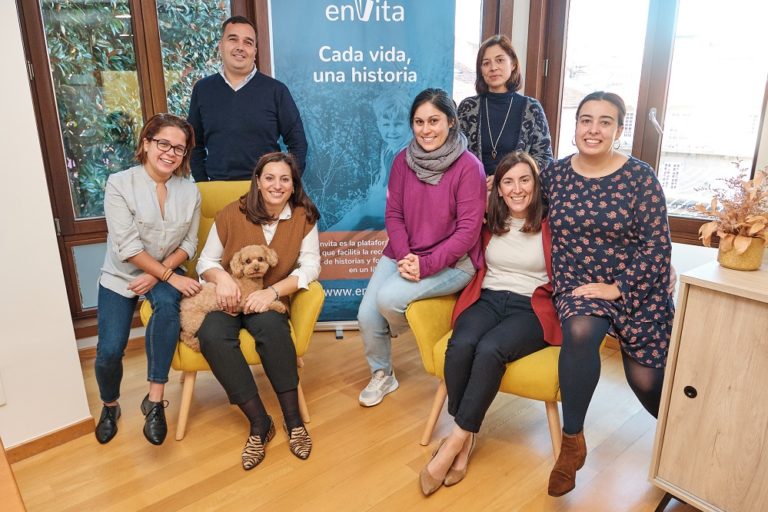
Envita, life stories to improve the care of the elderly

The experience in the management of centers for the elderly in various parts of the province of Pontevedra is the basis of the Envita project, a company that is committed to a paradigm shift in the care of this group that goes far beyond the care provided it usually lends in these types of centers. A new methodology allows taking a step forward in psychological care in the care of the elderly, much more necessary after the Covid-19 pandemic.

Noelia López, CIELO of Envita, explains that the project was going to start before the arrival of the pandemic but finally had to be postponed until the beginning of this year. “We have two types of products, life stories and the care and life plan that we are offering to the different institutions that work with the elderly. We are having a good reception and we already have clients from Galicia and also from abroad ”.

The use of technology is one of the essential elements of Envita’s project, but it is also essential to offer professionals in the care sector the largest available teaching materials to work with. Another important point is to propose very simple technological solutions so that the elderly themselves can become familiar with these types of tools that will also help them exercise their memory.

“The Envita Stories program,” says López, “consists of a platform that allows institutions that serve the elderly to offer them the possibility of taking a portrait of their lives. We use different types of tools that allow us to build the soundtrack of the life of an old man. The final product can become a book in physical and virtual version that is delivered in a small ceremony to the protagonist himself ”.

Another of the company’s programs will include the Envita Plan app, a practical and participatory tool that allows digitizing the person-centered care model. In this way, communication between the elderly, the professionals of reference and the families of the users of the centers is favored. These types of solutions are the beginning of a path for a change in the culture of care that became even more evident with the impact of the pandemic on nursing homes.

Given the long experience of Envita’s creators in this field, they are very clear that it is necessary to face a change in the culture of organizations and bet on putting the life project of the elderly as a priority. The solutions that Envita offers go in this direction. “We needed new instruments to start this new model,” says López.

Envita’s creators are very clear that it is necessary to face a change in the culture of organizations and bet on putting the life project of the elderly as a priority

Envita was part of the Vía Galicia accelerator and was also in the “Principia” program, @ both supported by the Galician Innovation Agency (Gain) of the Xunta de Galicia. The latter was “very important” for the start-up since it allowed them to hire a digital manager, among other things. The company was also one of those selected in the Connect-19 program, organized by the Xunta and Tecnópole, which allowed it to advance in the process of digitizing care and life plans.

López hopes that this new model of care for the elderly promoted by Envita will eventually spread to Galicia, in particular, and to Spain, in general, as is already the case in other northern European countries and also in the United States. By next year Envita will also study the possibility of offering its products and methodology in other countries. “We have extensive experience in training that has allowed us to train more than 3,000 professionals throughout Spain and this is also important towards the development of this project,” concludes López.

NutriGen 4.0, a bet towards healthy eating based on innovation

The company Hifas da Terra and the business organization of the canning sector Anfaco-Cecopesca collaborate in the NutriGen 4.0 project that aims to develop an intelligent and environmentally friendly industry that contributes to turning Galicia into a benchmark in healthy eating. The project has a budget of two million euros, co-financed with the Operational Program Feder-Galicia 2014-2020, and is part of the “Smart Factory” program called by the Galician Innovation Agency (Gain) of the Xunta de Galicia.

According to Arturo Rodríguez, the director of Innovation of Hifas da Terra, the project will allow optimizing production processes and obtaining new nutraceuticals, a line of products in which the company has been working for years and which consists of food supplements from of fungi, which help to prevent diseases or improve their treatment.

“NutriGen 4.0 takes advantage of the results of the previous R&D projects of Hifas de la #Terra in which we discovered that we lost potential in the strains of certain fungi, due to not knowing all the details of the production processes. This project tries to improve the automation of the production process and this is a field in which Anfaco’s experience is very important, ”says Rodríguez.

The project will allow the production of new secondary metabolites of several species of fungi from the collection that Hifas da Terra already has, applying control sensors and monitoring in real time, communication with warehouse control software, automated order management. production and automated quality analysis protocols.

For the development of the activities foreseen in the project, 4.0 tools had been used and a complete study will be carried out on a theoretical basis that will cover the entire process, using NIR and hyperspectral image from the input of raw material and monitoring of the product. Computational calculation tools, advanced mathematical simulation and Big Data will also be used for the study of fungal strains. In addition, a study of the safety and efficacy of the prototypes generated will be carried out and their potential for customization in humans will be analyzed in relation to their xenic profile.

This knowledge will serve to select the processes with the greatest industrial interest for their definitive implementation at the end of the project, improve the specificity of the proposed protocols and the commercialization of new formulas with optimized processes. “We are at the beginning of a project with which we started the end of 2020 and we hope to have a first product prototype in the last months of 2021 and be able to commercialize it in two or three years. Later, we will continue with the development of other products ”, points out the R&D director of the company Hifas da Terra.

NutriGen 4.0 had been developed in the facilities of the company in Bora (Pontevedra), where the pilot project will be carried out in highly technical rooms to later be able to move towards a validated production system. Rodríguez explains that R&D is a field in which Hifas da Terra has long experience and is currently working on several projects that are already obtaining results in collaboration with hospital centers of the Galician Health Service such as those in Ourense and Vigo.

The project has a budget close to two million euros and the first products will be able to be commercialized in two or three years

In the R&D department of the company they have very varied professional profiles, from laboratory technicians to biologists or veterinarians and also doctors and pharmacists who collaborate in research. The company investigates the role of fungi in the prevention and treatment of cancer and neurodegenerative, cardiovascular and autoimmune pathologies.

Hifas da Terra has a biotechnology center focused on research and innovation with a high degree of specialization in the development of nutraceuticals from medicinal mushrooms. For its part, Anfaco-Cecopesca is a private business association that represents nearly 250 companies in the marine and food sector. It has a technology center from which it provides high added value services to its associates.

Celtarys, biochemistry at the service of new drug discovery

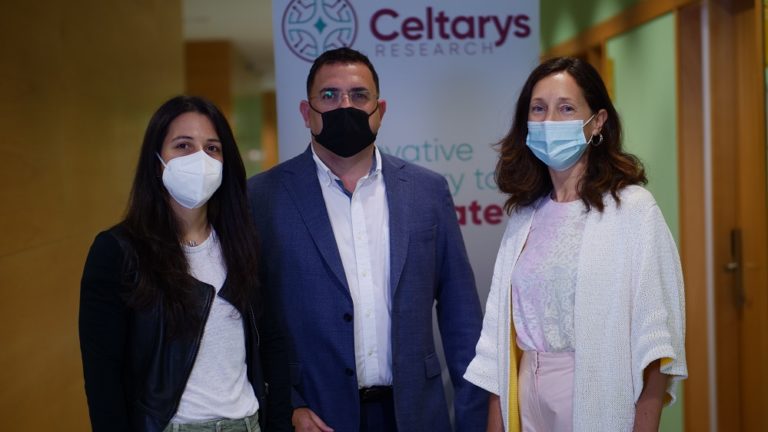
Celtarys, spin-off of the University of Santiago (USC), was born three years ago at the initiative of the professor of the Faculty of Chemistry Eddy Sotelo, who since 2009 has been carrying out research in his laboratory on the use of chemical tools based on fluorescence for the research of new drugs. The project became part of the Ignicia program in 2018 and at the beginning of this year a spin-off was created that will carry out the commercialization of the products designed from the research carried out.

Sonia Martínez Arca, CEO at Celtarys, explains that the start-up’s activity focuses on the discovery of a type of molecule called “ligands” that are used in biotechnology to advance the discovery of new drugs. “We are working on the investigation of fluorescent ligands that are an alternative to the radioactive ones that have been used until now. They are difficult elements to design and synthesize and for this reason there are currently few fluorescent ligands for clinical trials. What we do is accelerate the synthesis process to make fluorescent ligands that can work on any type of target during the research process of a drug ”, indicates Martínez Arca.

The ligands that Celtarys works with make it possible to avoid the use of radioactive elements in the research process and also represent cost savings. It is a type of product based on biotechnology with great potential for development in the coming years. The Galician company already has a validated technology in this field and is now beginning the marketing phase of its products.

“The development costs of new drugs have increased a lot in recent years and biotechnology companies need to improve their competitiveness in this regard,” says Martínez Arca. Celtarys’ business model will be based on three elements: the sale of the company’s catalog of fluorescent ligands, the development of new ligands for companies that have new targets in their research, and reaching agreements with other companies in the sector that can apply Celtarys technology in different types of tests. 

Martínez Arca explains that the main objective of the company at the moment is to publicize its technology and achieve a good situation in international purchases. Celtarys is currently in the final stage of reaching a major funding round to develop its business plan. The forecasts are that the company could reach a turnover of more than 3 million euros in 2024 and in this way it would already be able to obtain benefits.

The company has a group of three main researchers and also has the support of the research group of Mabel Loza, professor of Pharmacology at USC and head of the BioFarma research group, which is in charge of the pharmacological validation of the tools developed by Celtarys.

CELTARYS HAS THE MEDIUM-TERM OBJECTIVES TO GIVE KNOW ITS TECHNOLOGY AND GET A GOOD SITUATION IN INTERNATIONAL PURCHASING

Martínez Arca highlights the importance that inclusion in the Ignicia program had for the project, since it allowed them to encourage both the financing part and the commercial development. He also points out that Celtarys is part of the BioIncubaTech program, which is facilitating the company’s presence at various virtual fairs in the biotechnology sector and also helping the company’s brand positioning. Both the two aid programs are part of the support lines of the Galician Innovation Agency (Gain) of the Xunta de Galicia.

USC is part of Celtarys shareholders and also holds a patent developed by the company, which has a technology transfer agreement with the university. For its part, the Xunta’s venture capital body, XesGalicia, also provides financing and forms part of the shareholders of the new company.