EMPATTICS: New Technologies at the Service of Chronic Patients

The European EMPATTICS program, in which the Xunta participates through Axencia do Coñecemento en Salud, has as a priority for the use of new technologies to improve care for chronic patients. Diseases such as COPD, diabetes and heart failure are the starting point to provide new monitoring and control mechanisms for the thousands of chronic patients that live in Galicia. The program is underway with the main target of achieving specific results in the near 2019.

“The model of Pontevedra has been replicated because it applied a humanistic strategy”

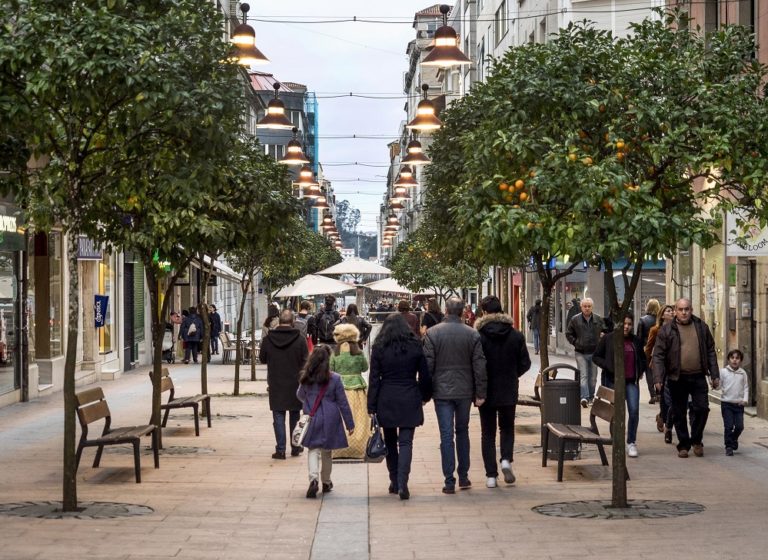
Ramón Ledesma, lawyer and current adviser at PONS Seguridad Vial (Road safety), has dedicated part of his professional career to studying mobility issues in cities and strategies to solve them. Among the positions that he has recently taken up is the General Subdirectorate of Regulation and Resources of the DGT (highway patrol management). This is the place from which he implemented the penalty points on the driving licence system in Spain. This has contributed to a great decrease in the number of fatalities in the Spanish  roads. He knows very closely the experience of pedestrianization in Pontevedra, an initiative which is considered a milestone and whose philosophy is spreading the word about this model worldwide.

-You have been closely acquainted with the pedestrianization experience which took place in Pontevedra. What makes it different from the ones in other cities?

-I think there are two key factors to explain the uniqueness of what has happened in Pontevedra. The first is that the decision to implement a model of these characteristics corresponds to a political strategy that has been supported by the highest level of municipal responsibility and executed in a coordinated manner. All the councils act at the same time to give the city back to the pedestrians. The second factor is that it is a transversal project, where the human point of view predominates. The goal was to return the public space to the citizens who had lost it to the benefit of the vehicles. In other places, decisions are made on a case-by-case basis, but there is no strategic vision that is carried out from high above. In the case of Pontevedra, in addition, this decision has been politically profitable because the mayor still remains in his post after many years.

-Given your experience as an adviser in other countries, do you consider that the Pontevedra model is also a viable one in other larger cities?

-It is a fully exportable model. Pontevedra is not a small city, it has about 70,000 inhabitants, and if the same model is applied to larger cities what will have to be done is to create small “Pontevedra neighborhoods” within the same city. Traffic must be concentrated on the big avenues of cities, so that 80% of the streets are almost free of traffic. In Pontevedra has been achieved so that vehicles arriving from outside of the city are directed to the downtown parking lots and if they do not park there, they are practically expelled from the city and have to re-enter.

-Can it be said that other cities will follow suit regarding this model of pedestrianization in spite of strong opposition in other places?

-No doubt, this model is becoming more prevalent. In the first decades in which the cars appeared, cities were transformed to give them space but now there is an opposite movement and the tendency is to follow this kind of model in the city centers. Most definetely, people will follow suit and the implementation time will depend on the political momentum and also on the pressure of their citizens. In this sense, Pontevedra leads the way and that is why from PONS we have dedicated a book to analyzing what Pontevedra is all about regarding pedestrianization.

Pontenciencia: little scientists

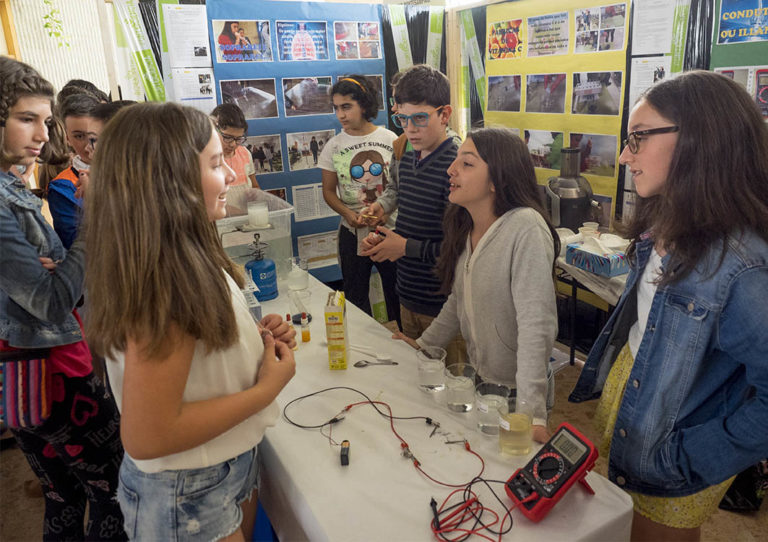
Little scientists who learn from early years hot to do scientific research in school. More than 300 students participated in the Pontenciencia event, which is held by the Concello de Pontevedra with the patronage of FECYT. 18 experiments and an awful lot of eagerness to take part in an event, which sparks the critical thinking of the most captives and the ability to solve problems.

Gato Salvaje Studio, Surviving Among Giants is possible

With a product placement, which has reached 140 countries worldwide, may seem a miraculous achievement coming from humble business beginnings. But it is what they have achieved so far at Gato Salvaje Studio; a grass-roots company located in their hometown of A Coruña since its inception in 2010 and that has not stopped breaking barriers. The competitive industry of video games is the habitat in which they have been developing their products.  Innovation and adaptation are key factors in an ever changing market, which Gato Salvaje Studio has managed so well so far to distinguish themselves from the rest of the other players in this industry.

Sergio Prieto, one of the founders of the company, explains that “the video game industry has become the largest leisure industry in the world and that in Galicia and Spain there is yet so much more to explore.” In this line, Gato Salvaje does not only care about the development of new products, but also carries out the task of training new talent.

95% of the sales made by the company are targeted to foreign markets and four products with which it currently has in the market are distributed in English, although they have also implemented the Galician language. Games like the AR-K and BullShot have been very successful. The first of them went over the mark of 150,000 units sold and was placed in the top 10 best video game sellers in Spain.

AR-K, launched in 2014, allowed Gato Salvaje to access the world’s largest video game platform, Steam, which has over 150 million active users. AR-K is a graphic adventure, which has recently added to their team as a scriptwriter the prestigious American comic artiste Greg Rucka, winner of several Eisner awards and author of the famous saga of Gotham Central.

Prieto points out that “at Gato Salvaje, they decided to stay in Galicia and contribute to the development of a new sector within the leisure industry, despite having a significant offer to go and set up offices in Canada.”.

The difficulty of receiving financial support is one of the key issues GSS is currently facing, and has had only the support of Xesgalicia to push into the overseas market  .

Aeromedia: drones with a galician soul

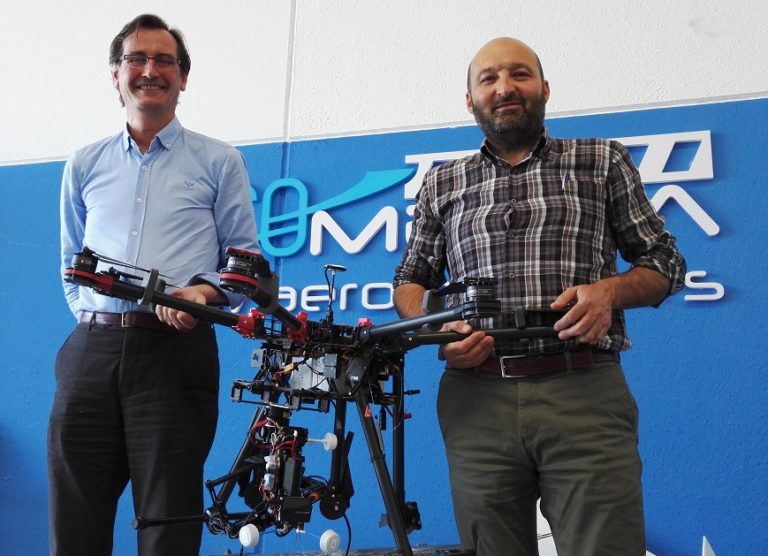
Aeromedia´s business track record  in just five years of trading is a good advance of the possibilities of growth, which lie ahead in the drone sector. The company, born and bred in A Coruña since its inception in 2012, currently has opened a total of 19 franchisees in different parts of Spain. This year, Aeromedia’s headquarters, based in Oleiros, expect to reach a turnover of 1.5 million euros, which is triple the number reached last year.

Carlos de la Rocha, founding partner of the company together with Aquilino Abeal, explains that the decision to embark on this adventure arose by combining his business vision with Abeal’s knowledge in the world of aeromodelling. The company was initially dedicated almost exclusively to audiovisual projects, but soon evolved and has been able to develop four other lines of business: emergency sector, industrial inspections, agroforestry and training.

The five branches have balanced their income but the inspection in the industrial sector is the one that shows greater possibilities of growth and is one of the main reasons for explaining this large expansion through franchising.

De la Rocha also has highlighted the development possibilities shown at Rozas drone center, promoted by the Xunta, as it may encourage the participation of groups of  other Galician small and medium companies in a sector with a promising future. Aeromedia now has 16 workers and expects to have 25 by the end of this year. The possibilities of ongoing growth in the future are great, since “there are markets that until now were not mature and now have begun to be so,” says De la Rocha.

Walking Reduces significantly the Risk of Brain and Physical illness

A study published by the journal of Preventive Medicine in 2013 quantified the health impacts on obesity by cutting down on traveling by car, using public transport and taking cycling when traveling around in Barcelona. The results showed great health benefits by replacing 40% of long distance movements by car for public transport.

In addition, the reduction of exposure to airborne contamination by microscopic particles resulted in an annual reduction of seven cases of low birth weight, six premature births, one cardiovascular disease and one lower respiratory tract infection.

David Rojas, a researcher at the CREAL (Center for Research in Environmental Epidemiology), warned that “the results show that transport policies to reduce car travel can yield significant health benefits in terms of reduced obesity, often times for those who take up active transport”.

The World Health Organization (WHO) specifies the need to practice at least 150 minutes of moderate-intensity aerobic physical activity during the week. Walking as a means of transport is considered a moderate activity, suitable for achieving the recommended levels.

Senseitrade, A Stock Market Networking Benchmark Conceived in Galicia

0

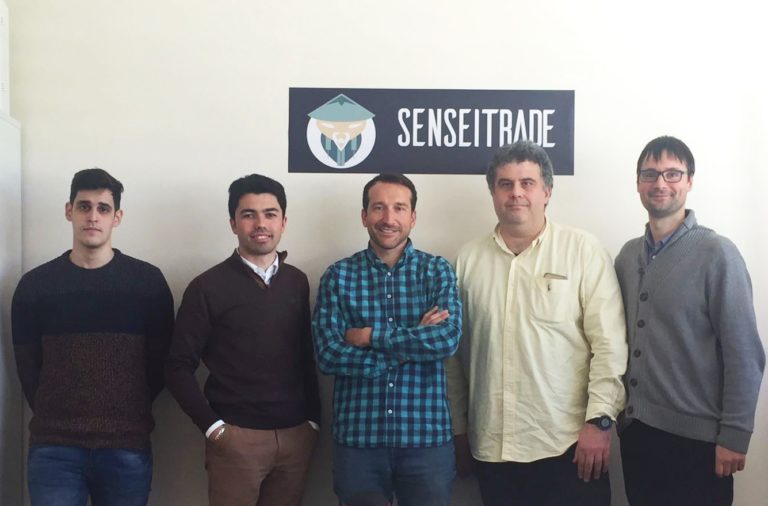
A group of Galician entrepreneurs saw that there was an opportunity if they could combine the world of the stock market with social networks. So Senseitrade was launched. Its founders developed an application for mobile devices, which analyzes messages posted on the world wide web and relates them to possible fluctuations in the value of shares. David Conde, CEO of the company, recalls: “We saw that a tweet or an opinion from an investor posted on the networks made the markets react to it.” With this idea, this economist decided to leave behind a wide background in the private banking and to start off this new project.

Pantalla de Senseitrade.

“There are many studies that show the relationship between what is published on social networks and the values of shares,” says Conde. He points out, in particular, a study by the University of Munchen that, after analyzing 250,000 tweets, it is possible to predict the evolution of securities with an 87% success. Similarly, it explains that there is also an 80% relationship between the volume of messages and the volume of movements over a given share.

Thus, through the compilation of messages and a semantic analysis of these messages, developed their application, already available for iOS and Android which has three separate sections.

“In ‘Top Values‘ we have the most talked-about-companies, either for better or for worse,” explains David Conde. In the ‘Alerts‘ section, the application warns the user when it might be a good time to buy or sell certain shares. Finally, there is the ‘Trader‘ section, where you can test the indicators provided by the application and enter competitions organized by Senseitrade.

Since the launch of the latest version, in November 2016, the ‘app’ of Senseitrade already adds about 10,000 downloads and is constantly improving. The proposal was already selected in the ViaGalicia accelerator, of the Vigo Free Zone, and participated in several initiatives.

Qubiotech: Neurotechnology is Best Patient Care

0

Interpretation of medical imaging is a common concern for healthcare professionals. A small detail in a diagnosis can be vital for the health of patients, this is the reason why it is necessary to have the best technology available to prevent problems.

This is the ethos of Qubiotech-a company based in A Coruña, Spain which was established at the end of 2014.

It was born “from the transfer of an algorithm developed by the research group in Nuclear Medicine and Molecular Imaging of the Ramón Domínguez Foundation, associated with the CHUS Nuclear Medicine Service”, explains Daniel Fernández, manager of Qubiotech. The algorithm was transferred to the company through an exclusive worldwide marketing license agreement, which has been granted for a period of 20 years.

Dispositivo de Qubiotech.

With this tool, the company was able to develop its first product, Neurocloud, which is already being used at the Nuclear Medicine Service of the University Hospital of Santiago de Compostela.

“It is a platform that houses an algorithm capable of clustering, in a single document, several images taken through different techniques,” says Fernandez. With this technology, through an online viewfinder, it is possible to analyze each of the treated images separately.

Another interesting and important fact about this technological breakthrough is that it offers information based on a statistical analysis which allows to observe the differences between the features of the patient and a database with information about healthy individuals. In this way, any anomaly can be more easily detected, especially in the case of brain ailments. On the other hand, Qubiotech also offers other custom software development services, useful for clinical and pre-clinical studies.

‘Today everyone wants their own street to be a car free zone’

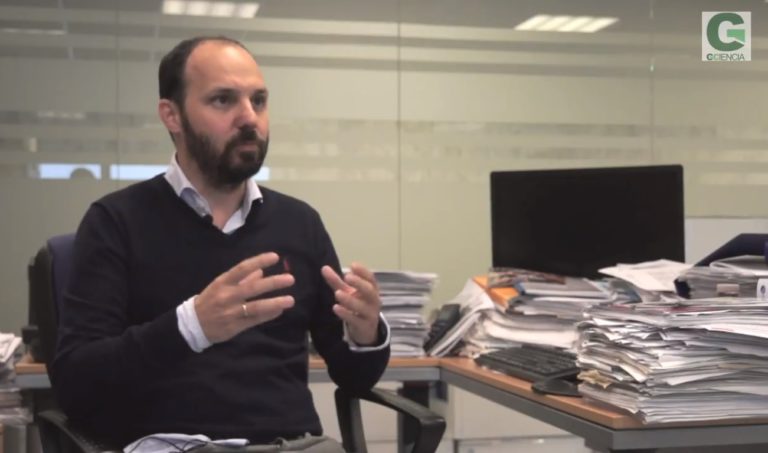
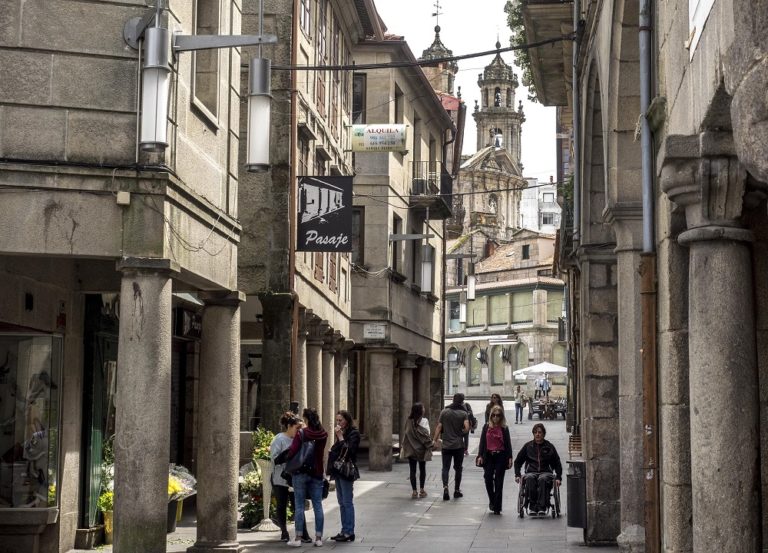
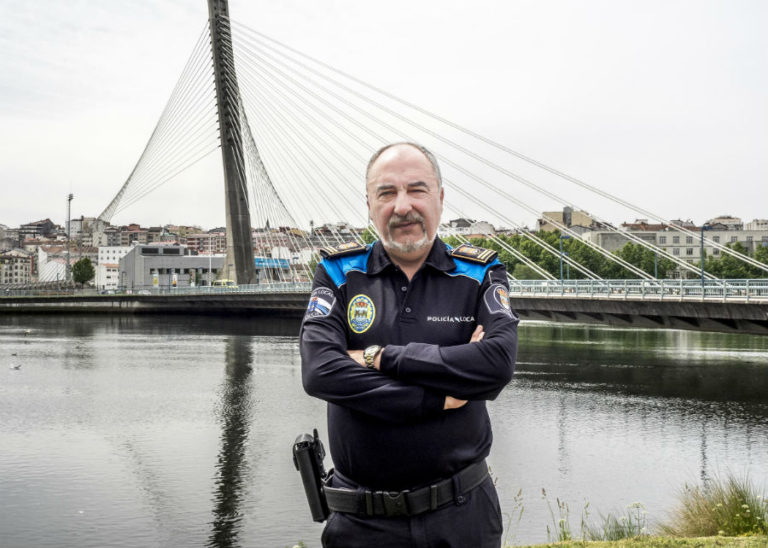
Pontevedra may not be a paradise. But the truth is that the city has been way over  2,000 days, longer than six years, without having to mourn a fatal victim due to traffic accidents. And it is also true that while Galicia is on the verge of demographic suicide, in Pontevedra there have been more births than deaths for the past 9 years. And at the UN, and in Dubai, Florence, Brussels, Beijing or Hong Kong, the city of Pontevedra has received awards for its urban model. Since 2005, Daniel Macenlle Díaz (Moaña, 1955), is the head of the Local Police. She believes that the commitment to pedestrian mobility has made “people feel even more proud of being pontevedresa”.

-There has not been a fatality in the city for six years regarding traffic accidents. Is it evidence that the model is well worth it?

-Undoubtedly, there is plenty of evidence. In 1999 the process of urban reform began, and since then the number of deaths and injuries has been falling every year. Our idea focuses on two key traffic issues: Volume Reduction and Calming. Casualties and mortality have a lot to do with traffic speeding, so we act on that, with legislative and physical measures which prevent drivers from committing offenses. And so far, it has worked.

-What other figures justify the commitment to a new model of a city that has forged this reputation for Pontevedra?

-The number of accidents since then has remained constant, with about 800 per year, but its severity has been greatly reduced. As we have already mentioned, there have been no deaths since 2011. But in addition to this, between 1999 and 2008, when the reform was still starting, there were 486 serious injuries traffic related. Between 2008 and 2016, only 113.

-What do you repeat most when you tell your experience to the world?

They get surprised. They ask: ‘But this can this really be done?’ What worries them most is whether we had a lot of resilience at the beginning and how smoothly we managed it.