Castañam: Innovative Gourmet Food

Getting an innovative project kickstarted in a rural area, away from the large business centers, may seem like a utopia, but there are times when you see a chance and you have to grab it. In the case of Castañam– one of the main catalysts was the actor Rubén Riós who began the project with his brother and this family business is deeply rooted in his family. “We had both worked in the family businesses (shop, supermarket) that my parents had in Riós (Ourense), where classic products were sold and we wanted to invest in something innovative,” explains Rubén.

Rubén Riós, CEO de Castañam

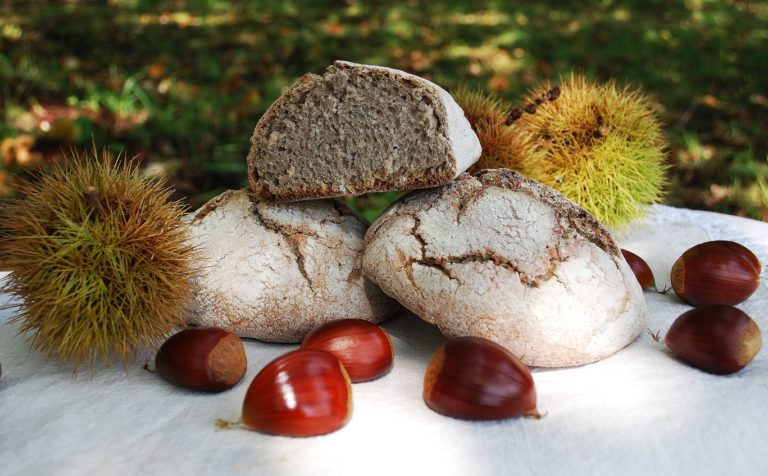
The abundance of organic chestnuts in that environment led them to take an interest in the possibilities of developing a new chestnut flour and after a process of trial and error, which took them over a year, with the important cooperation of the local bakers, managed to find a formula to make bread with a high percentage of this type of flour, with high quality standards and that would become the star product of the project.

“It is a product that is marketed to restaurants and businesses alike because its price is high compared to the common bread loaves (between 10 and 13 euros a kilo). The top end of the catering business is an important niche market for us and we have the support of chefs like Iván Dominguez and Juan Crujeiras who use it in their restaurants, “says Riós.

In addition to bread, Castañam sells other products made with freshly picked up organic chestnuts such as Galician jam, jelly, marmalade and muffins. They only have just opened their own store located in A Coruña and do not plan to open more because it is intended to distribute the products through stores specializing in gourmet foods in a growing market, such as Coren (which has landed them a distribution deal) in several localities.
Galicia in the CERN


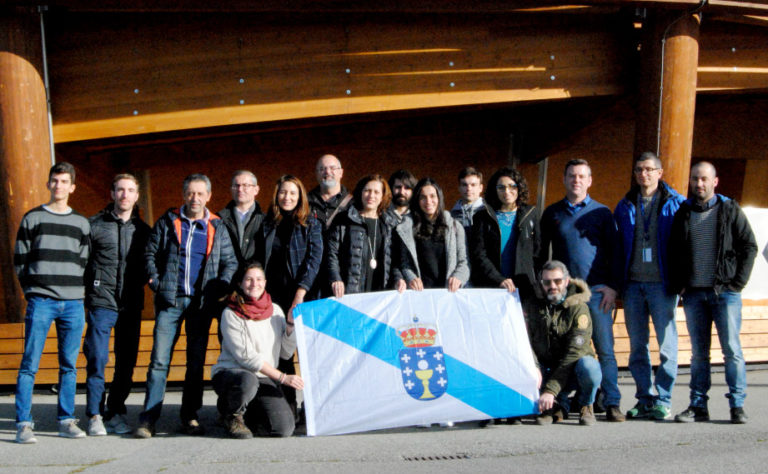
GCiencia visits the galician workers of CERN. The CERN, between France and Switzerland, very close to the city of Geneva, holds the greatest experiment in the world. A tunnel of 27 kilometers of circumference to collide particles at a speed very close to the speed of light. The objective: create conditions similar to the Big Bang and discover the fundamental components that build the Matter and everything we know.

Here, a complet report about de galician scientists in the CERN

Investigation with a focus on patients

Research in the health field is a long-distance race that often takes a long time to give concrete results. The PRIS program of SERGAS, developed by the Agency of Knowledge in Health (ACIS), aims to identify the research carried out in Galician hospitals which have more commercial potential. So that they are given a push that helps patients to a speedy admission into a hospital. In its second edition, this includes projects like the one led by Dr. Francisco Blanco to make a quick diagnosis of patients with osteoarthritis.

Project Reproesteatosis, Innovative Health Solutions Against Liver Ills

The fight against cancer and other diseases with a genetic origin requires a long way and research to be able to offer positive results. The project Reproesteatosis that is carried out at the CiMUS of the University of Santiago, Spain began years ago with the objective of making progress in the detection of the causes that kickstart diverse diseases of the liver, among them liver cancer, and how to prevent the spread of this tumor. Five years of work have allowed the CiMUS to get the first positive results by using mice for research. Now perhaps the most difficult thing is to secure the necessary funding to continue on the right the path started and in order to make the project a viable business initiative.

The biologist, Begoña Porteiro, is one of the researchers who is part of the group and over the last five years has studied the evolution of fatty liver disease in mice. One of the most important conclusions of this long work is the possibility of reducing fat levels in the liver of mice by manipulating the P53 and P63 genes. In this way it could prevent the appearance of fatty liver disease, which can eventually lead to cirrhosis and liver cancer.

Although the research still has a long way to go, it has been possible to verify some of the hypotheses, which the team is working with in the project like samples of human patients suffering from the steatohepatitis. The collaboration of the research group in Santiago with others in Bilbao and Madrid is what has made these progress possible, although it will be necessary to obtain more funding to be able to move forward and to obtain effective drugs to combat and prevent this type of liver ailments.

VMS Automotive, Designing The Motorcycle of the Future

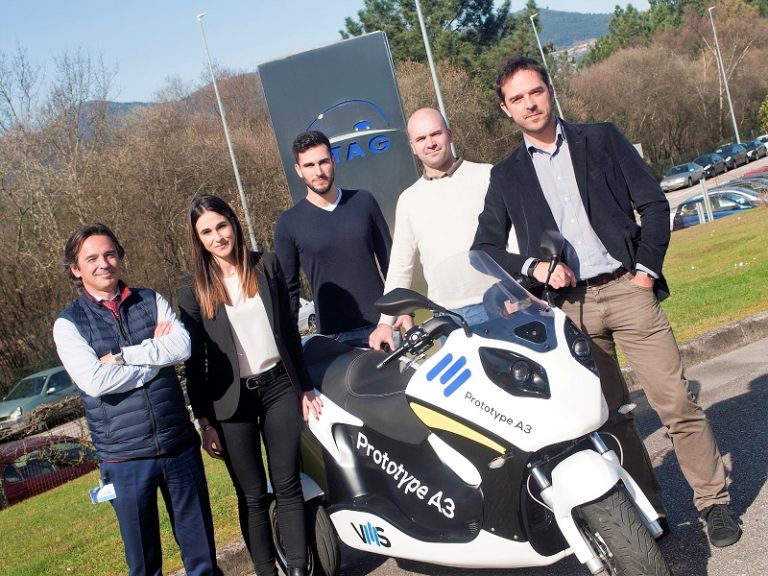
The long history of the automobile sector in the Vigo area is the starting point of VMS Automotive, a business project with just one year of life but which aims to stand out in the automobile market in 2019 with an electric motorcycle that can break molds in this sector due to its capabilities and advanced technology. The role of R & D, which is being done in collaboration with the Galician Automotive Technological Center (CTAG) and various engineering companies, is key to the development of a product that has high probabilities of success in today´s global market, and that increasingly calls for environmentally friendly mobility solutions.

Pablo Campos, CEO of VMS Automotive, explains that the project emerged as a spin-out of the Marsan group, with more than 60 years of industrial expertise in the city of Vigo. In 2016 it was decided to press forward with on of the independent subsidiaries of the group that is currently working on the product.

The motorcycle that is being developed has a unique the design with a high tech state-of-the-art-system of balancing, steering and suspension. This will account for a very safe vehicle. It is a three-wheeled motorcycle that will have engines in each of the rear wheels. “We have a patent for this system. Today there are few models of electric motorcycles and our expectation is to start by penetrating the Spanish and French market, and then expand to western Europe, the Nordic countries and the United States” said Campos.

The VMS Automotive model will be in the mid-range of the market and the idea is to offer a potential customer a new riding experience, which includes the possibility of reversing, something unusual on a motorcycle. In addition, They are committed to a vehicle with zero emissions and with very advanced safety conditions. In the end, it is a matter of moving towards a more flexible and efficient mobility concept, which is gradually trying to impose itself in the main cities world wide. The bike will be the first vehicle to be developed by the company, which aims to launch other products later on.

Baltasar Merino, a pioneer in meteorology and botanics

0

The Jesuit Father, Baltasar Merino, is the figure chosen this year by the Royal Academy of Galician Sciences to celebrate the Day of Science. Father Merino was a key figure for his role as a pioneer in the fields of botany and meteorology. Merino arrived in Galicia in 1880 and until his death in Vigo in 1917, he was deeply involved with science on a daily basis. 

Innovation commited to society

The commitment to innovation in the business world can also serve to better projects that have a social objective. This is the ethos of the Connecting For Good Galicia program, sponsored by Vodafone and the Xunta, which celebrates its second edition by supporting entrepreneurs who go beyond the business benefit. Six companies, with very different features, have been chosen to take part in the project. 3 DAcoustic is one of them and is dedicated to the manufacturing of personalized hearing instruments making the best of 3-D printing

From paper to digital book

The implementation of the electronic textbook is now a reality in more than 150 centers in the country. The Abalar project, developed by the Agency for Technological Modernization of Galicia (Amtega), is committed to the progressive implementation of digital education and for the next two years the acquisition of up to 22,000 laptops is expected to increase in schools. Some of them have already had the Y-Dixgal project to implement the electronic book, among them the public school of La Ramallosa in Teo, near Santiago.

Administration makeover due to new technologies

The ability of new technologies to change our habits has been a very clear example in the implementation of an electronic administration in recent years. Like other institutions, the Xunta has an ambitious digitalization program in place that aims to facilitate the presentation of documents to citizens and legal persons without having to have access to a physical place.

The Smart Car


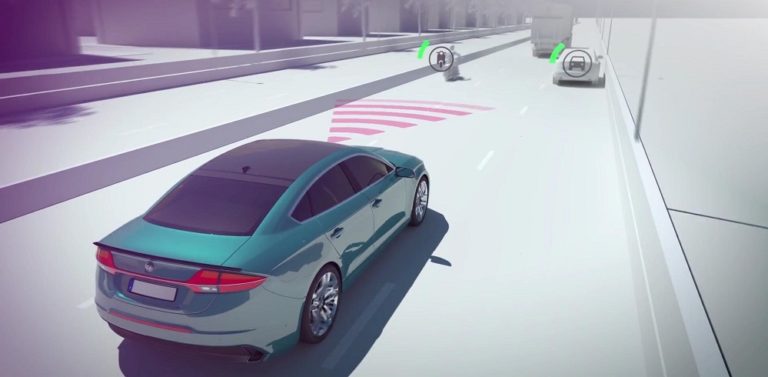
A smart car is closer to being a reality. The Galician company Xesol Innovation, located in the Parque Tecnópole de Ourense, launches its SmartCars project, which introduces artificial vision vehicles, which helps driving and increases safety at the wheel.